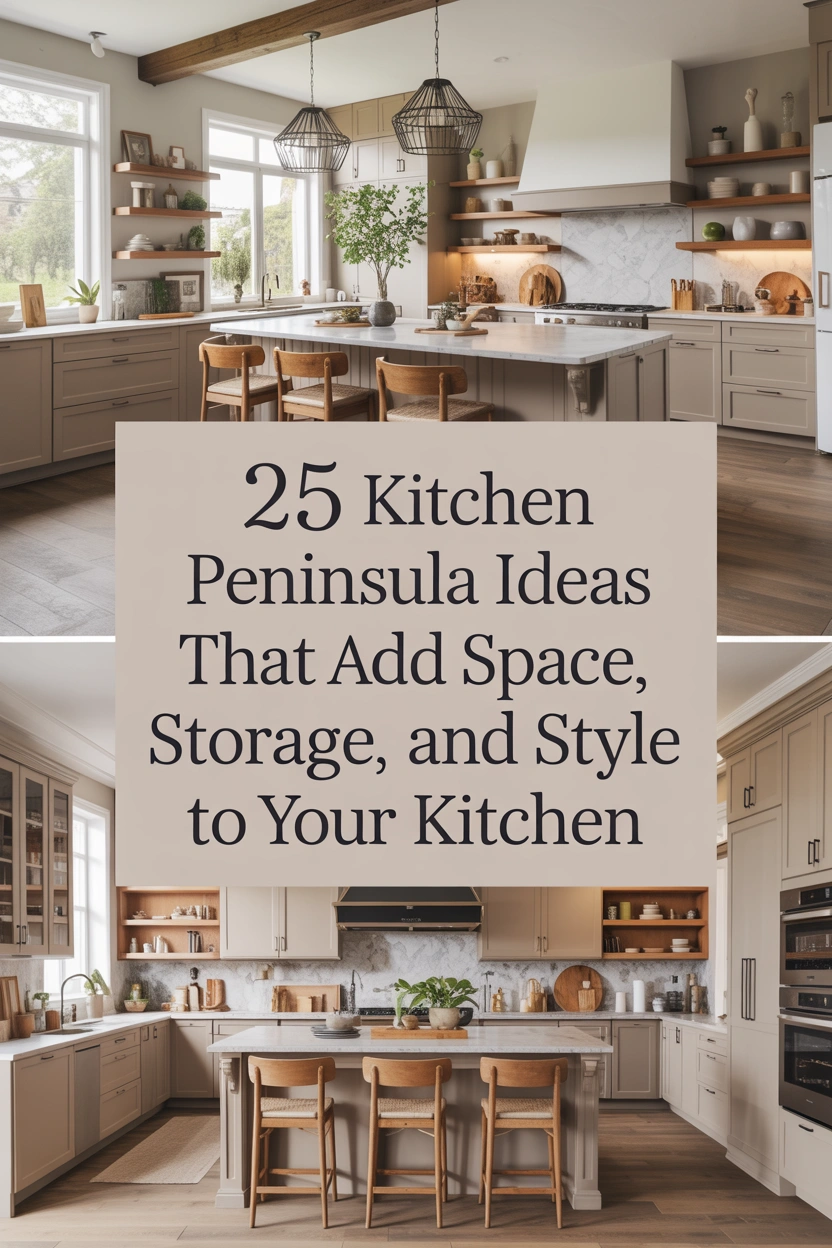
If you’ve ever wished your kitchen had just a little more room to breathe, a peninsula might be the answer you didn’t know you were looking for. Unlike a full island, a peninsula connects to an existing wall or cabinet run on one end, which makes it a smarter choice for kitchens where space is limited but the need for extra workspace, seating, and storage is very real. It gives you the best of both worlds without requiring a complete kitchen overhaul.
Whether you’re working with a small galley kitchen or a medium-sized open-plan space, there’s a peninsula configuration that can work beautifully for you. Here are 25 ideas to spark some inspiration.
1. The Classic L-Shaped Peninsula
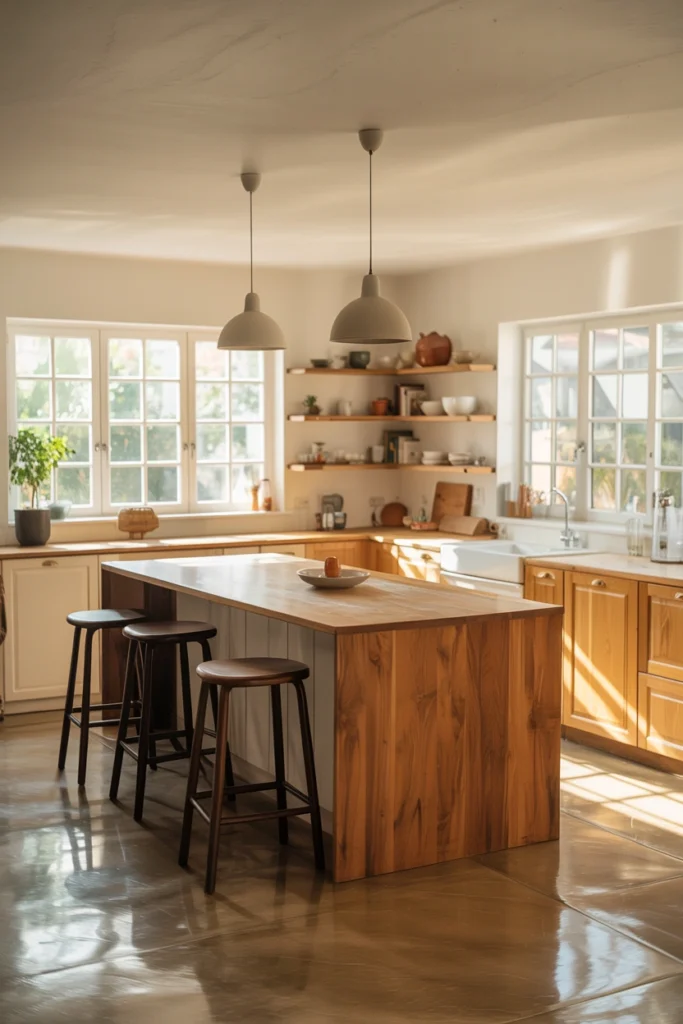
The L-shaped peninsula is where most people start, and for good reason. It extends naturally from one wall of cabinets and creates an easy, intuitive workflow between the cooking zone and the rest of the kitchen. It defines the kitchen space without closing it off, making it ideal for open-plan homes. Add a couple of stools on the outer edge and you have an instant casual dining spot that doesn’t require a separate table.
2. Peninsula With Breakfast Bar Seating
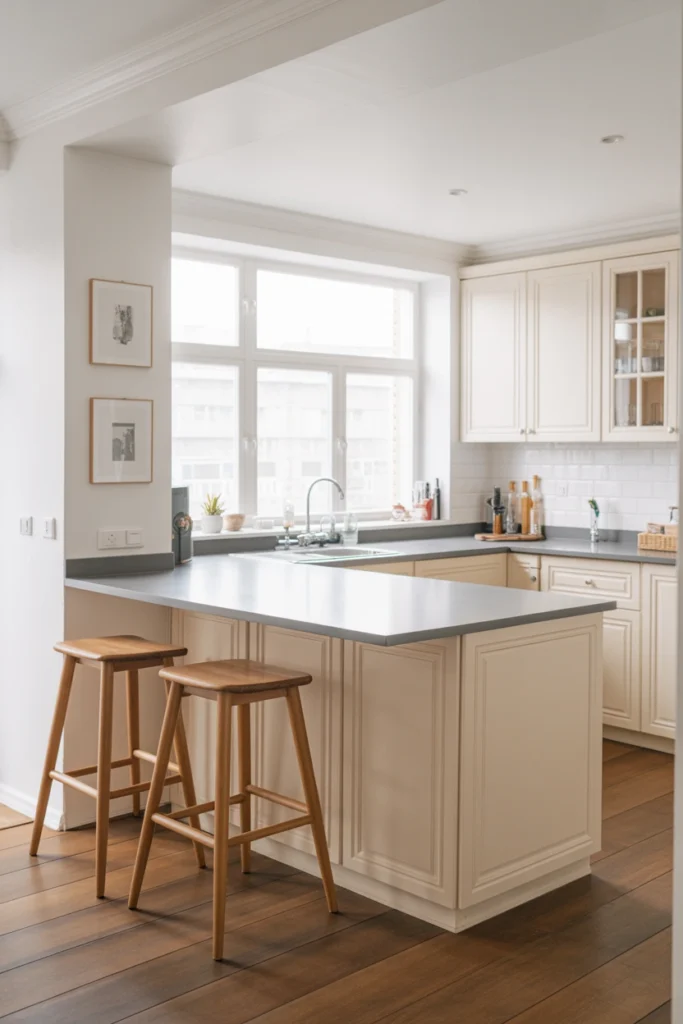
One of the most popular reasons people add a peninsula is to create a casual seating area. A slightly raised or flush countertop on the open side of the peninsula gives you a breakfast bar where family members can sit, eat, work, or just keep you company while you cook. It removes the need for a separate dining table in smaller homes and creates a natural gathering spot that feels relaxed and social.
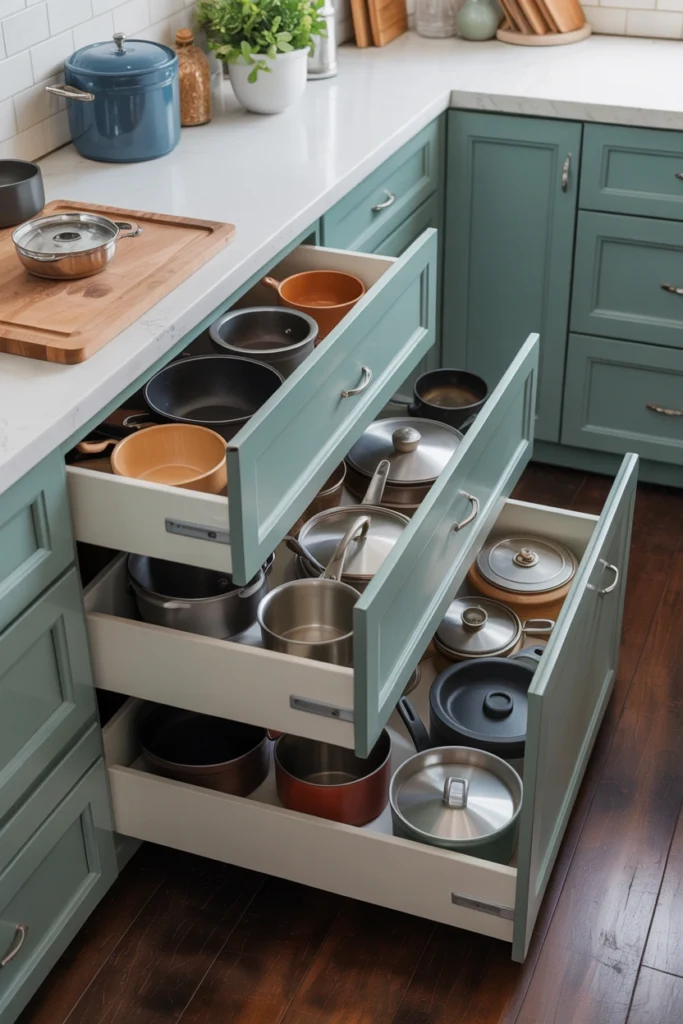
3. Storage-Heavy Peninsula With Deep Drawers
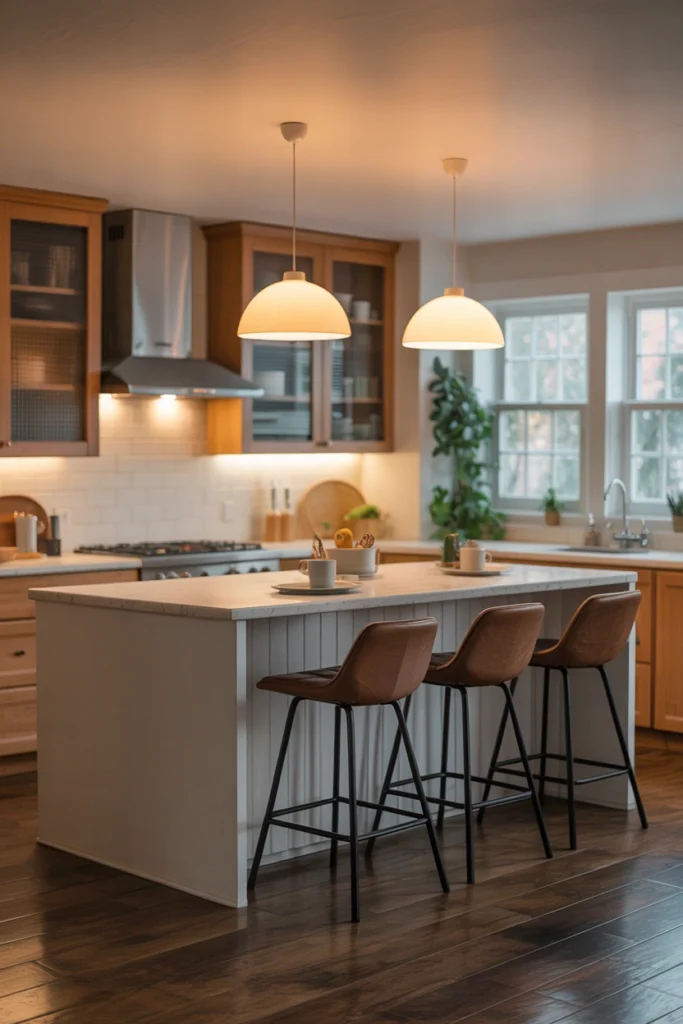
A peninsula without storage underneath is a missed opportunity. Deep pull-out drawers on the kitchen-facing side of the peninsula are perfect for pots, pans, baking trays, and appliances you don’t use every day. They keep everything accessible without cluttering your counters. If you’re planning a new build or renovation, prioritize drawer depth and width here because this storage tends to become the most heavily used in the entire kitchen.
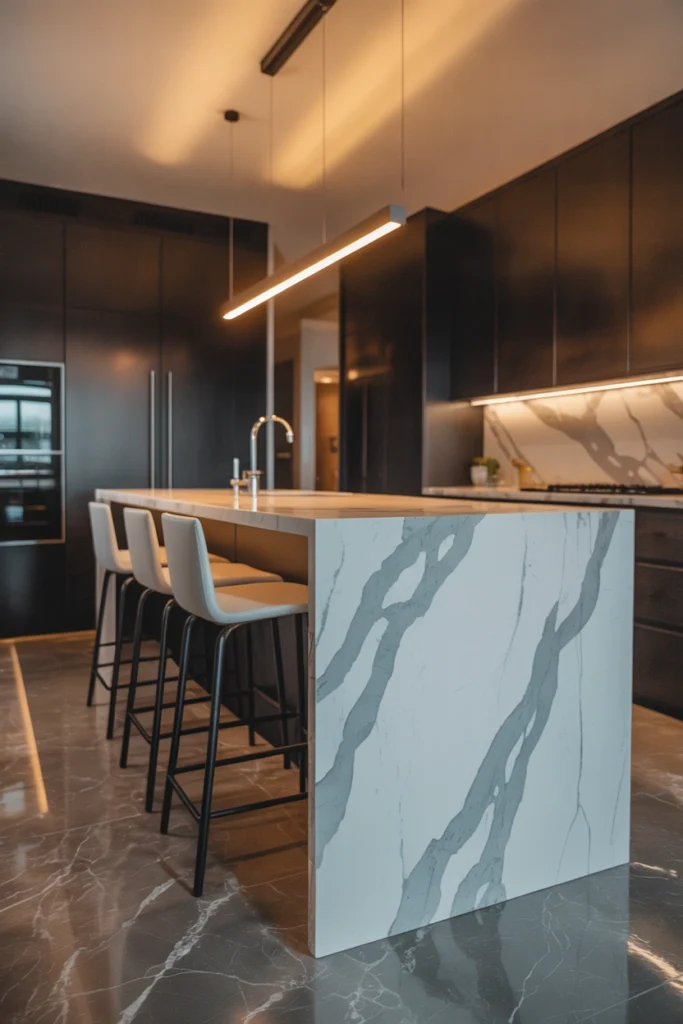
4. Waterfall Edge Peninsula
The waterfall edge is where function meets serious style. The countertop material, whether it’s marble, quartz, or a wood slab, continues down the side of the peninsula all the way to the floor. It creates a seamless, sculptural effect that looks expensive and deliberate. This works particularly well in kitchens that lean modern or contemporary, and it turns the peninsula itself into a design statement rather than just a utility feature.
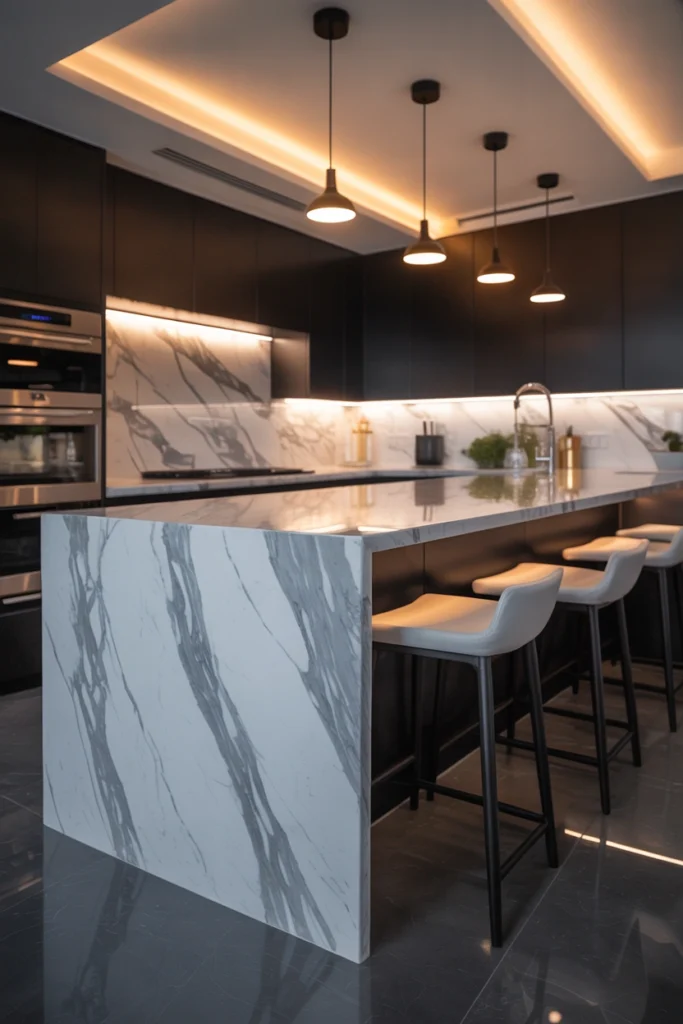
5. Peninsula With Open Shelving on One Side
Instead of closing off the outer face of your peninsula with solid cabinet doors, consider open shelving on the seating or living room side. This keeps the space feeling light and connected while giving you a place to display cookbooks, ceramics, small plants, or a wine rack. It softens the boundary between the kitchen and adjoining spaces, which is especially useful in open-plan layouts where you want the kitchen to feel like a natural extension of the living area.
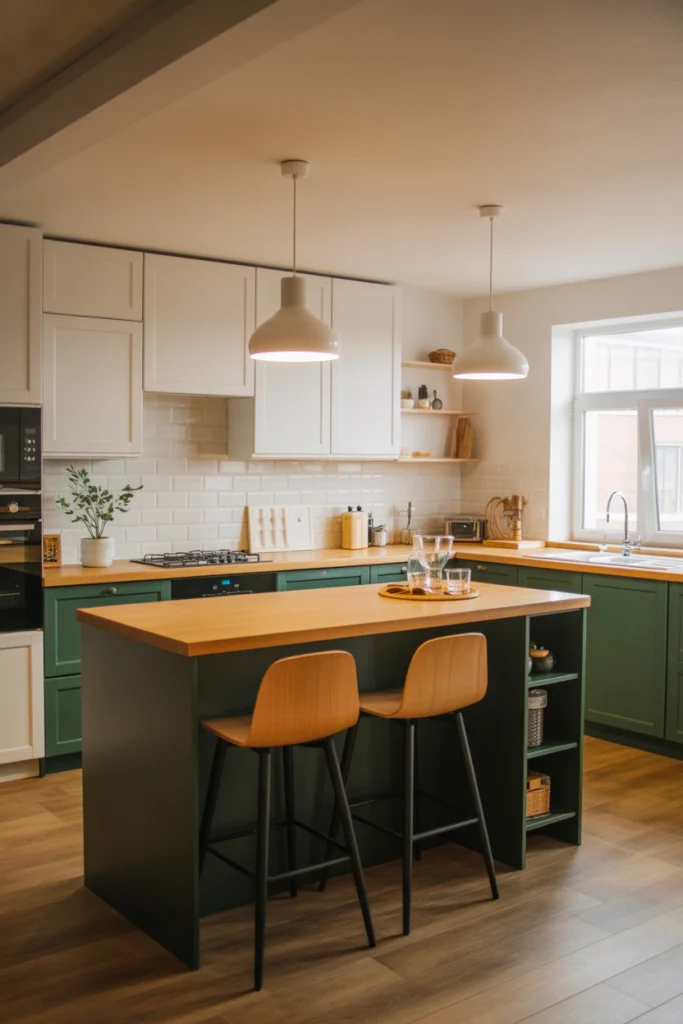
6. Two-Tone Peninsula Design
A two-tone approach is one of the easiest ways to add visual depth to a kitchen without going overboard. Paint or finish the peninsula in a contrasting color to the rest of the cabinetry. For example, if your main cabinets are white, try a deep navy, forest green, or warm charcoal for the peninsula. It draws the eye, defines the space, and gives the kitchen a layered, considered look that feels anything but generic.
7. Peninsula as a Room Divider
In open-plan homes, the peninsula serves a practical architectural role. It gently separates the kitchen from the dining or living area without building a wall. This kind of soft division creates zones without sacrificing openness. You still get the connected, airy feel of an open plan, but each zone has its own sense of identity. A peninsula used this way works best when it’s finished carefully on all visible sides, since it will be seen from multiple angles.
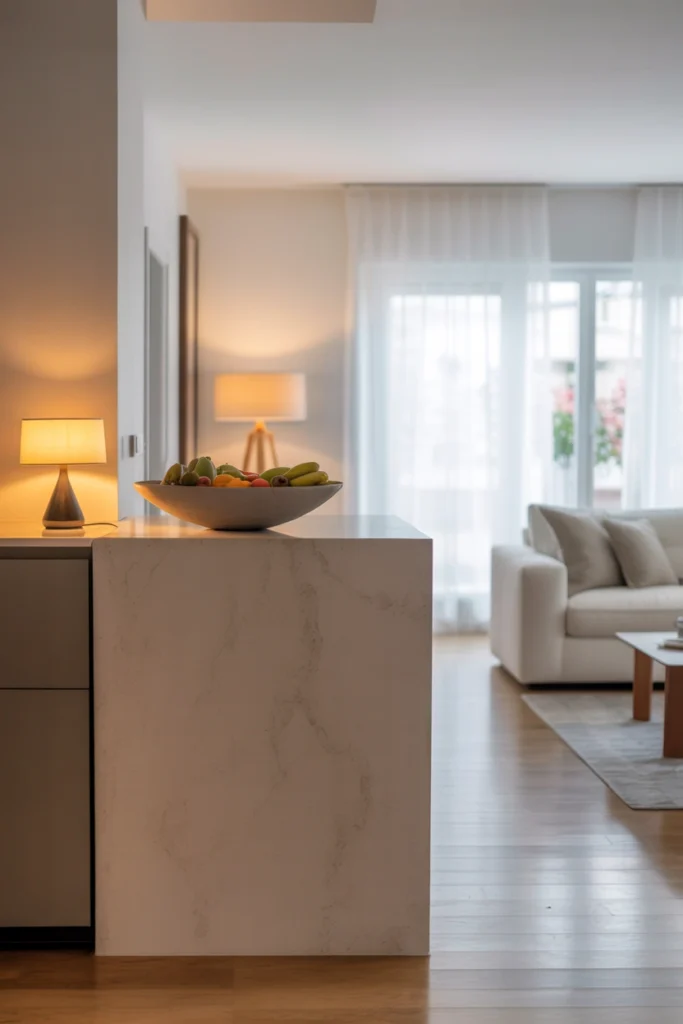
8. Small Peninsula for Compact Kitchens
You don’t need a large kitchen to benefit from a peninsula. Even a modest extension of 60 to 90 centimeters can make a real difference in a compact kitchen. It adds prep space, creates a spot for quick meals, and can house a few drawers or a small wine rack underneath. The key in smaller kitchens is keeping the peninsula proportionate to the room so it aids the workflow rather than blocking it.
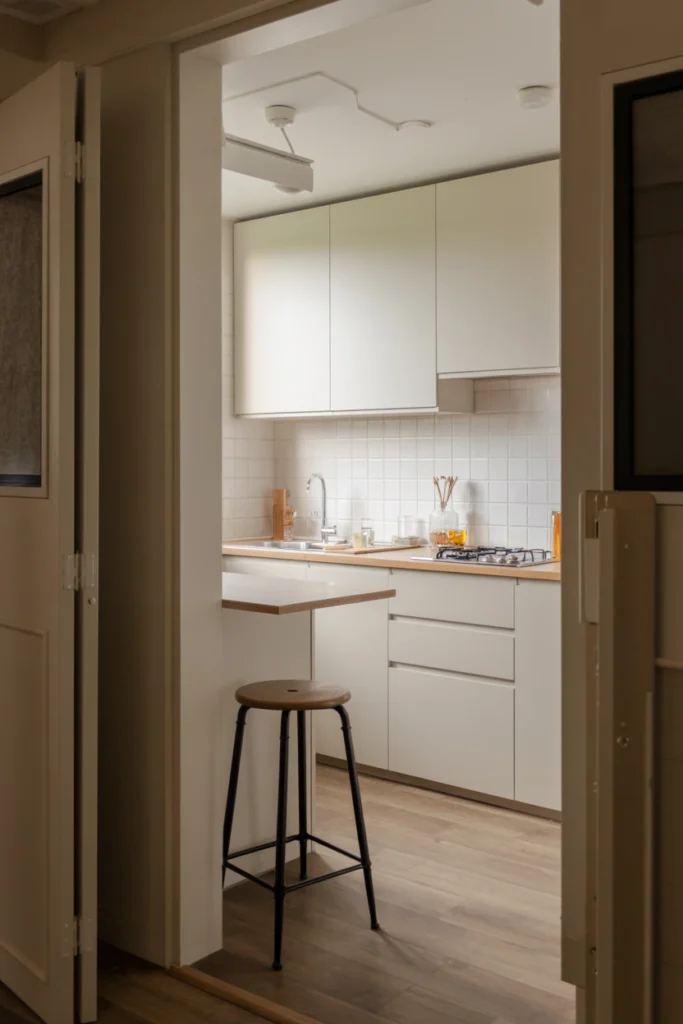
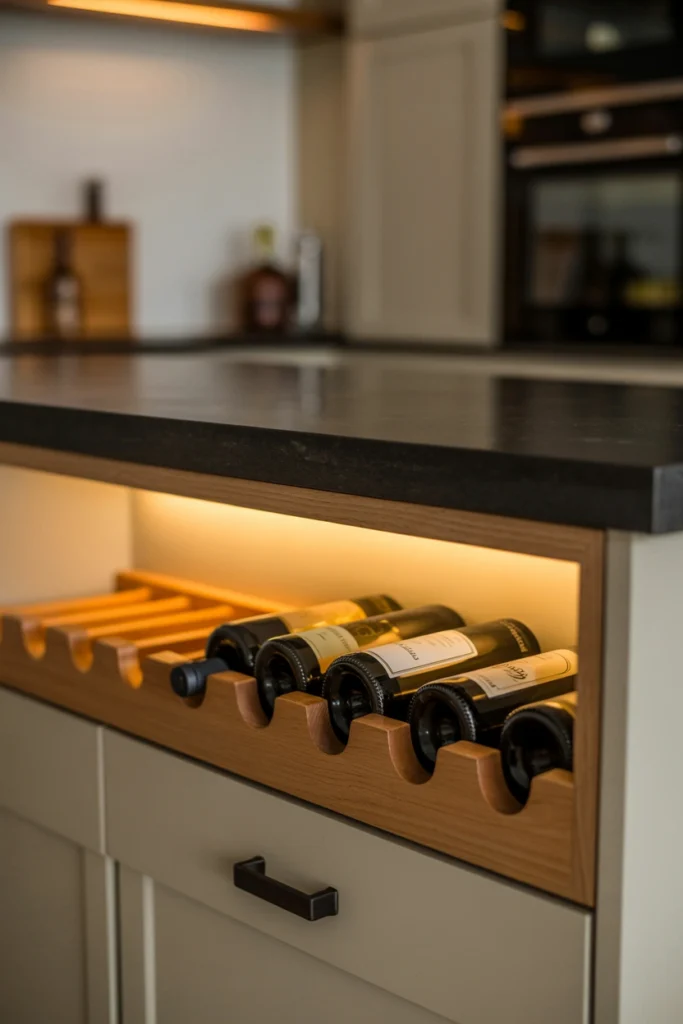
9. Peninsula With Built-In Wine Rack
If wine is a regular part of your household, building a wine rack into the base of your peninsula is both practical and atmospheric. It keeps bottles within easy reach during dinner prep, adds a restaurant-like quality to the kitchen, and uses what would otherwise be dead space very efficiently. A row of bottles neatly stored horizontally along the base of the peninsula also adds warmth and texture to the overall design.
10. Concrete Top Peninsula
Concrete countertops have a raw, artistic quality that suits kitchens with an industrial, Japandi, or modern rustic aesthetic. On a peninsula, a concrete top feels especially grounded and tactile. It’s not for everyone, but if you appreciate materials that develop character over time and don’t mind the occasional seal and maintenance, concrete can be one of the most distinctive choices you make in your kitchen design. Pair it with warm wood tones and matte black fixtures for a cohesive look.
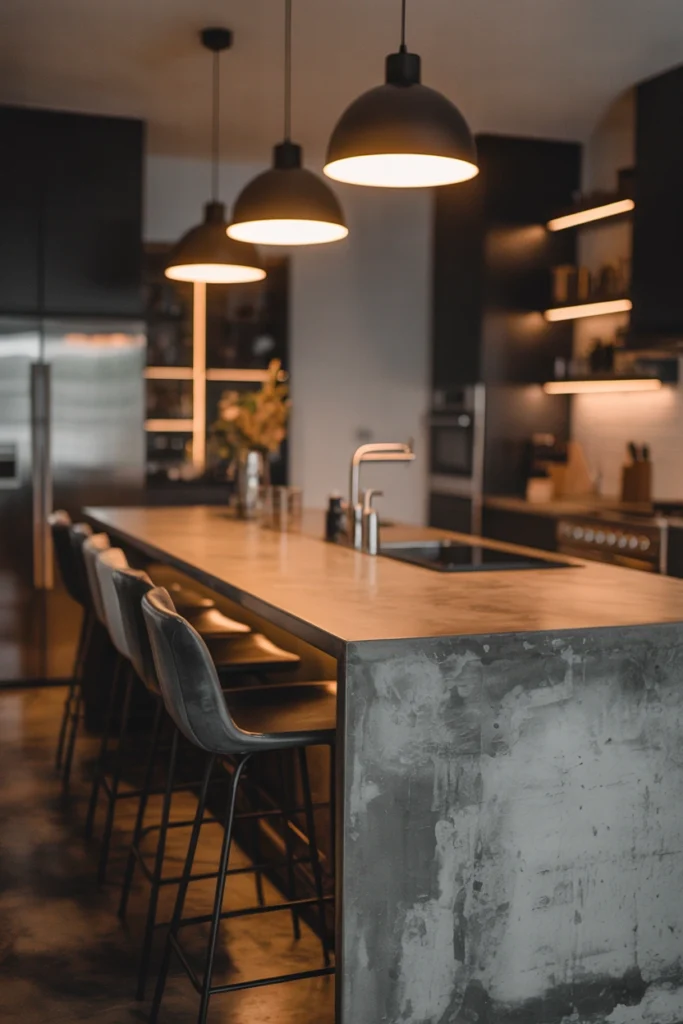
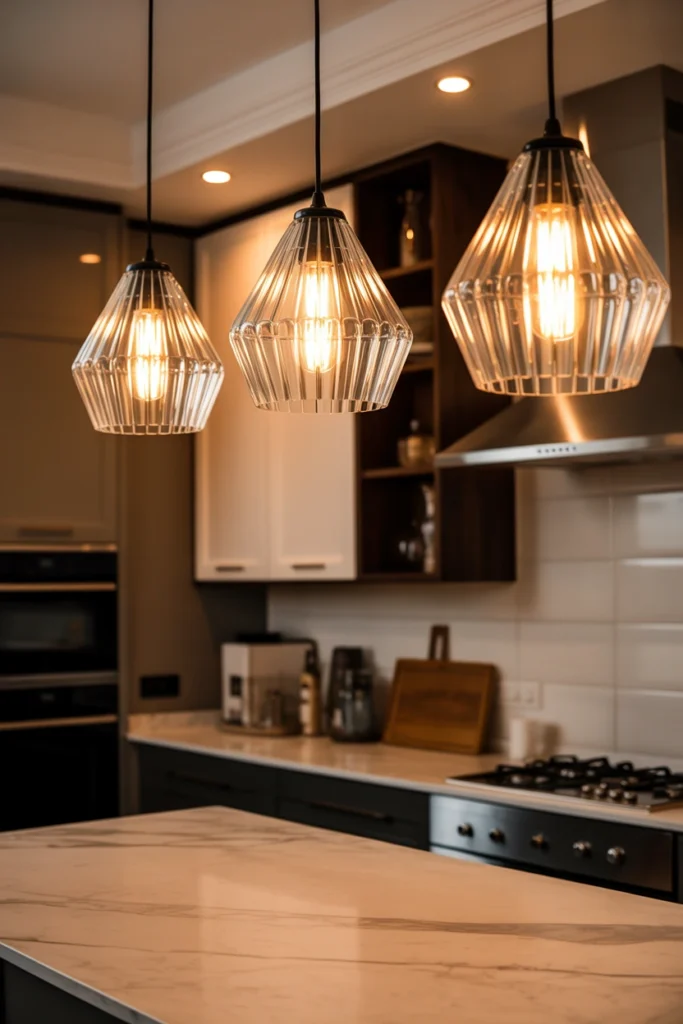
11. Peninsula With Pendant Lighting
The right lighting above a peninsula completely changes its character. Pendant lights hung in a row above the counter are one of the most impactful and relatively affordable upgrades you can make. They define the peninsula as its own zone, add warmth and intimacy to the seating area, and give you the opportunity to introduce a design element that reflects your personal taste, whether that’s industrial cage pendants, organic woven shades, or sleek minimal cylinders.
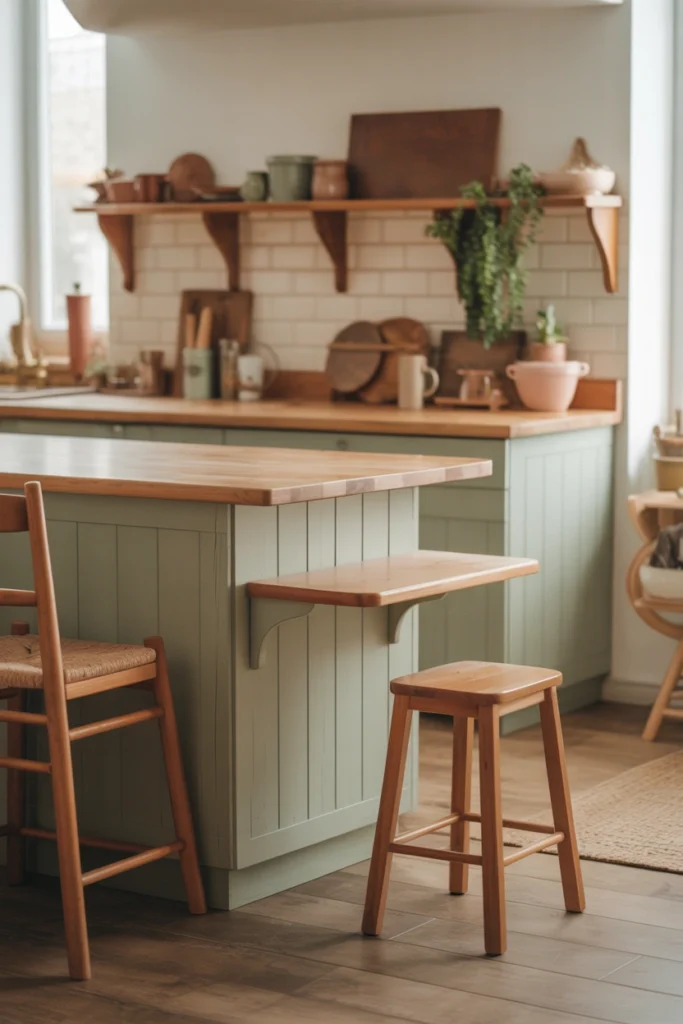
12. Kid-Friendly Peninsula With Lower Counter Section
Families with young children often find that a standard counter height is too tall for kids to comfortably use. A peninsula with one lower section, around 70 to 75 centimeters rather than the standard 90, gives children their own prep area where they can help with baking or meals safely and comfortably. It’s a thoughtful detail that makes the kitchen genuinely more inclusive and functional for the whole family.
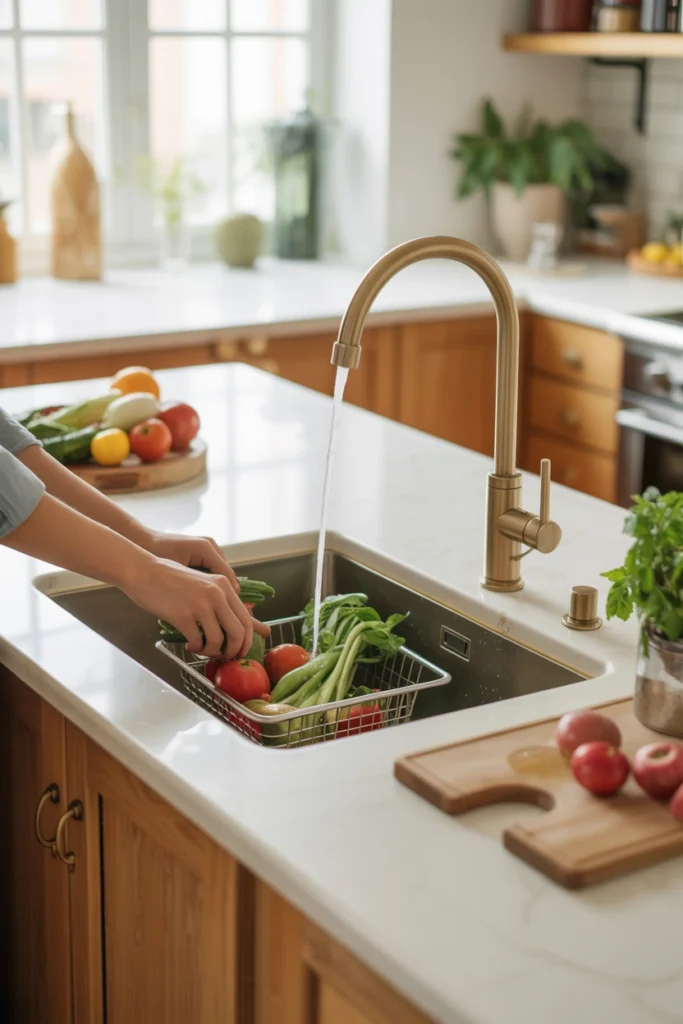
13. Peninsula With Integrated Sink
Moving the sink to the peninsula is a bold but practical choice. It positions the person washing dishes or prepping food to face the room rather than a wall, which makes kitchen time feel more social and connected. It also creates a natural clean-up station that’s separate from the cooking zone. You’ll need plumbing routed to the peninsula, which adds cost, but many people find this layout change alone transforms how they experience their kitchen.
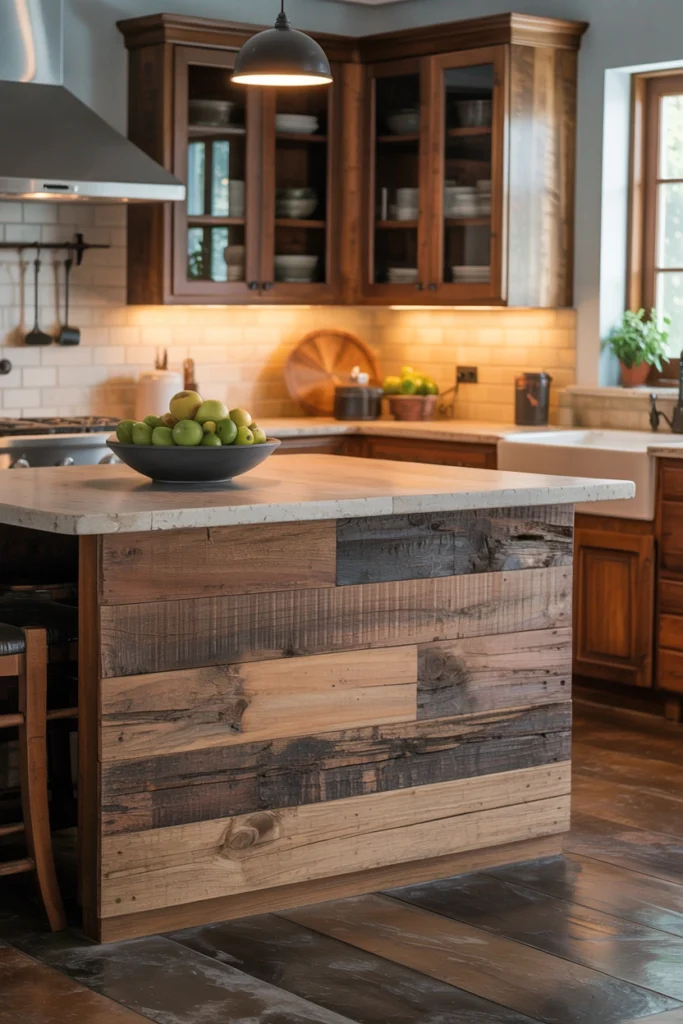
14. Rustic Wood Peninsula
A peninsula built in reclaimed or solid natural wood brings warmth and character that no painted cabinet can match. This works especially well in farmhouse, cottage, or Japandi-style kitchens where you want materials to feel genuine and unhurried. The natural grain, knots, and variation in the wood become part of the design rather than something to hide. Over time, a solid wood peninsula only gets better looking, which makes it one of the most satisfying long-term investments in a kitchen renovation.
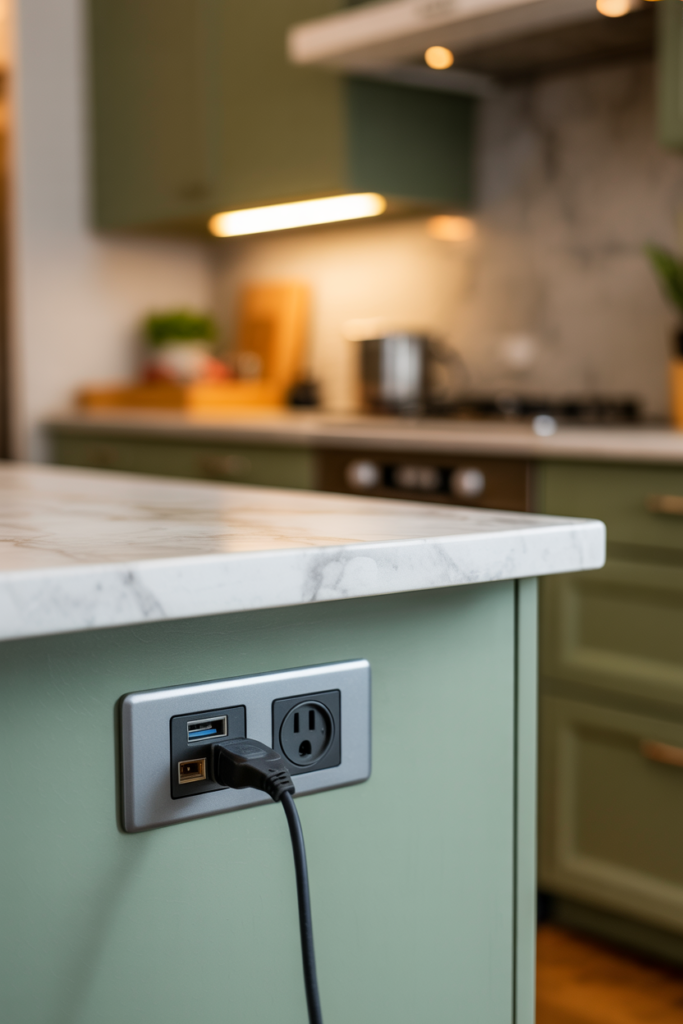
15. Peninsula With Charging Station
Modern kitchens need to account for how we actually live, and that includes phones, tablets, and laptops on the counter. Building a discreet charging station into one end of the peninsula, with a USB port and standard outlet hidden behind a small panel, keeps cables off the main workspace. It’s a small detail that makes a meaningful difference to daily kitchen life, especially if your peninsula doubles as a homework or work-from-home station.
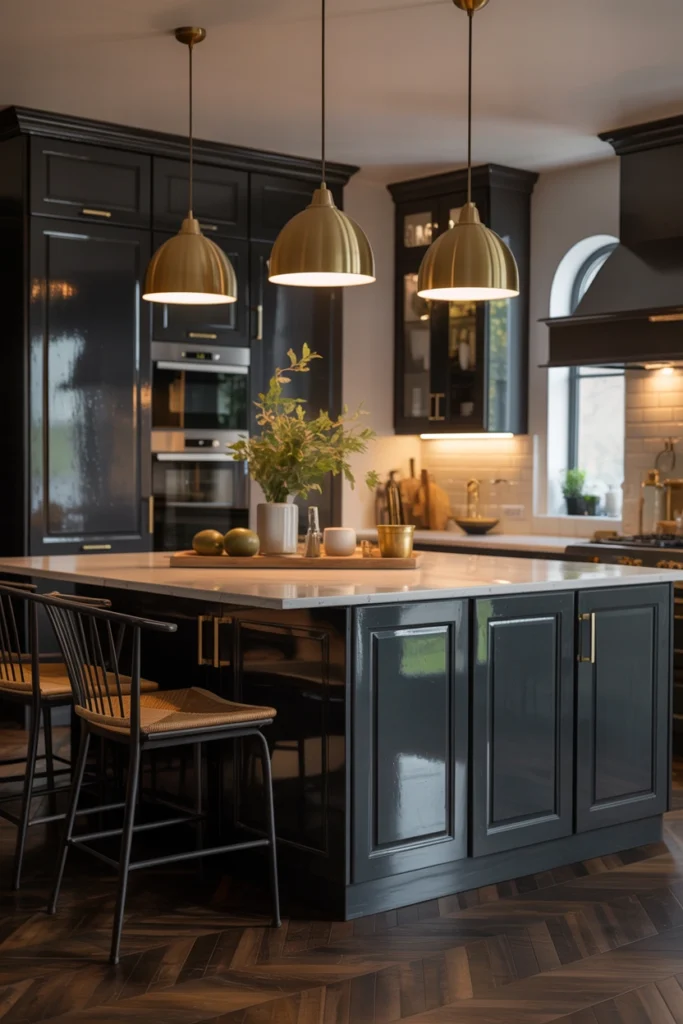
16. Dark and Moody Peninsula
Not every kitchen needs to be bright and white. A peninsula finished in deep charcoal, black, or dark slate creates a dramatic focal point that feels sophisticated and intentional. This works particularly well when the rest of the kitchen is lighter, creating a contrast that gives the space real depth and personality. Pair it with brass or gold hardware and warm lighting to prevent the dark tones from feeling cold or heavy.
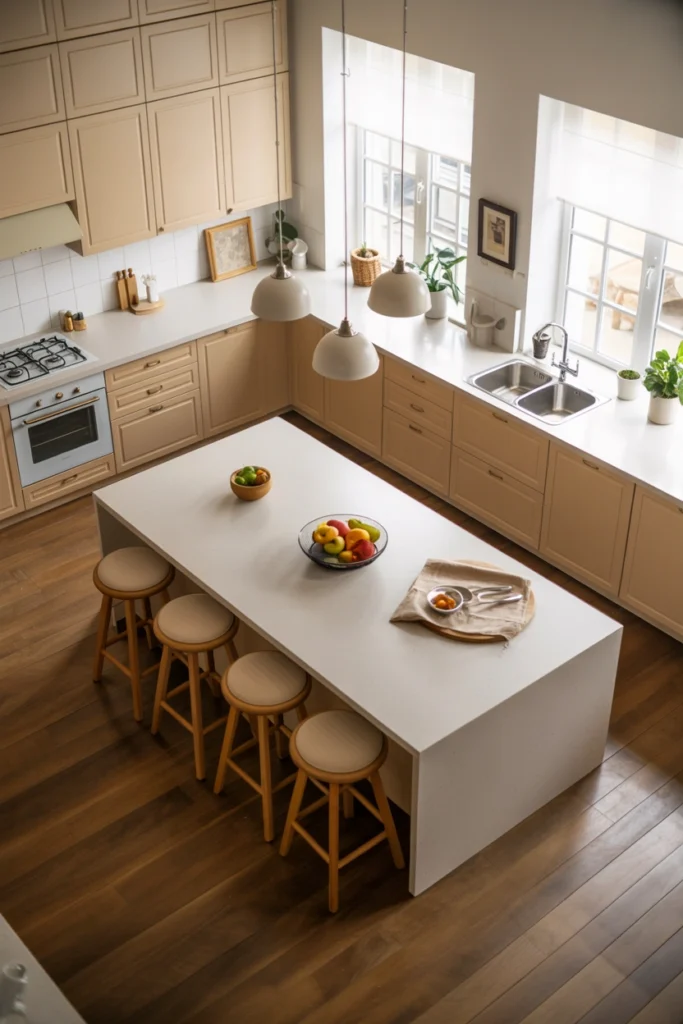
17. Peninsula With Seating on Two Sides
If your kitchen layout allows, placing seating on two sides of the peninsula creates a more social and flexible space. One side might be at standard counter height for adults eating a quick meal, while the other could be a lower section where younger family members sit comfortably. This configuration works beautifully in larger kitchens and makes the peninsula feel like the true heart of the home, a place where people genuinely gather rather than just pass through.
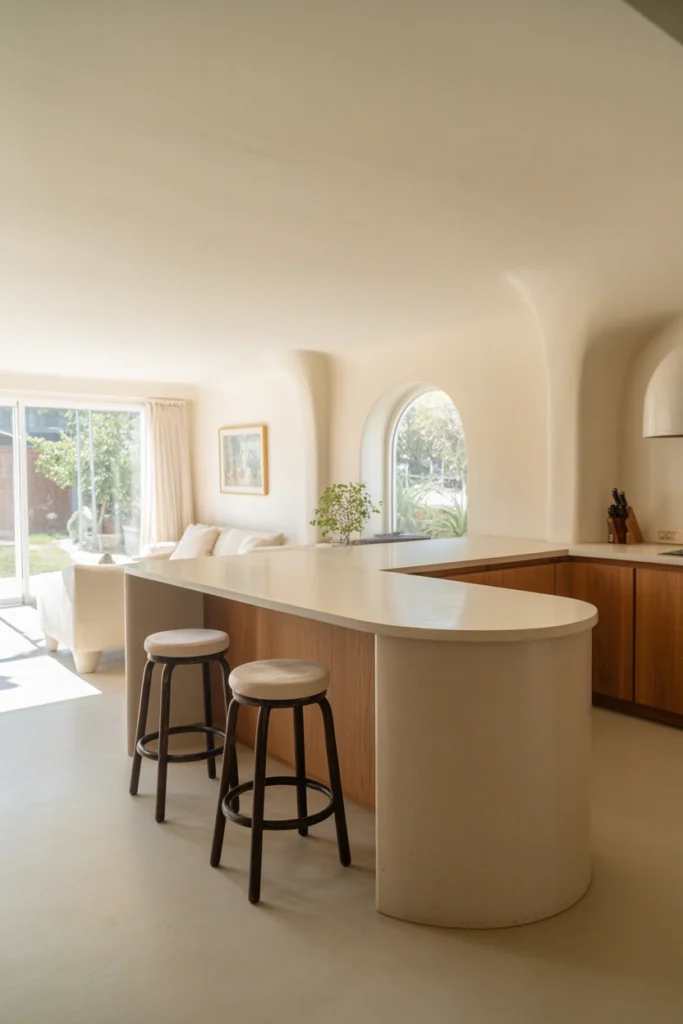
18. Curved Peninsula Design
Most peninsulas are angular and straight, which is perfectly practical. But a curved peninsula softens the entire kitchen and creates a more organic, flowing feel. It’s particularly useful in kitchens that connect directly to a living room because the curved end faces the room without any sharp corners to navigate around. It costs a little more to build and requires a custom countertop, but the visual result is distinctive and feels anything but ordinary.
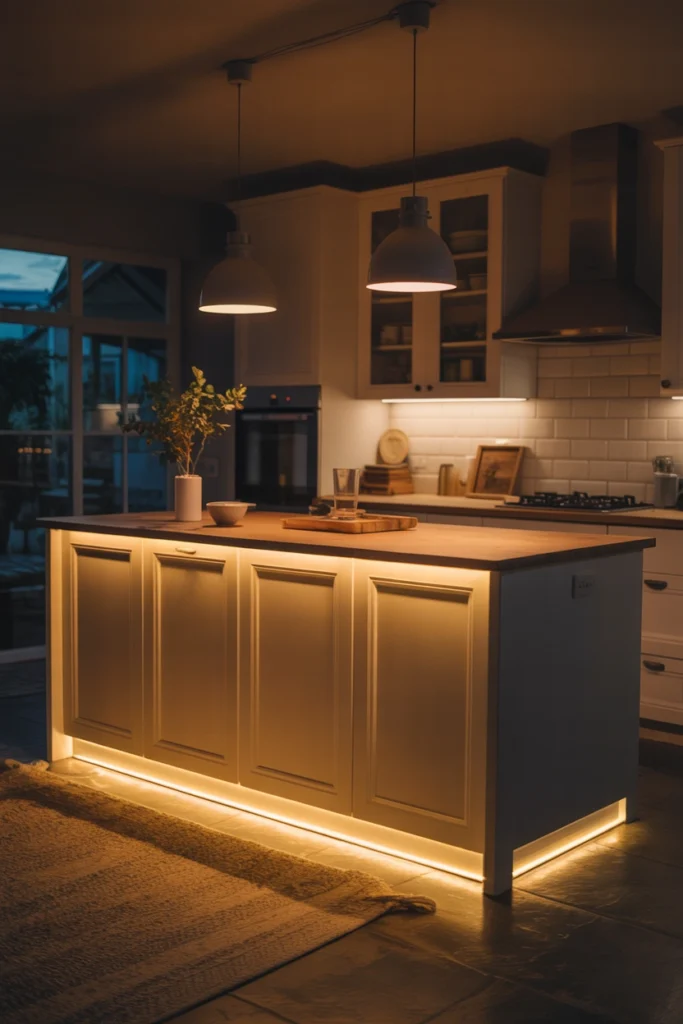
19. Peninsula With Toe-Kick Lighting
Toe-kick lighting runs along the base of the peninsula just above the floor and creates a beautiful floating effect at night. It’s subtle during the day but transforms the atmosphere in the evening, giving the kitchen a soft, ambient glow that feels almost cinematic. It’s also surprisingly practical as a night light for late-night kitchen visits. LED strip lighting in warm white is the most common choice and is relatively easy to install even as a retrofit.
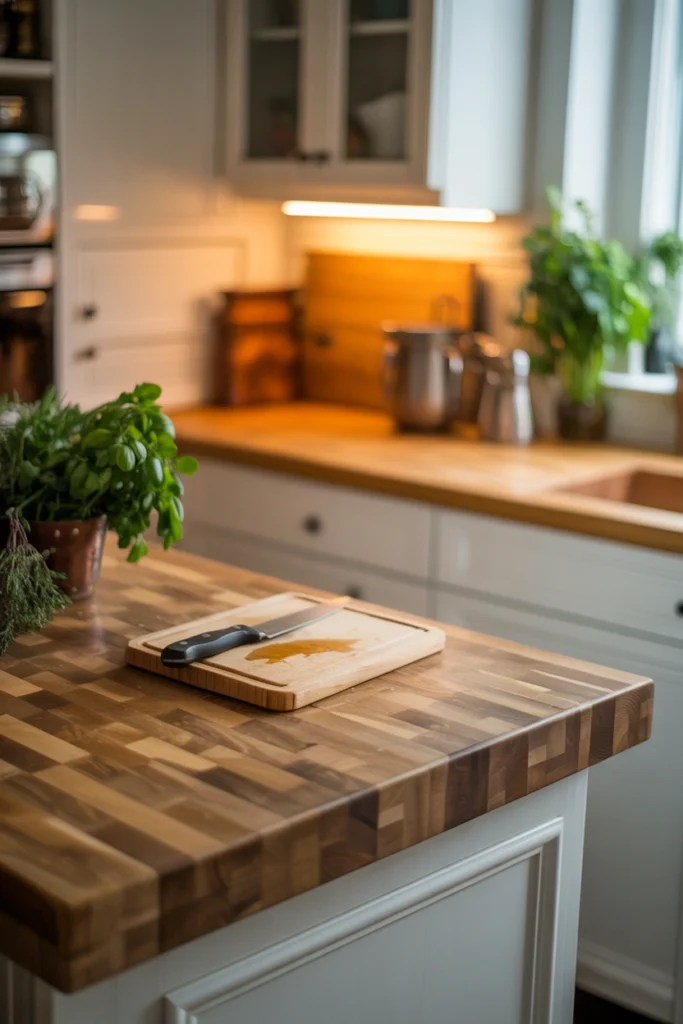
20. Peninsula With Butcher Block Top
A butcher block countertop on the peninsula is a classic choice for good reason. It’s warm, practical for food prep, and brings an immediate sense of life and usefulness to the kitchen. It does require regular oiling to maintain its condition, but many people enjoy that maintenance ritual as part of connecting with their kitchen. Butcher block works especially well as a contrast surface when the rest of the kitchen features stone or quartz countertops.
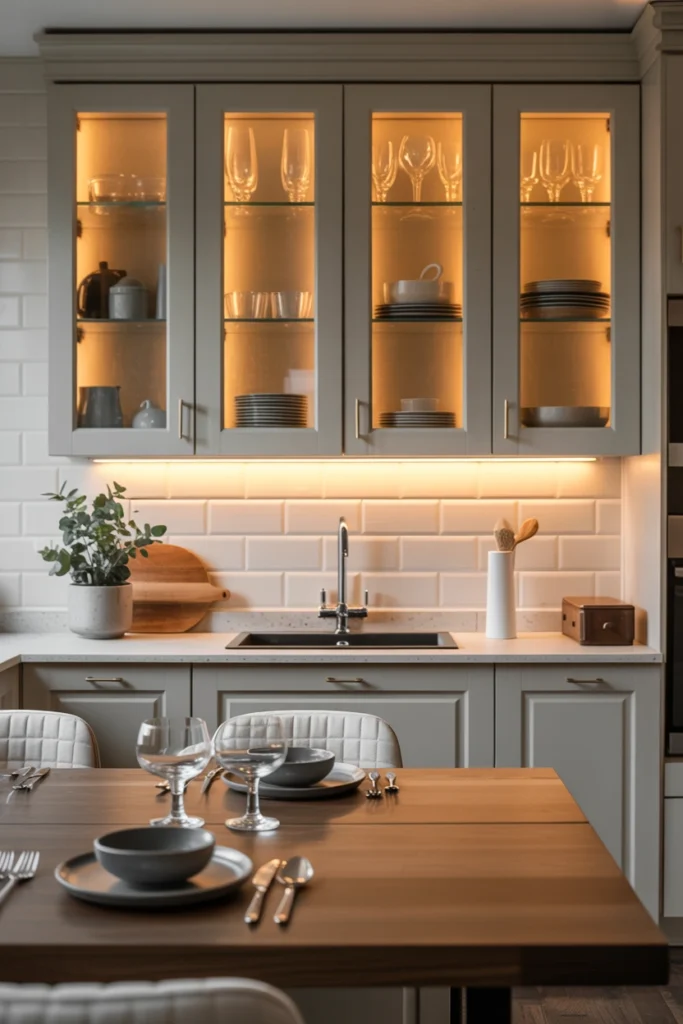
21. Peninsula With Overhead Cabinet Storage
If you need storage but don’t want a full upper cabinet run closing off the kitchen from the rest of the space, overhead cabinets above just the peninsula can be a good compromise. Keep them open on the bottom side, use glass-front doors, or limit the depth so they don’t feel oppressive. This adds significant storage capacity while keeping the peninsula area defined and purposeful without boxing in the whole kitchen.
22. Japandi-Style Peninsula
The Japandi aesthetic blends Japanese minimalism with Scandinavian simplicity, and it translates beautifully to kitchen peninsula design. Think clean lines, natural materials, muted tones, and zero unnecessary decoration. A Japandi peninsula might feature a pale wood base, a matte stone top, and simple integrated handles. Everything is considered and nothing is superfluous. This style is particularly appealing for anyone who finds maximalist kitchens exhausting and craves a space that genuinely feels calm to work in.
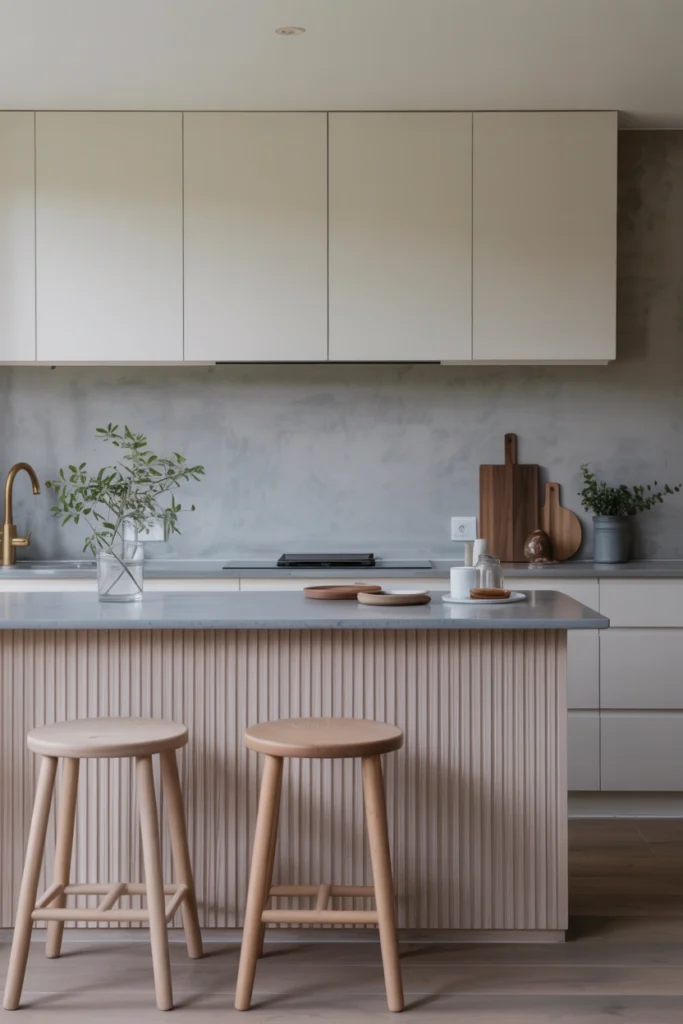
23. Peninsula With Decorative End Panel
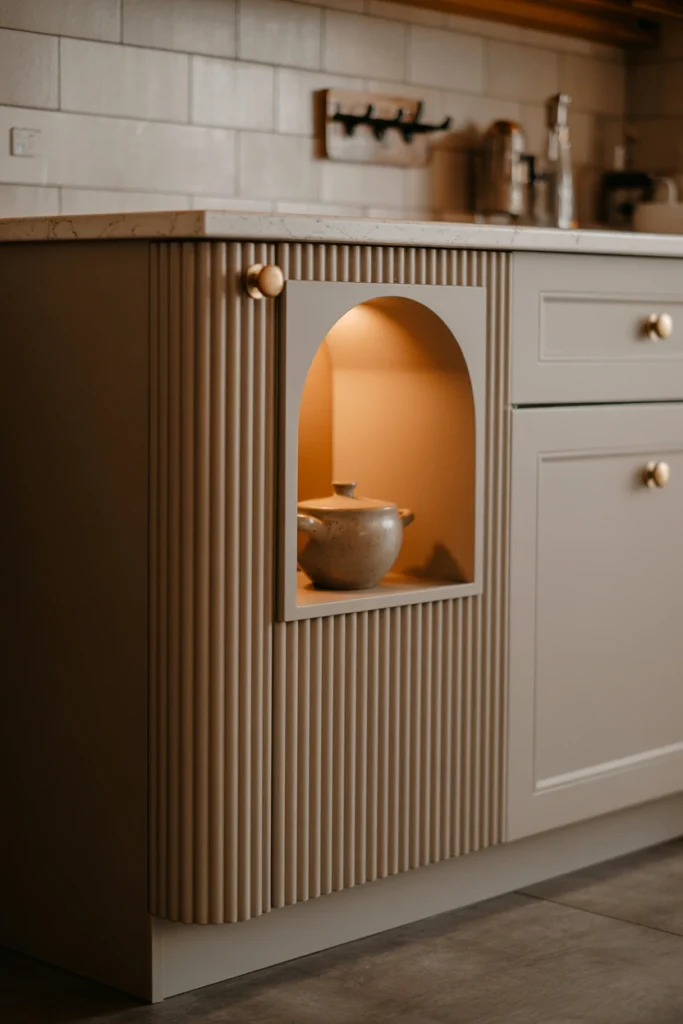
The end of a peninsula that faces a room is a small but significant design opportunity. Rather than leaving it as a plain flat panel, consider a shiplap finish, fluted wood detail, decorative molding, or even a small built-in niche for displaying an object or plant. These details take almost no extra space but add visual richness and show a level of design thoughtfulness that makes a kitchen feel genuinely custom rather than off-the-shelf.
24. Multi-Level Peninsula
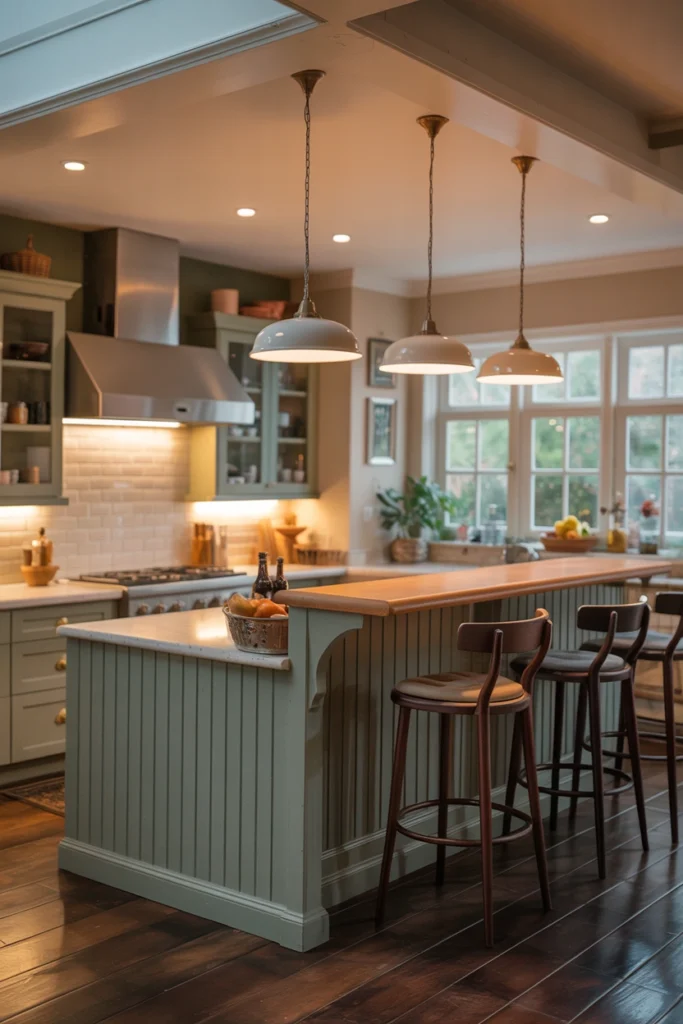
A multi-level peninsula gives you the best of everything. The lower level serves as a generous prep and work surface at standard counter height, while the raised upper section creates a bar or breakfast counter where people can sit without looking directly into the prep zone. It adds visual interest, defines the seating area naturally, and gives the cook a little privacy from the mess of cooking, which is more useful than it might sound during a dinner party.
25. Peninsula With a Built-In Cooktop
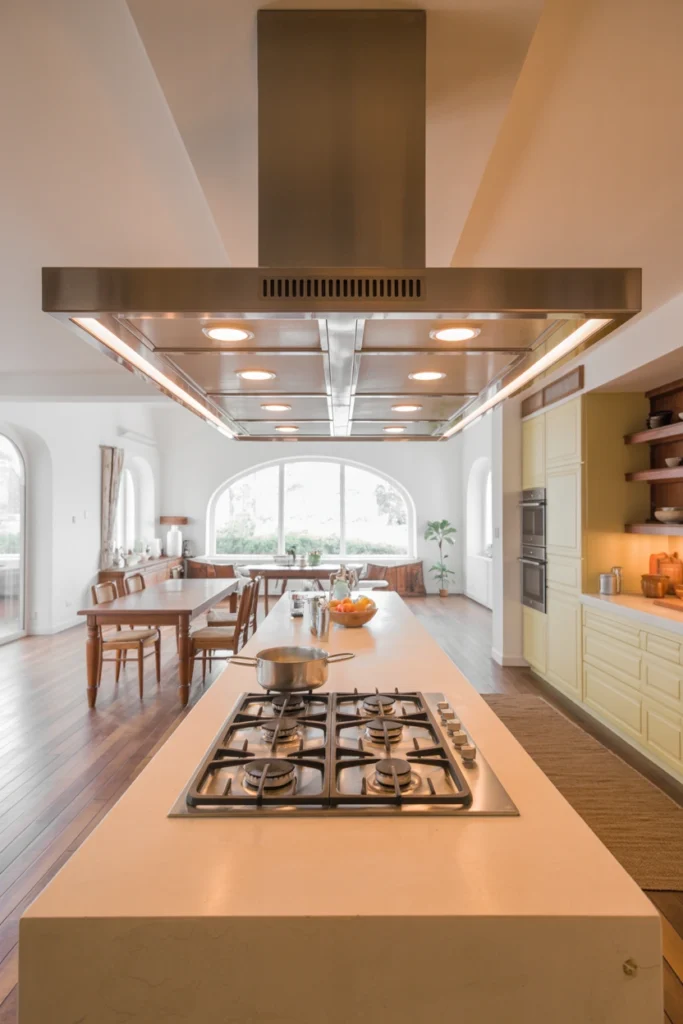
Putting the cooktop on the peninsula rather than against the wall is one of the most social kitchen layouts you can choose. It means the cook faces the room while working, which completely changes the dynamic of cooking for guests or family. You’ll need a ceiling-mounted extractor hood above, which becomes a design feature in its own right. This layout works best in larger kitchens with enough clearance on all sides, but when done well, it makes the kitchen feel like a true stage for cooking and entertaining.
Conclusion
A kitchen peninsula is one of the most versatile and rewarding upgrades you can make to your home. It doesn’t just add counter space. It changes how you move through the kitchen, how you interact with the people in it, and how the whole space feels day to day. From simple storage solutions to bold design statements, the ideas on this list cover a wide range of styles, budgets, and practical needs.
You don’t have to do everything at once. Pick the ideas that speak most directly to how you live in your kitchen, start there, and build from that foundation. The right peninsula, designed thoughtfully for your specific space, can genuinely become the most used and most loved part of your home.