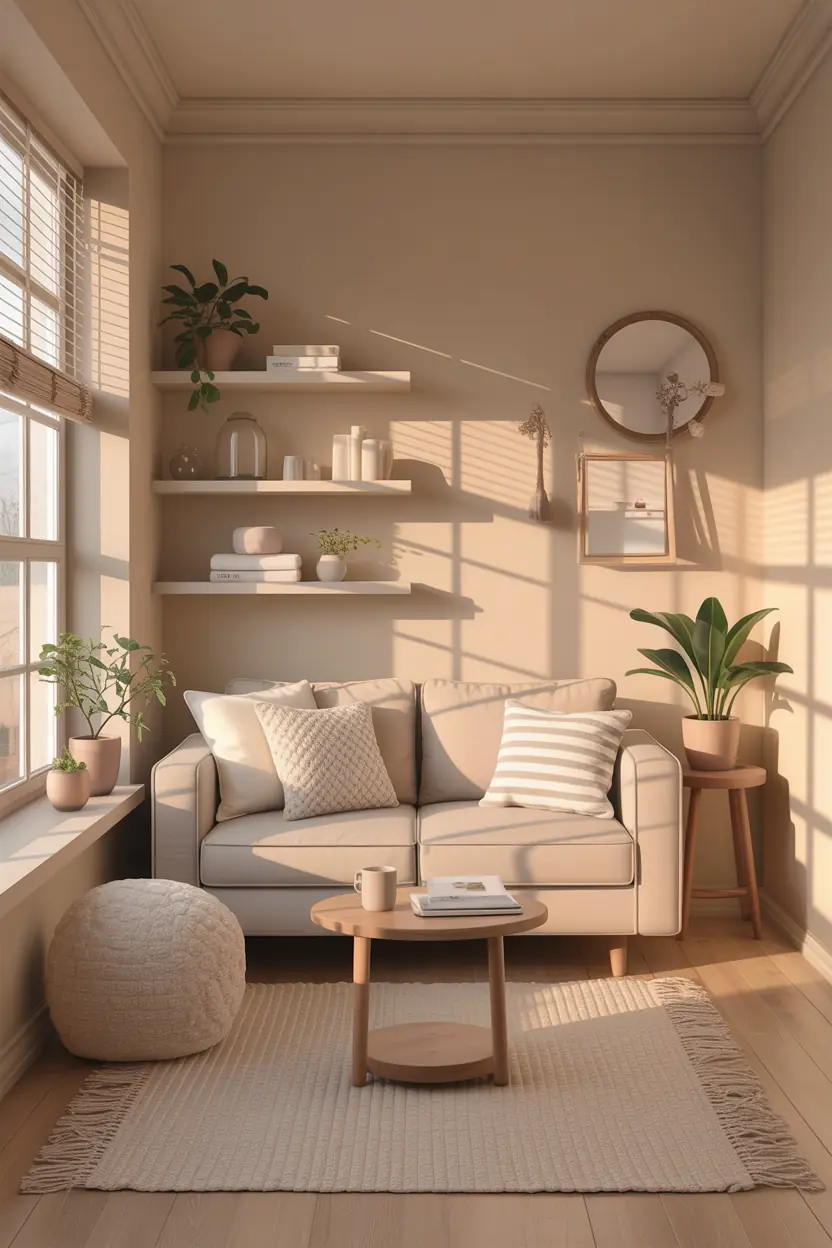
Let me tell you about the best-decorated room I know: it cost its owner under $200 total, and every guest assumes she hired someone. Her secret isn’t money — it’s that she shops secondhand first, buys paint without fear, and understands that style is 90% arrangement. A $5 thrifted vase styled well beats a $50 new vase plonked down carelessly. Every single time.
These eight ideas are the highest-impact moves in budget decorating — the ones where a little money or a little effort produces a disproportionate transformation. No renovations, no big purchases, just smart moves.
Idea 1: Rearrange Before You Buy Anything
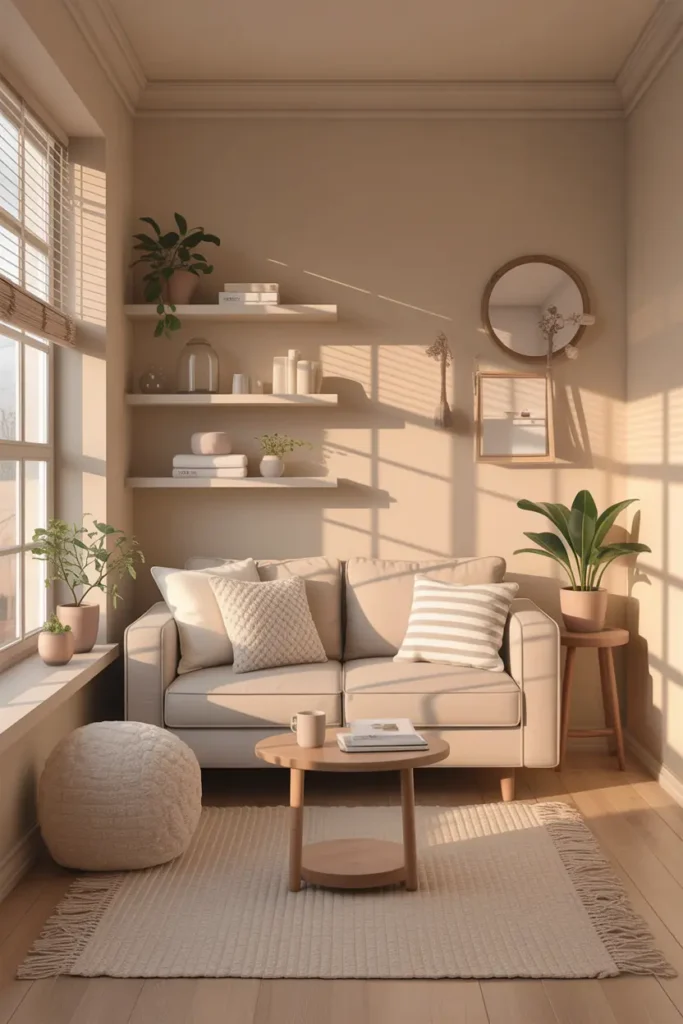
The most powerful budget tool is free: moving what you own. Pull furniture 3–4 inches off walls, try the sofa on a different wall, swap the bedroom art into the living room. Our eyes go blind to rooms we live in; rearrangement forces fresh seeing. I’ve seen rooms transformed in an afternoon with zero spending — the “new” layout reveals that the problem was never the furniture, it was the arrangement.
Photograph the room from the doorway before you start, then try three layouts and photograph each. The camera is brutally honest about what works. Live with the best option for two days before deciding — first impressions of a new layout are unreliable.
Idea 2: Wall Art for the Price of Frames
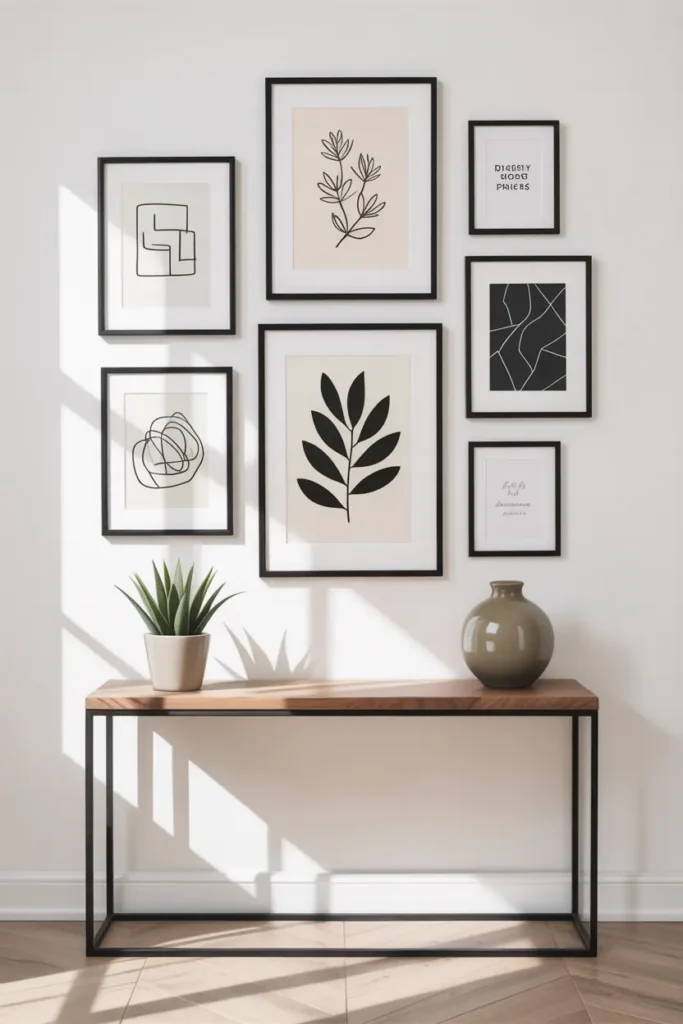
Thrift stores sell framed art for $3–8, and half of it is perfectly good once you ignore the frame. Buy for the image, spray-paint the frame matte black or gold ($5 a can covers a dozen frames), and you’ve got coordinated gallery art for the price of lunch. Alternatively, print free high-resolution art from public domain archives — museums put thousands of images online free — at any print shop for a few dollars.
The trick to cheap art looking expensive: uniform framing. Ten mismatched thrift frames painted the same color and hung in a tight grid look like a curated collection. Ten mismatched frames in ten finishes look like a yard sale. The paint is the design.
Idea 3: Thrifted Mirrors, Styled Right
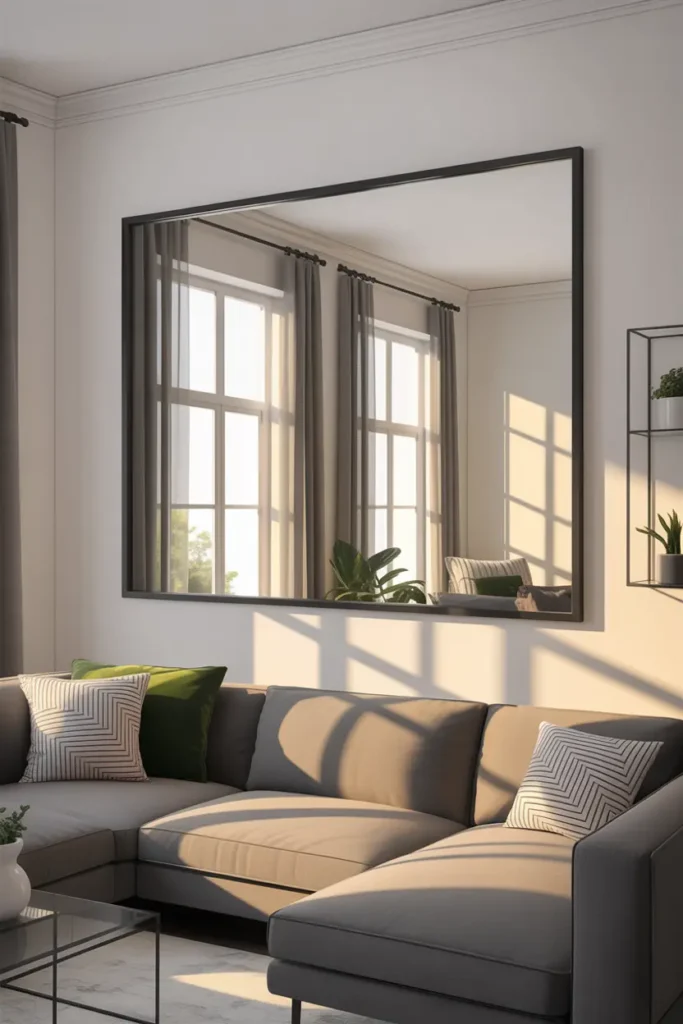
Secondhand stores are full of mirrors for $5–15 — people donate them constantly because they’re heavy to move. A large thrifted mirror with an interesting frame, leaned against a wall or hung across from a window, adds light, depth, and a focal point for almost nothing. Check the glass for foxing (dark spots) before buying; light aging is charming, heavy spotting is just damaged.
Paint dated gold or oak frames in matte black, white, or brass spray paint and they look current instantly. One big mirror beats three small ones for impact — go for the largest your wall and your car can handle.
Idea 4: The Cushion-and-Throw Transformation
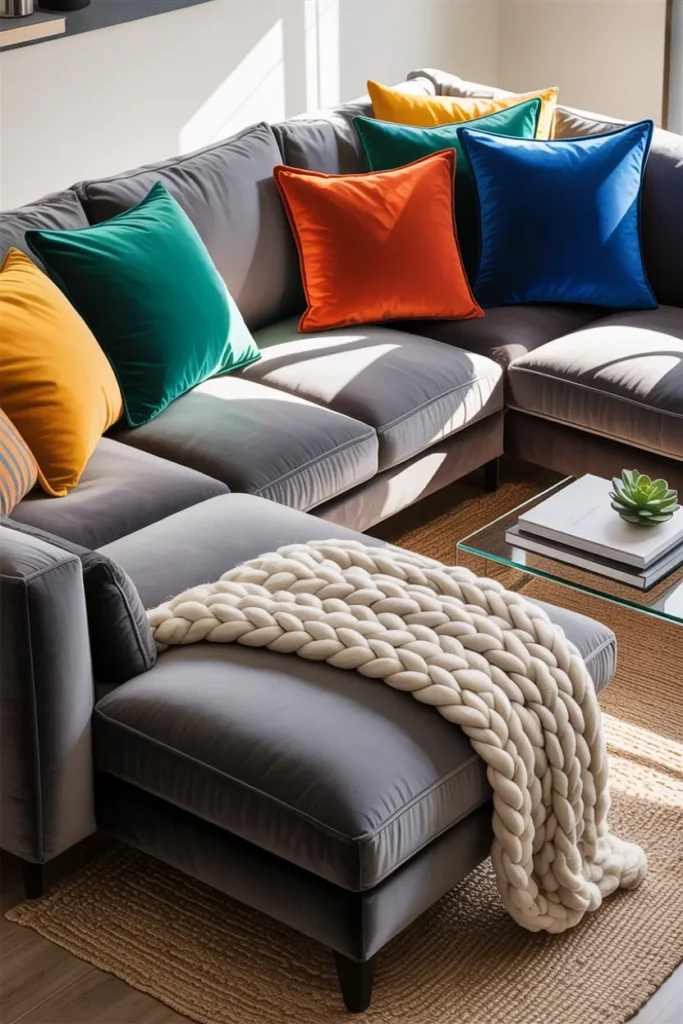
If your sofa is fine but tired, don’t replace it — redress it. Two new cushion covers ($8–12 each) in a current color or texture plus a throw blanket ($15–25) make a five-year-old sofa look intentional again. This is the highest ROI move in budget decorating: $40 transforms the largest object in the room.
Buy covers, not new cushions — the inserts you own are fine. Mix textures (linen + velvet, or cotton + knit) rather than matching exactly; the mix is what reads as styled. And size up: 20-inch covers on a standard sofa look plush, 16-inch look apologetic.
Idea 5: Style Your Storage Instead of Hiding It
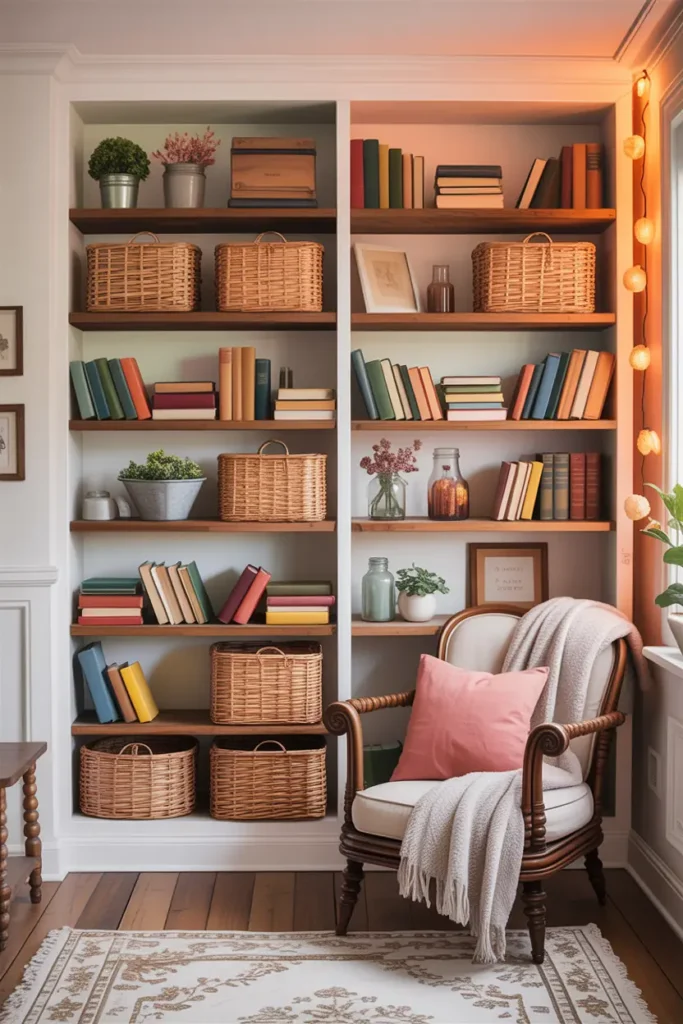
Open shelving and visible storage are free decor if you style them: group books by height, corral small items in baskets or boxes, leave breathing room. The rule is simple — if it’s visible, it’s decor, so make it look deliberate. Matching baskets ($6–10 each) turn a chaotic shelf into a designed one; they’re the cheapest visual upgrade for storage areas.
Edit before you organize: donate what you don’t use, then contain what remains. No basket system fixes too much stuff. And label baskets if multiple people use the room — labeled storage stays organized, unlabeled storage reverts to chaos in a week.
Idea 6: Lighting on a Shoestring
Thrifted lamps are the budget decorator’s secret weapon — $5–12 for solid, interesting bases that would cost $60+ new. The shade makes or breaks a thrifted lamp: replace stained or dated shades with simple drum shades ($12–18), and the lamp looks brand new. Always rewire if the cord is cracked ($8 kit, 20 minutes, basic safety).
Then the free part: swap every bulb to 2700K warm white. Cool bulbs make even nice rooms feel harsh; warm bulbs make thrifted finds glow. A $3 bulb upgrade changes a room’s mood more than a $100 accessory.
Idea 7: One Styled Corner
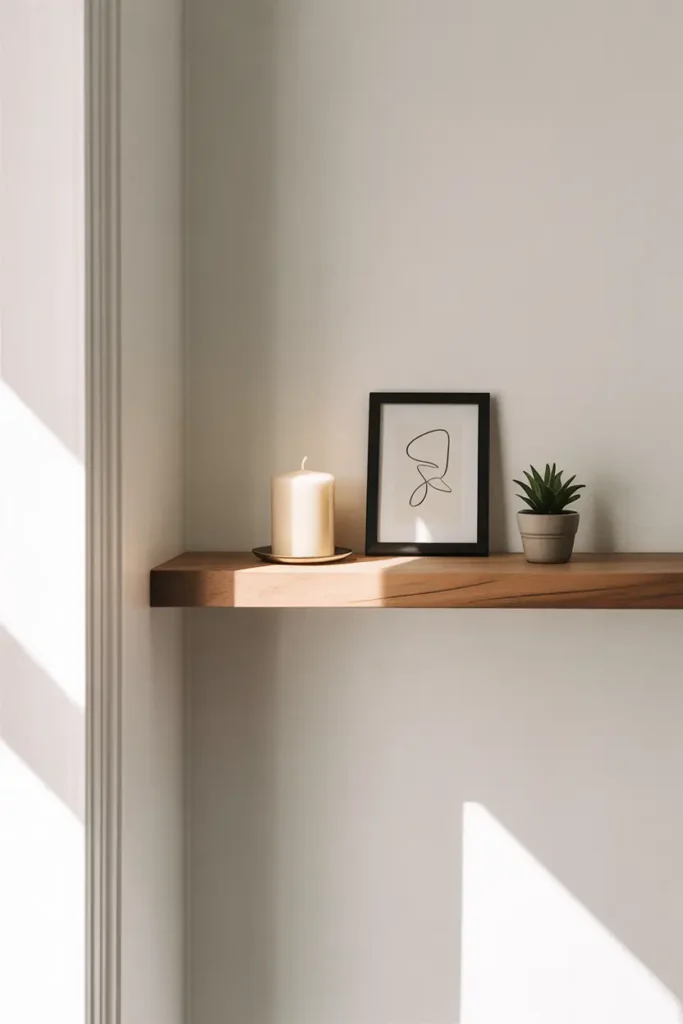
You don’t need to decorate the whole room — one beautifully styled corner changes how the entire space feels. The formula: something tall (floor lamp, tall plant, leaning mirror), something mid-height (small chair, side table, stack of books), and something low (basket, pouf, candle cluster). Three heights, one corner, done.
This works because the eye reads the styled corner as evidence of intention and extends that judgment to the whole room. It’s the same psychology as making your bed — one ordered zone suggests an ordered life. Cost: whatever you can assemble from what you own plus one thrifted piece.
Idea 8: Make the Big Piece the Star
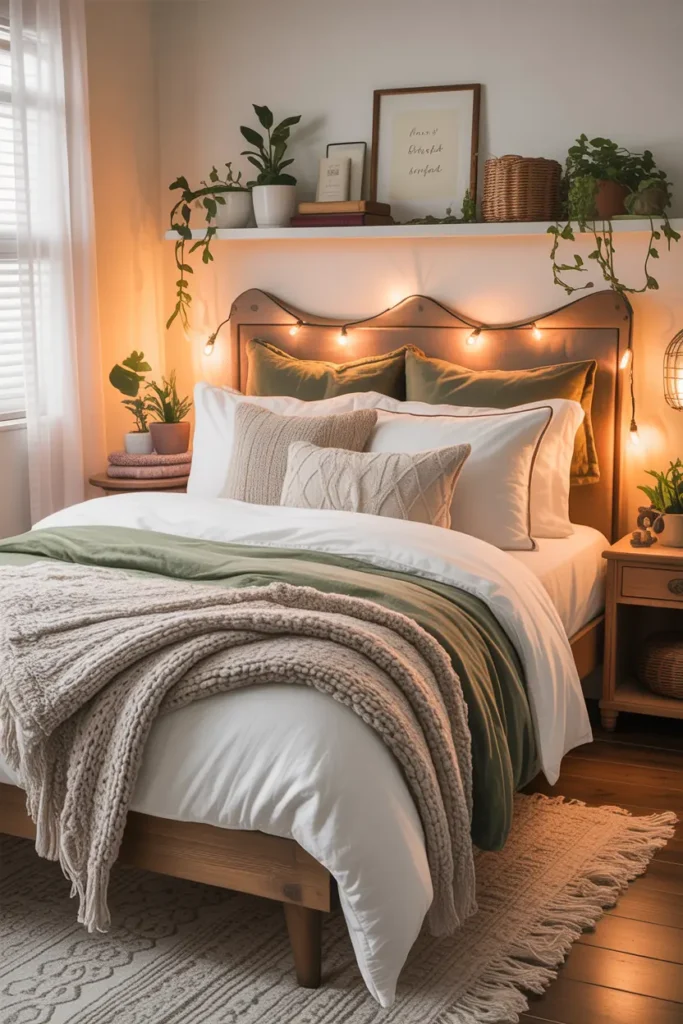
In any room, one piece dominates — the bed or the sofa — so make it look deliberate and let everything else support it. New bedding or cushion covers, a throw folded with care, pillows arranged (not piled): fifteen minutes of attention on the hero piece elevates the whole room. People judge rooms by their largest object; style that object and you’ve styled the room.
The supporting cast should be quiet: neutral walls, simple curtains, clear surfaces. When the star is styled and the background is calm, a budget room reads as designed. When everything competes, even expensive rooms read as cluttered.
Final Thought
Low-budget decorating isn’t about deprivation — it’s about allocation. Spend nothing on arrangement, a little on the high-impact moves (cushions, paint, lighting, one thrifted statement), and let editing do the rest. The rooms that look expensive on tiny budgets all share one thing: someone made decisions.
Pro Tips
- Make a thrift-store hit list and check weekly: large mirrors, solid wood frames, ceramic vases, interesting lamps. The good stuff goes fast — regulars get the finds.
- Keep a can each of matte black, white, and gold spray paint on hand. They unify almost any thrifted frame, vase, or lamp in minutes.
- Set a “one in, one out” rule while budget decorating. New finds should replace something, not accumulate — accumulation is how budget rooms become cluttered rooms.
- Before any purchase, ask: “Where exactly will this live?” If you can’t picture the spot, you don’t need the item — no matter how good the price.
FAQs
How can I decorate my room with almost no money?
Rearrange furniture (free), deep-clean and declutter (free), swap items between rooms (free), then spend tiny amounts on the highest-impact items: cushion covers, a throw, warm bulbs, and one thrifted statement piece. Under $50 transforms most rooms.
What should I buy first when decorating on a budget?
Textiles first — cushion covers, throw, rug — because they cover the largest visual area per dollar. Then lighting (warm bulbs, a thrifted lamp). Then wall art. Furniture last; style what you own before replacing it.
Is thrift store furniture good quality?
Often better than new budget furniture — older pieces were frequently built with solid wood and real joinery. Check for sturdiness (wiggle everything), smell (mustiness can be permanent), and upholstery condition. Wood pieces are the safest bets.
How do I make cheap decor look expensive?
Coordination and editing: a tight color palette, matching finishes (paint those frames!), clear surfaces, and good lighting. Cheap items in a coordinated, well-lit, uncluttered room look intentional — and intentional reads as expensive.

Ahsan Yousaf is a home decor writer and enthusiast behind HowDecor. He shares practical, budget-friendly decorating ideas — from colour schemes and small-space solutions to seasonal makeovers — for real homes, not showrooms.