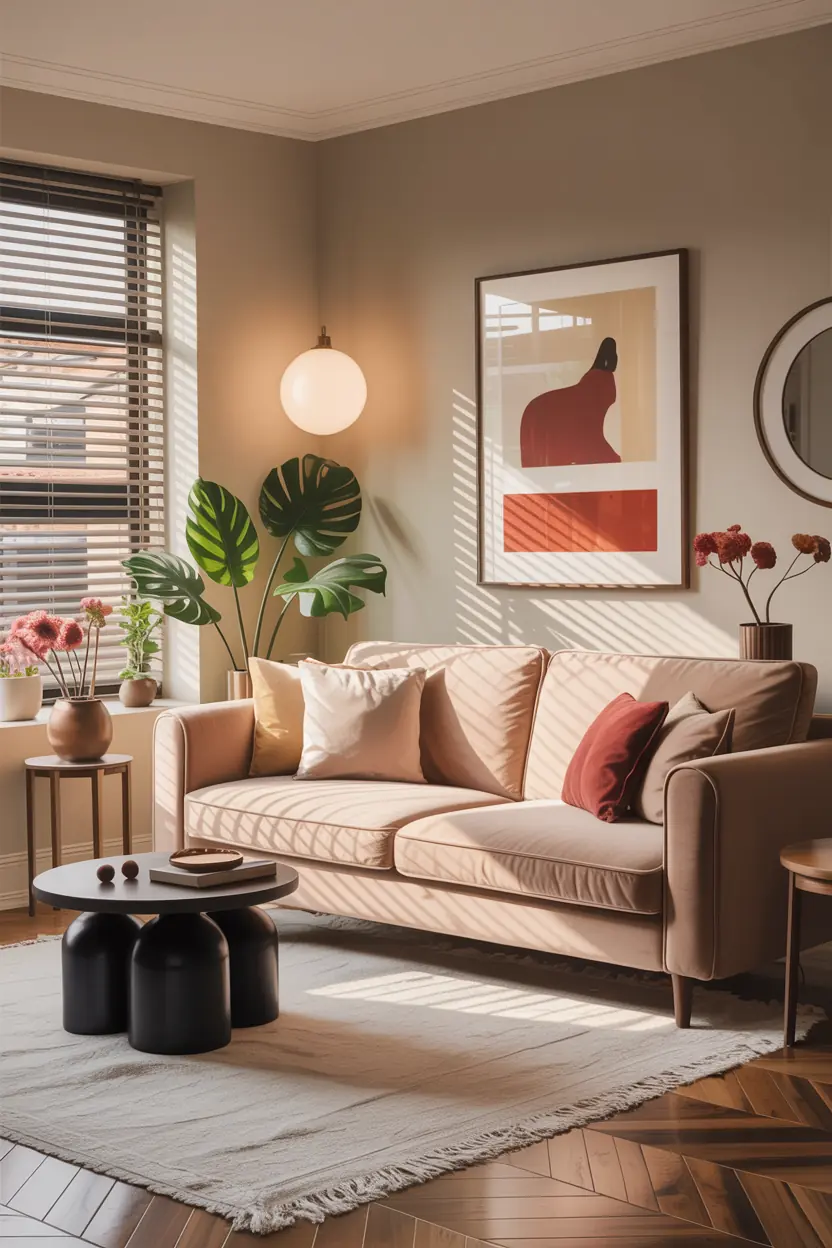
Living room trends used to arrive in truckloads — remember when everyone suddenly needed a chevron rug and a pallet wall in the same month? 2026 is the year the pendulum settled. The look now is quieter and more confident: warm minimalism, honest materials, and rooms designed around how people actually live instead of how photos perform. Nothing here will embarrass you in three years, which is the real test of a trend.
Below are the ten moves defining living rooms right now — each one practical, each one built to last past the trend cycle.
1. Warm Neutral Color Palettes
The gray era is officially over. 2026’s neutrals run warm: oatmeal, camel, mushroom, warm white, soft clay. These tones flatter skin, wood, and evening light in a way cool grays never did, and they layer beautifully — three warm neutrals in one room look rich, where three cool ones looked flat.
The update for existing rooms is simple: if your walls are cool gray, warm them with textiles rather than repainting. Camel throw, oak-toned accents, brass instead of chrome — warm accessories pull a cool room toward the current palette for a fraction of a repaint. New painters: sample warm whites in your actual light before committing; they shift enormously between morning and evening.
2. Comfortable Statement Sofas
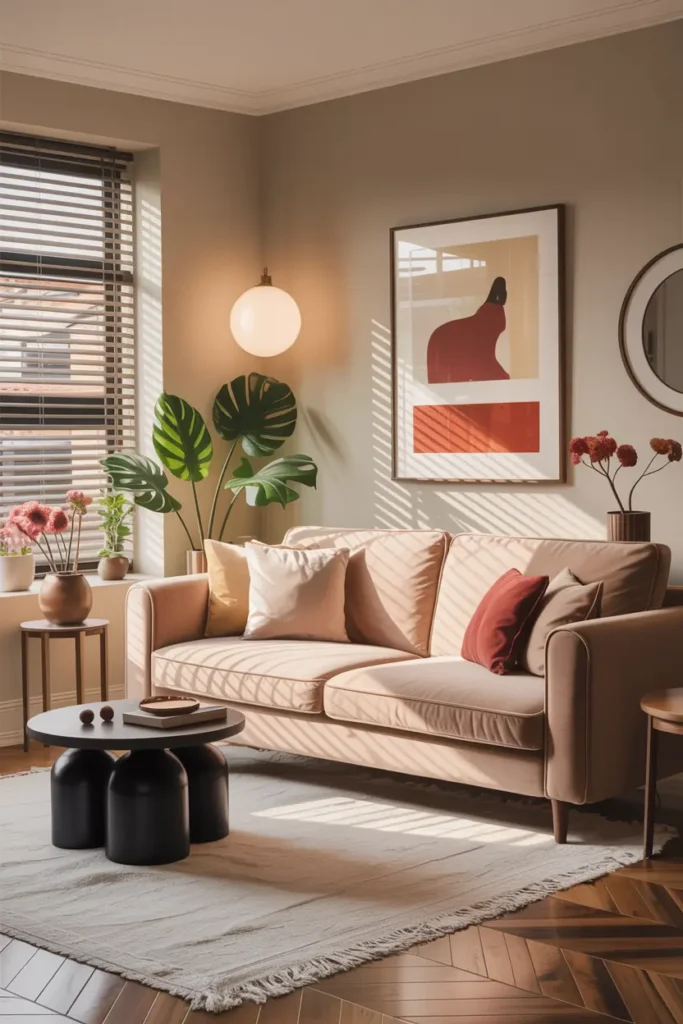
The 2026 sofa has opinions — curved backs, deep low seats, bouclé or performance velvet upholstery — but it also has to pass the Sunday-afternoon test. The trend is “sculptural comfort”: pieces with a distinctive silhouette that you can genuinely sink into. Seat depth of 23–25 inches is the current sweet spot for lounging without swallowing petite sitters.
If a new sofa is not in the budget, steal the look: a curved silhouette can be suggested with a rounded throw draped over one arm, and bouclé texture arrives via two cushion covers. The statement is in the shape language, and shape language is cheaper than furniture.
3. Layered Lighting for Mood
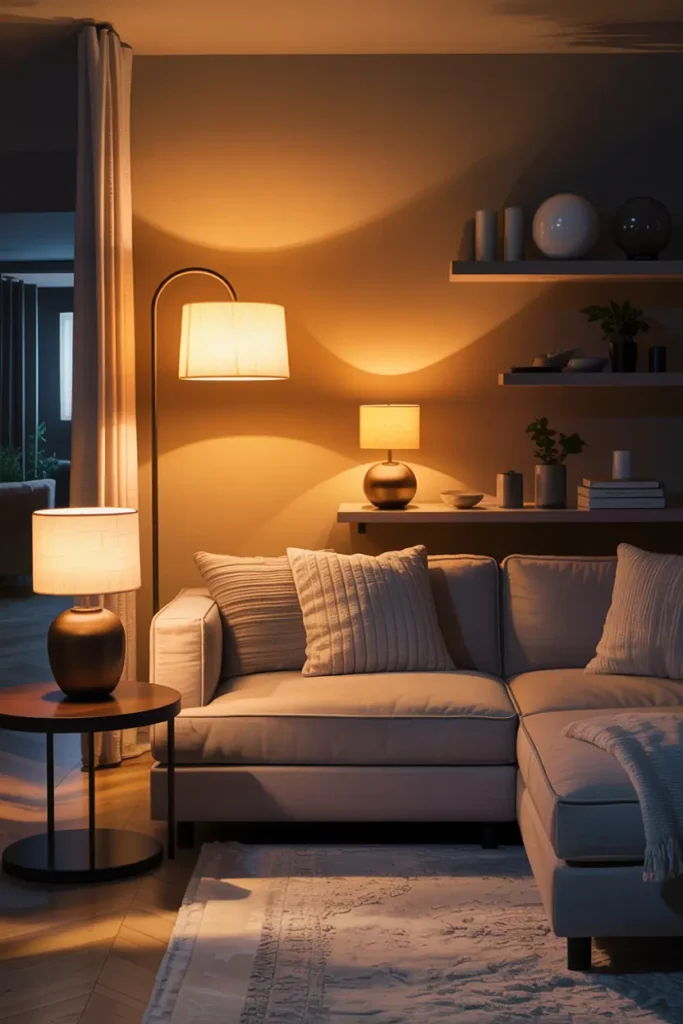
Single-source overhead lighting is the fastest way to date a room. The 2026 standard is three layers minimum: ambient (a dimmable floor lamp or pendant on a warm 2700K bulb), task (a reading lamp exactly where you sit), and accent (LED strips behind shelving, a small lamp in a dark corner, candles). Each layer on its own switch or smart control.
The trend-within-the-trend is sculptural fixtures as art — paper lanterns, alabaster table lamps, oversized rattan pendants. One artistic fixture plus two quiet supporters is the ratio. And dimmers: the cheapest luxury in lighting, transforming a room from daytime functional to evening cinematic for the cost of a switch.
4. Textured Rugs and Fabrics
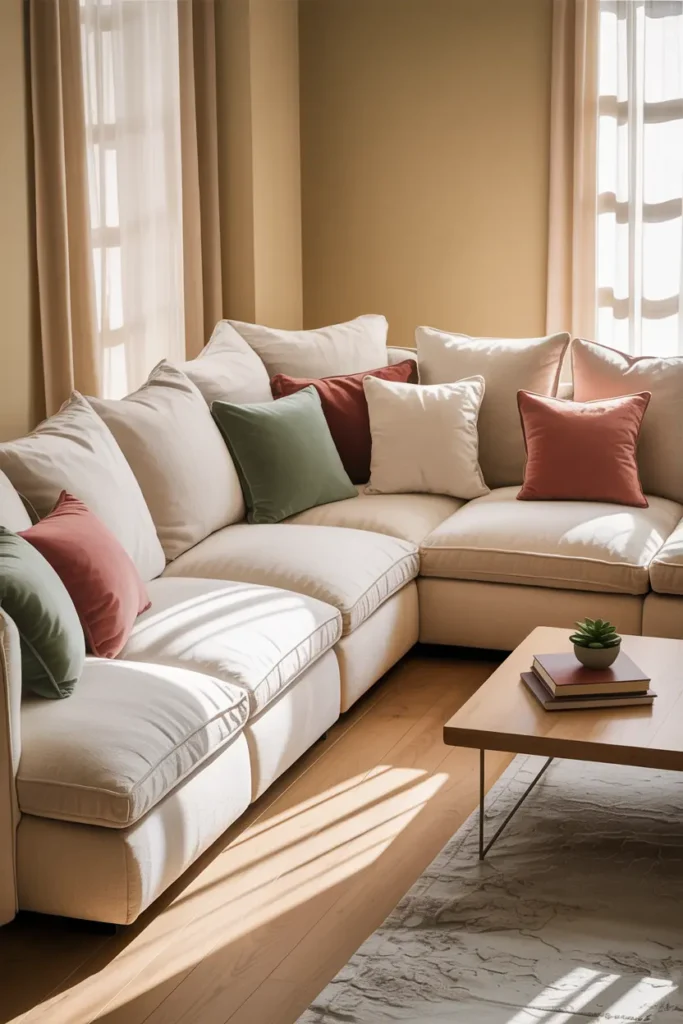
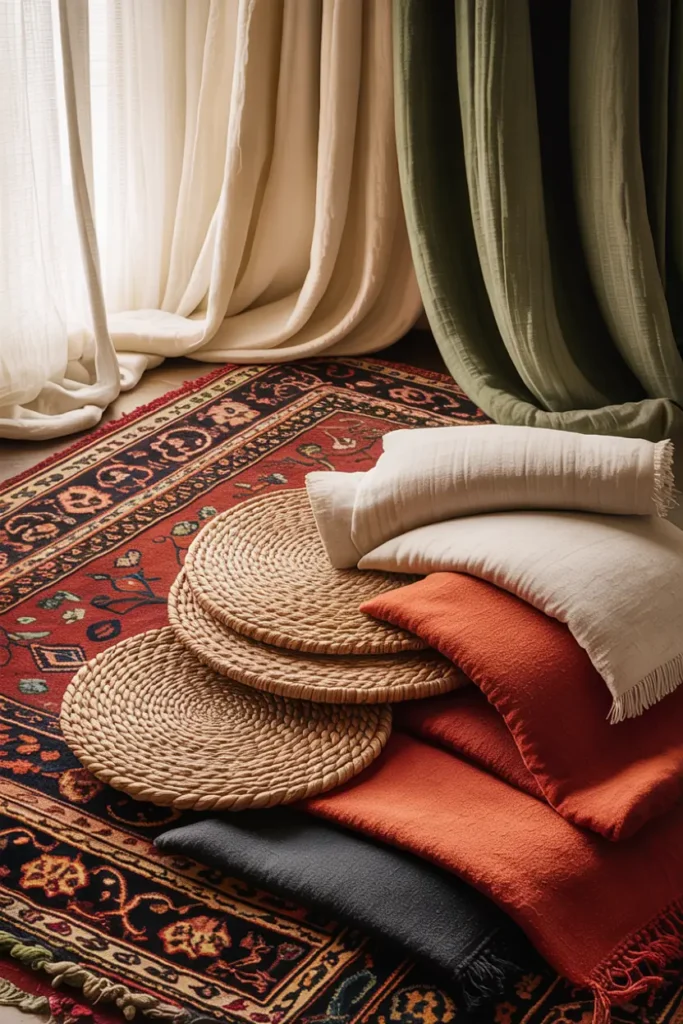
Flat is out; touchable is in. High-pile wool, hand-knotted texture, chunky weaves, and layered flat-weaves over carpet are everywhere in 2026 living rooms. Texture does the visual work that bold color used to do — it gives the eye somewhere to go in a calm palette.
The practical version: if a new rug is too much, layer. A flat-weave jute base with a smaller soft rug on top gives you the layered look designers charge for, at a fraction of one statement rug’s price. And in the washable-rug era, light colors are finally low-risk — choose the cream rug; you can actually clean it now.
5. Minimal Yet Meaningful Wall Decor
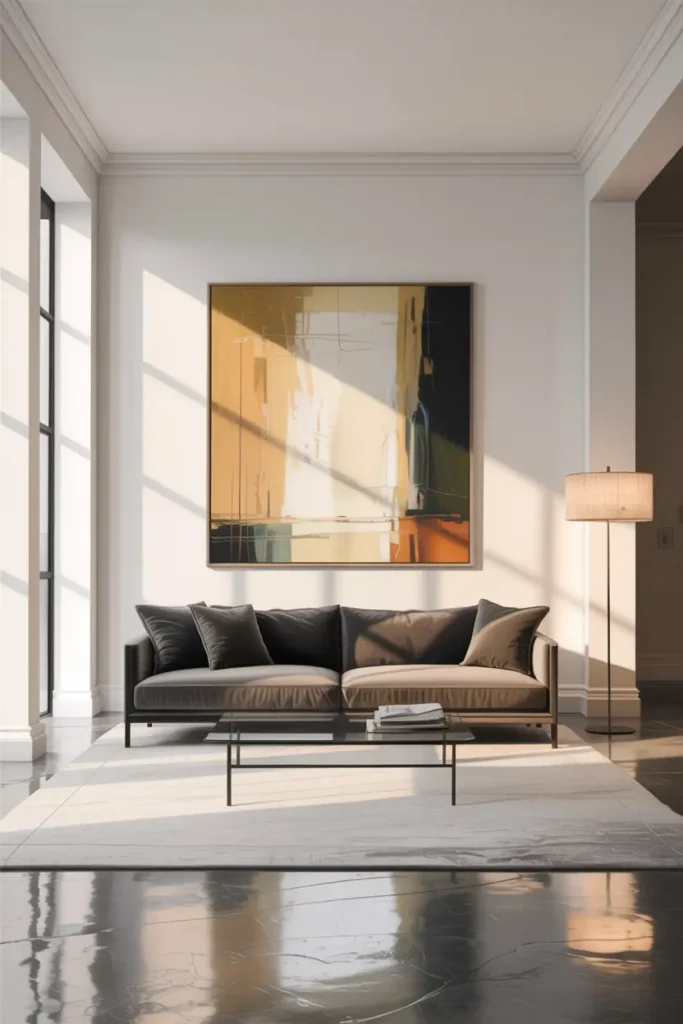
Gallery walls have given way to the single strong gesture: one oversized abstract, one dramatic mirror, one beautifully styled shelf. The 2026 wall is edited — negative space is part of the design, and each piece gets room to be seen. This is also the cheapest “trend” to adopt, since it mostly involves taking things down.
When you do hang, go big or go home: art should span about two-thirds the width of the furniture below it, centered at 57–60 inches. One 40×50 canvas beats four 12×16 frames in every contemporary room. Choose work with personal resonance — in a minimal room, meaningless decor has nowhere to hide.
6. Natural Elements and Wood Accents
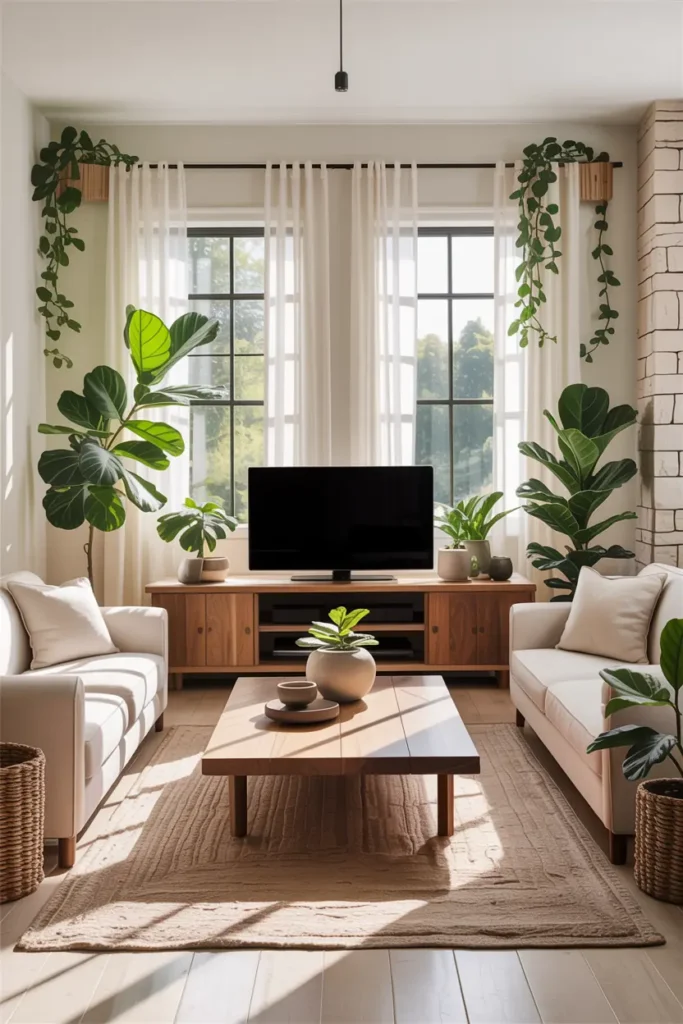
Biophilic design grew up in 2026 — less “jungle of small pots,” more architectural nature. One sculptural tree (olive, fiddle-leaf) in a beautiful pot. Real wood with visible grain — white oak, walnut — in at least one significant piece. Stone with character: travertine, honed marble, raw-edge details.
The materials should be honest: real wood, real stone, real plants. A single genuine oak side table outweighs a room of wood-look laminate, because the eye registers authenticity even when the mind cannot articulate it. If the budget allows one upgrade, make it the material your hands touch most — the coffee table top or the side table by your chair.
7. Open and Clutter-Free Layout
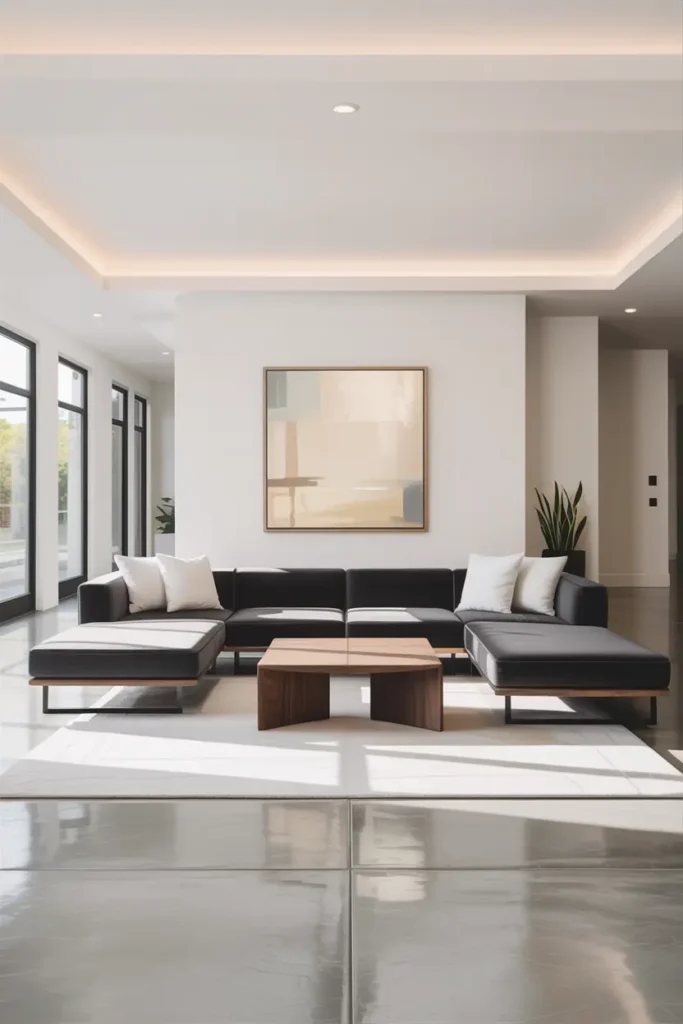
The open layout trend matured into something smarter: defined openness. Instead of one undifferentiated great room, 2026 living rooms use rugs, lighting zones, and low open shelving to carve distinct areas — conversation zone, reading corner, media spot — without walls. Each zone has a purpose; nothing is leftover space.
Circulation is the invisible design element: 30–36 inches for main paths, furniture floated to create the zones rather than hugging walls. And the clutter-free part is maintenance, not purchase — closed storage for 80% of stuff, curated display for 20%. Openness is a habit more than a floor plan.
8. Accent Chairs with Personality
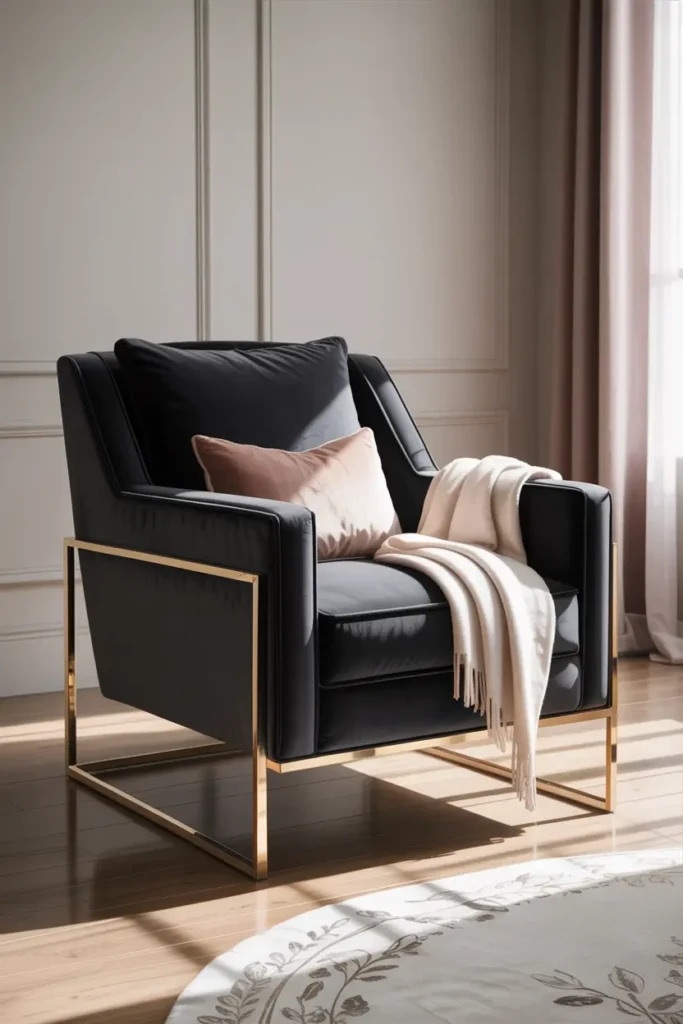
The accent chair is 2026’s designated wildcard — the one piece allowed to be weird. Sculptural swivels, vintage finds, bold upholstery, rattan statements: the chair is where the room’s personality concentrates, which lets everything else stay calm. Position it well (angled into conversation, catching good light) and it becomes the room’s signature.
One chair, one personality — two competing statements divide attention. Sit-test before buying; the most photogenic chair that nobody uses is a failed purchase. Thrift and vintage are ideal hunting grounds here, since character is the whole point and age adds it free.
9. Personal Touches That Tell a Story
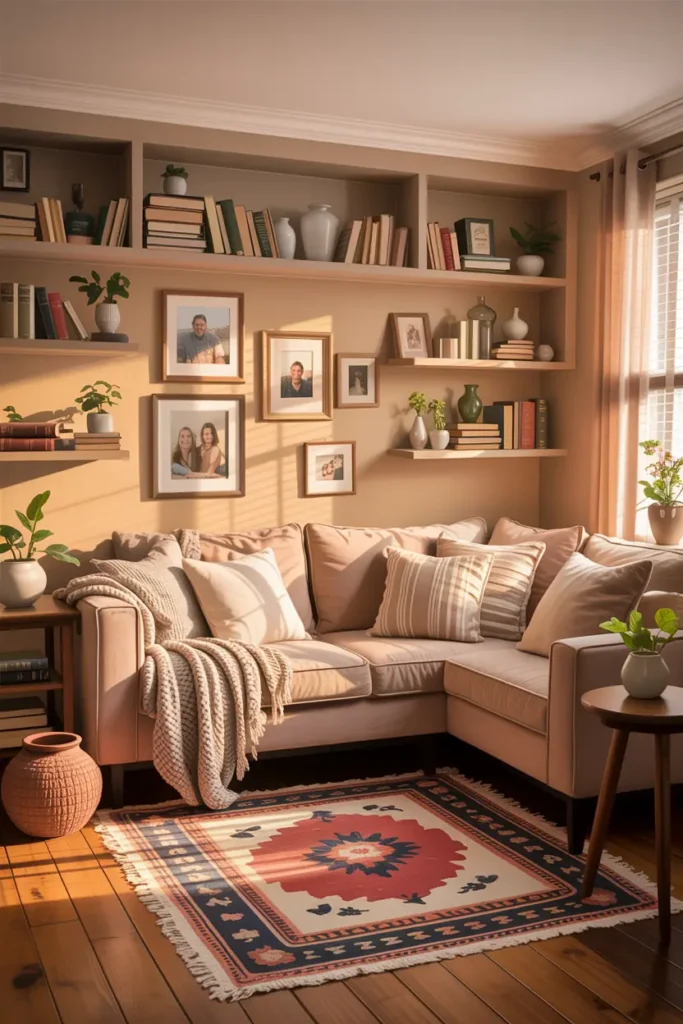
The counter-trend to all this polish is the most important one: rooms should contain evidence of their humans. The books actually read, the ceramic from the trip, the framed photo that matters — 2026’s best living rooms mix high design with deep personal. This is what separates a styled room from a showroom.
Style the personal deliberately: odd-numbered groups, varying heights, breathing room around each object. Five meaningful things in a calm room say more than fifty accessories in a busy one. And rotate seasonally — swapping a few objects refreshes the room for free and keeps it feeling alive rather than arranged.
10. Balance Between Style and Comfort
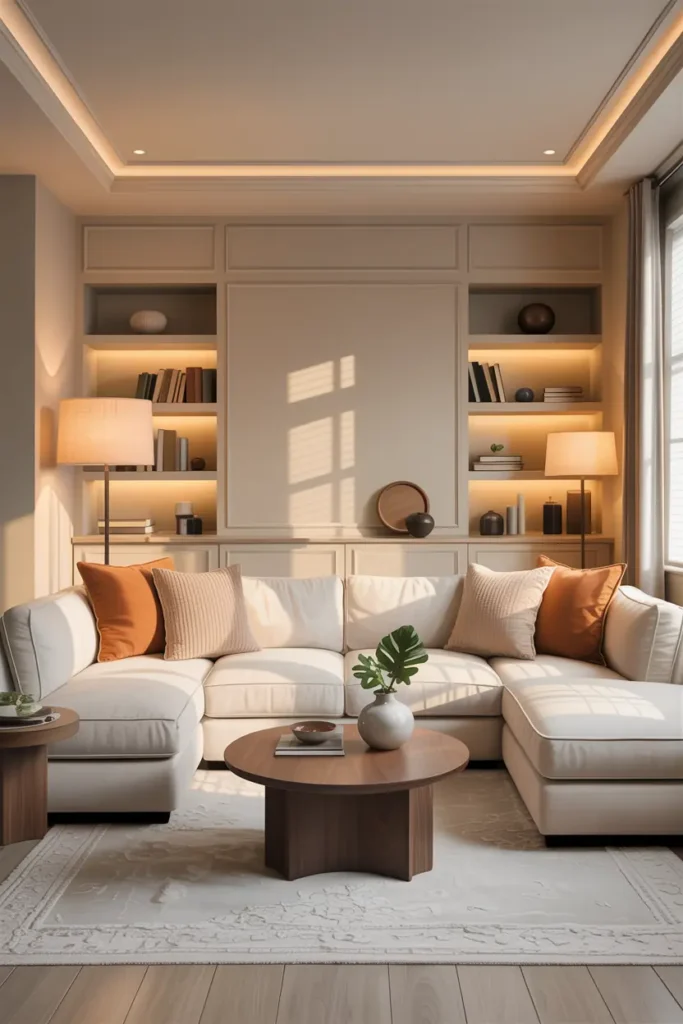
The meta-trend beneath all nine above: 2026 killed the trade-off between beautiful and livable. Performance fabrics that survive kids and pets, washable rugs in light colors, deep sofas with tailored lines — the market finally delivers both. Design your room for your actual life, not an imagined one.
The test for every choice: would this survive a normal Tuesday? If the white bouclé chair cannot handle your dog, it is not the right white bouclé chair — get the performance-fabric version. Comfort is not the opposite of style anymore; in 2026, it is the proof of it.
Final Thoughts
The 2026 living room is warm, textured, honest about its materials, and unapologetically personal. None of these trends demand a full renovation — most are achievable with textiles, lighting, editing, and one or two considered purchases. The through-line is confidence: fewer, better choices, made for real life. That is a trend with genuine staying power.
Pro Tips
- Trend-proof with the 80/20 rule: keep 80% of the room timeless (neutrals, quality basics) and let 20% carry the trends (cushions, art, one chair). Refresh the 20% as tastes evolve.
- Buy the light before the lamp: choose warm 2700K dimmable bulbs first, then fixtures. The bulb determines the mood more than the shade.
- One vintage piece minimum: a single aged or vintage item keeps a new room from feeling like a showroom. Patina is the antidote to sterile.
- Photograph in black and white: if the room’s composition holds without color, your layout and texture are solid — the trends are just garnish.
FAQs
What are the biggest living room trends for 2026?
Warm neutrals replacing gray, curved comfortable furniture, layered warm lighting, rich textures, natural materials (oak, stone), edited single-statement walls, and personal meaningful decor. The overall direction is warm minimalism designed for real life.
Is gray really out for living rooms?
Cool gray is fading, but warm gray (greige) remains a solid neutral. If your room is cool gray, warm it with camel, cream, and wood-toned textiles rather than repainting — the undertone shift is what matters.
How do I update my living room for 2026 on a small budget?
Textiles and lighting: warm-toned throws and cushions, a textured rug (or layered rugs), warm dimmable bulbs, and editing down to one strong wall piece. Under $300 transforms most rooms.
Will these trends look dated in a few years?
The ones built on timeless principles — warm neutrals, quality materials, good lighting, personal meaning — will not. The more novelty-driven details (specific silhouettes, trendy finishes) live in the 20% you can refresh cheaply.

Ahsan Yousaf is a home decor writer and enthusiast behind HowDecor. He shares practical, budget-friendly decorating ideas — from colour schemes and small-space solutions to seasonal makeovers — for real homes, not showrooms.