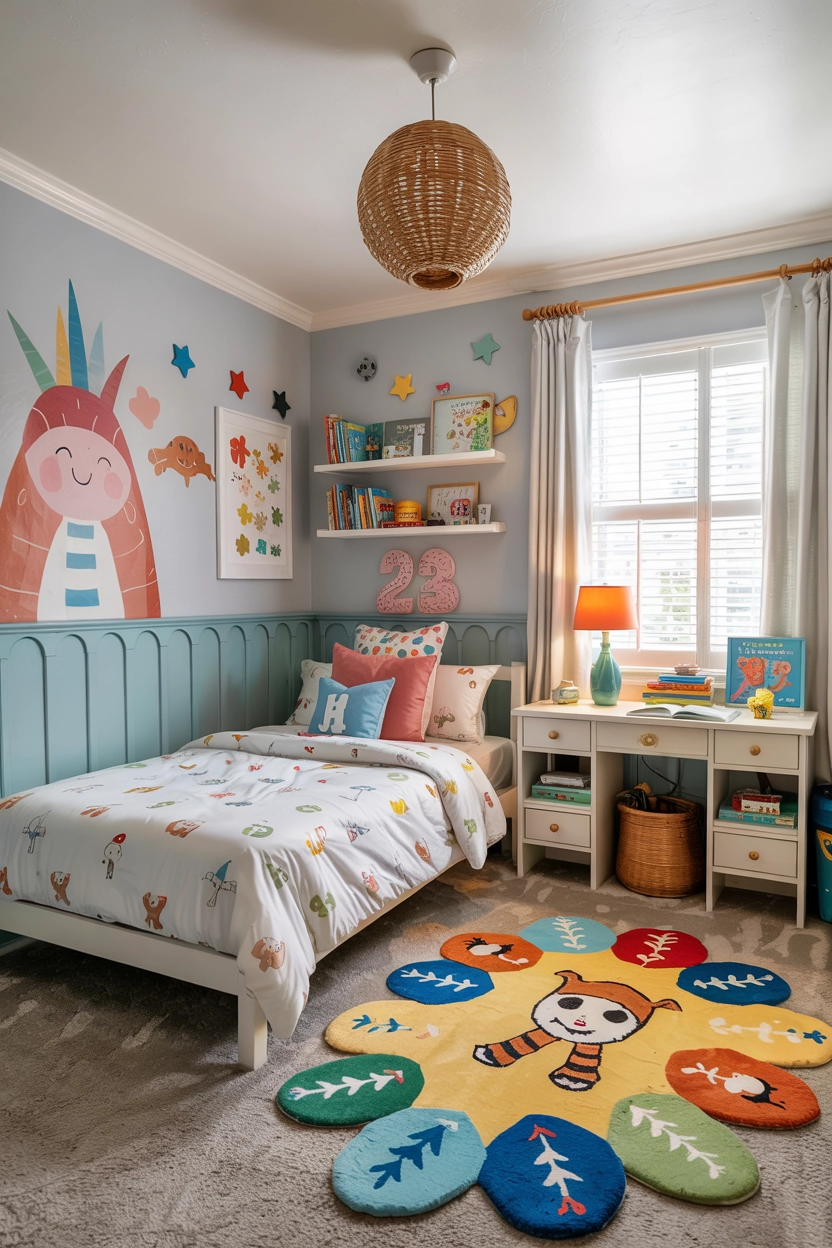
Your six-year-old has never once commented on your throw-pillow arrangement. But she will remember, for years, the little reading corner with the light that was just hers, and the wall where her paintings hung in real frames like they belonged in a gallery. That’s the thing about kids’ rooms: the decor that matters most to them is rarely the expensive stuff.
These ten ideas are about building a bedroom that’s fun and colorful without being chaotic — a room that can handle glitter glue today and homework in five years. Most of them cost less than a family pizza night, and every one of them treats your child like the actual resident of the room, not a guest in your design project.
1. Choose a Theme That Grows With Your Child
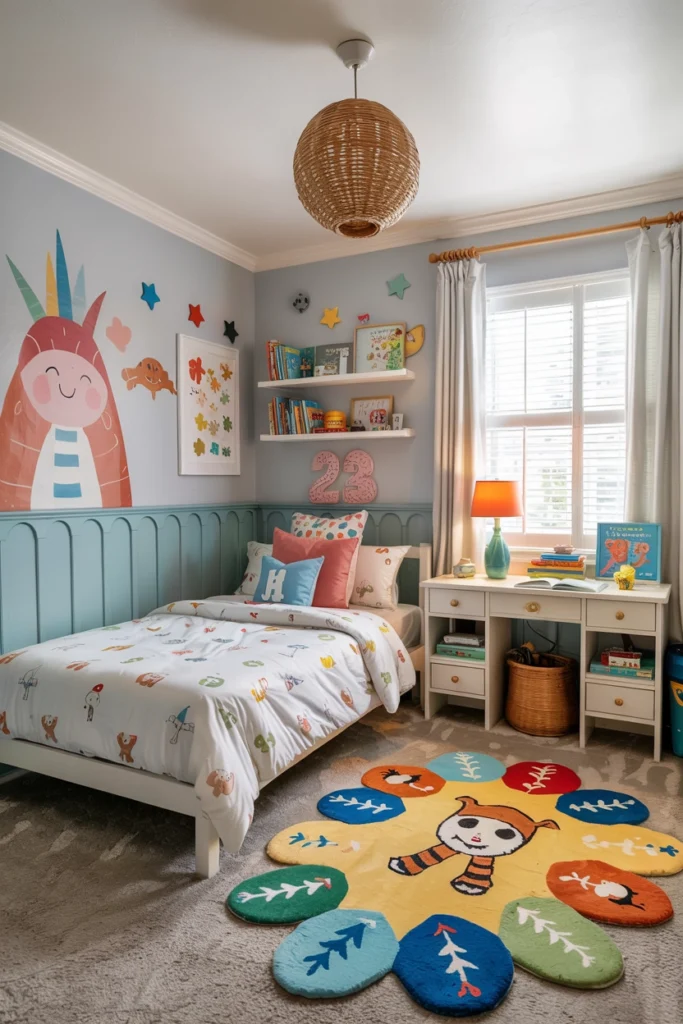
The biggest mistake parents make is picking a theme too specific and too babyish — the full dinosaur-mural room a four-year-old outgrows by seven, leaving you repainting the whole thing. Instead, choose a broad, flexible theme: “ocean” instead of “baby shark,” “space” instead of one specific cartoon, “jungle” instead of a single character. Broad themes absorb new interests instead of expiring with them.
Keep the permanent elements (walls, bedding, furniture) in the broad theme and put the specific obsessions in the cheap, swappable layer — posters, pillowcases, a $10 duvet cover from a discount store. When the dinosaur phase ends and the soccer phase begins, you’re swapping $30 of textiles, not repainting. A theme that grows with your child should survive at least five years without a full redo.
2. Use Color Boldly but Thoughtfully
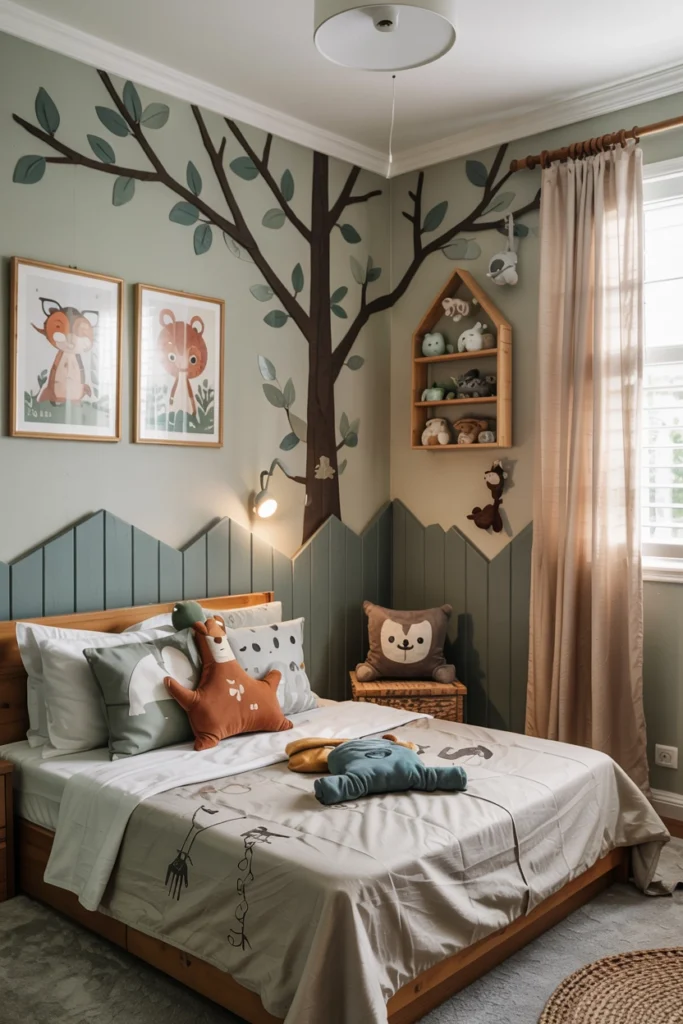
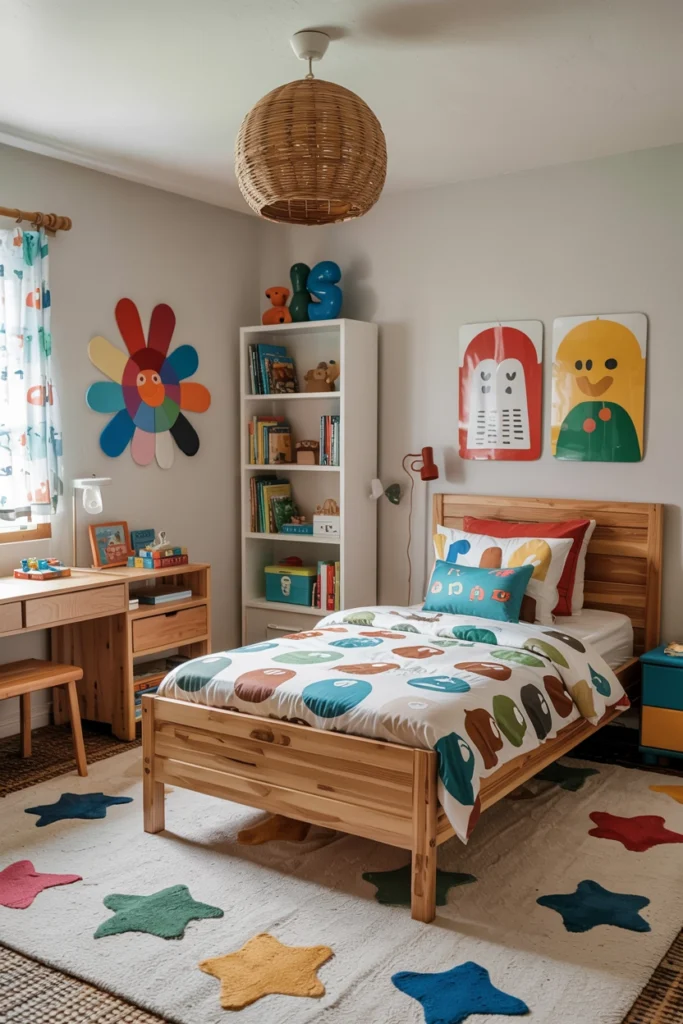
Color is the most powerful tool in a child’s bedroom, and kids genuinely respond to it — a beige kids’ room is a missed opportunity. But bold doesn’t mean every wall a different neon. Pick one hero color for impact (a single accent wall, or colorful bedding against white walls), then repeat it in two or three smaller doses around the room so it feels intentional rather than random.
A gallon of cheerful paint ($25–$35) on one wall delivers more joy-per-dollar than almost anything else you can buy. If paint feels too permanent, try it in textiles first: a $20 colorful duvet cover or a $15 rug lets you test how the color feels at 7am before committing. And involve the child in choosing — they’re the ones who have to fall asleep surrounded by it.
3. Create a Dedicated Reading Nook Just for Them
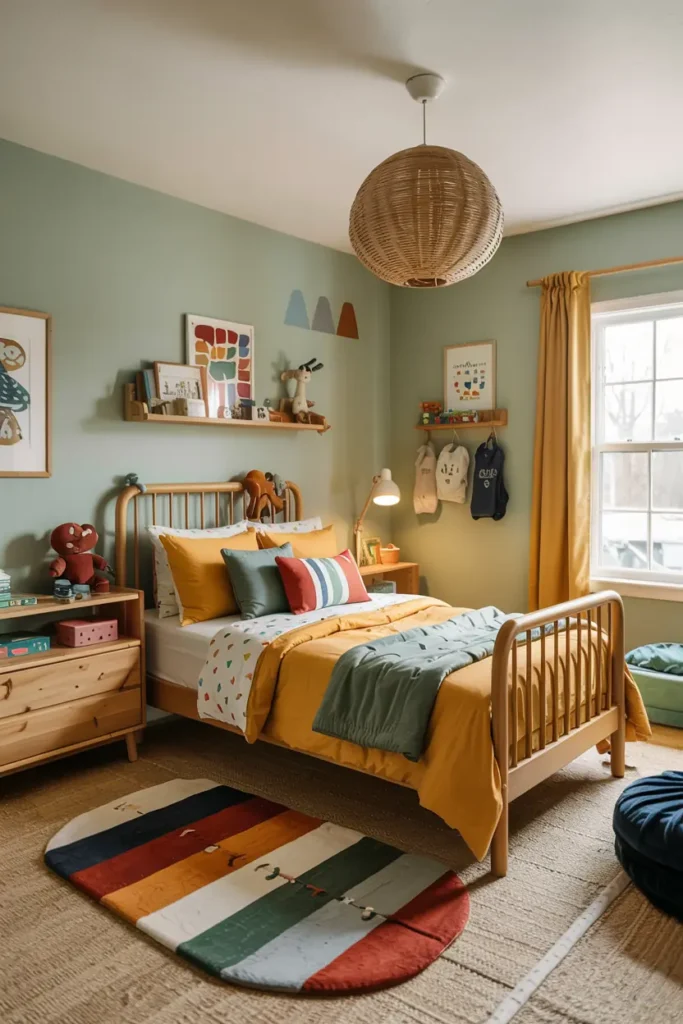
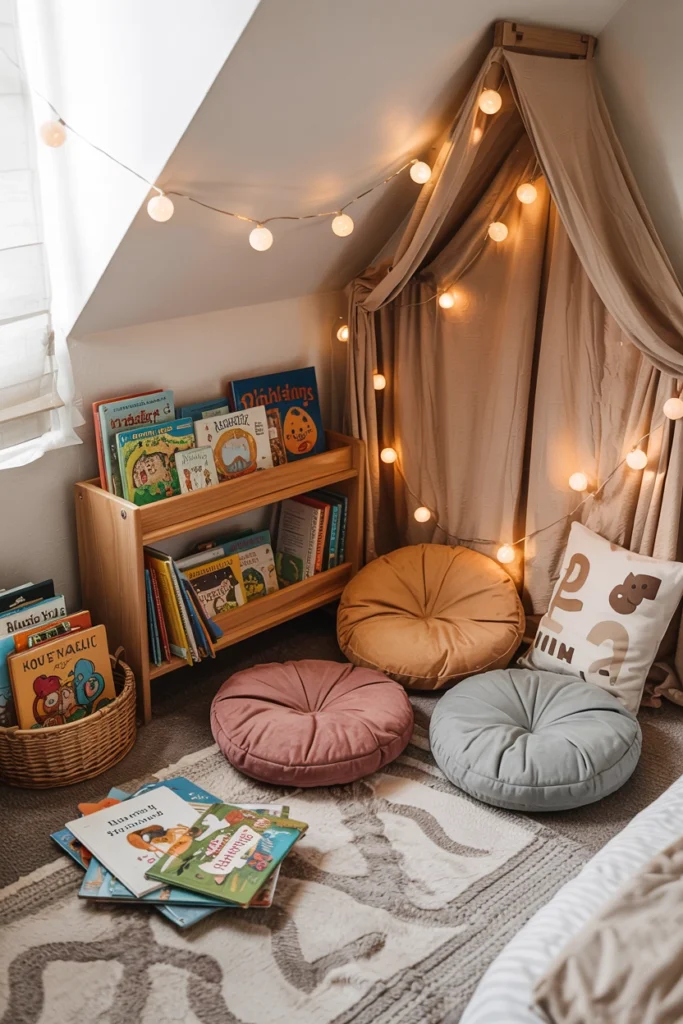
There’s something magical about a child having a small, cozy space within their bedroom that belongs entirely to them. It doesn’t need much: a corner, a floor cushion or beanbag ($20–$35), a small bookshelf or wall-mounted book ledges at their eye level, and a warm light they can switch on themselves. Front-facing book ledges ($12–$18 each) work brilliantly because kids choose books by their covers.
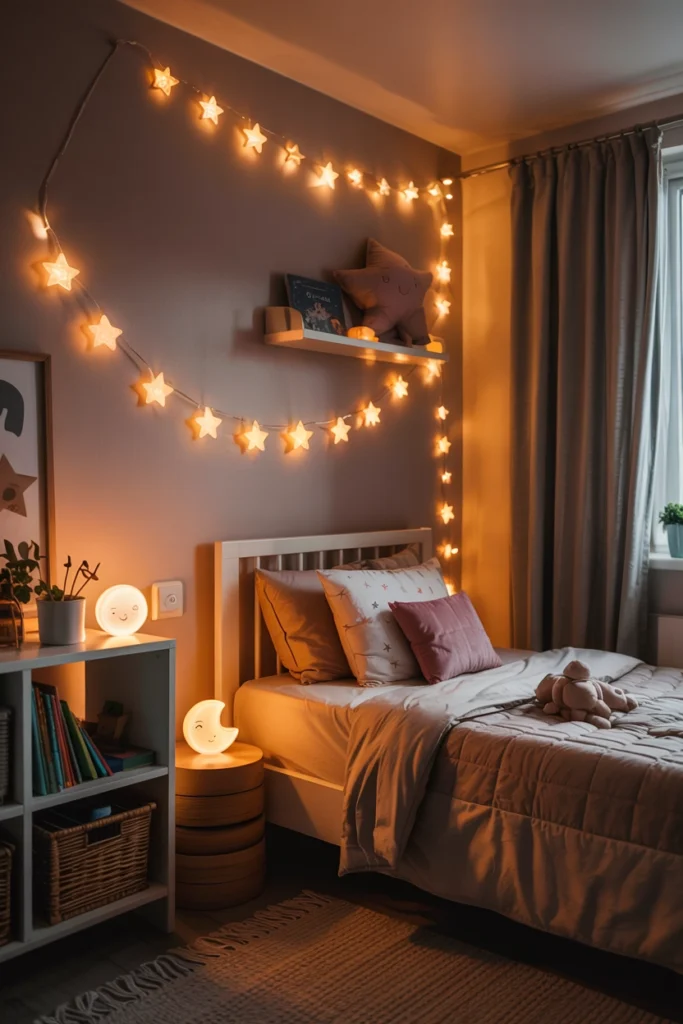
Keep the nook at child scale — an adult armchair in the corner makes it your nook, not theirs. A string of warm fairy lights ($8–$12, battery-operated so there are no cords to worry about) turns it into the most coveted three square feet in the house. This is the corner they’ll photograph in their memory decades from now; make it theirs completely.
4. Make the Walls Tell a Story
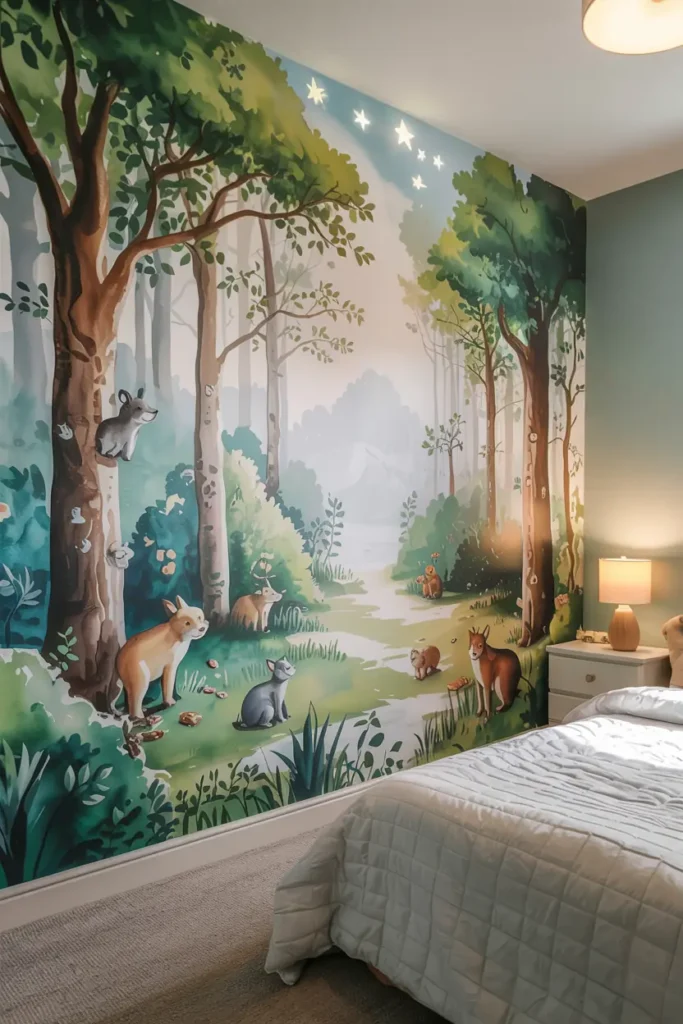
Kids’ bedroom walls are the one place in the house where the decorating rules genuinely relax. Removable wall decals ($15–$30 for a full set) go up in an afternoon and peel off cleanly when tastes change — stars, animals, maps, rainbows. A world map decal doubles as decor and a slow-burn geography lesson every time they stare at it before sleep.
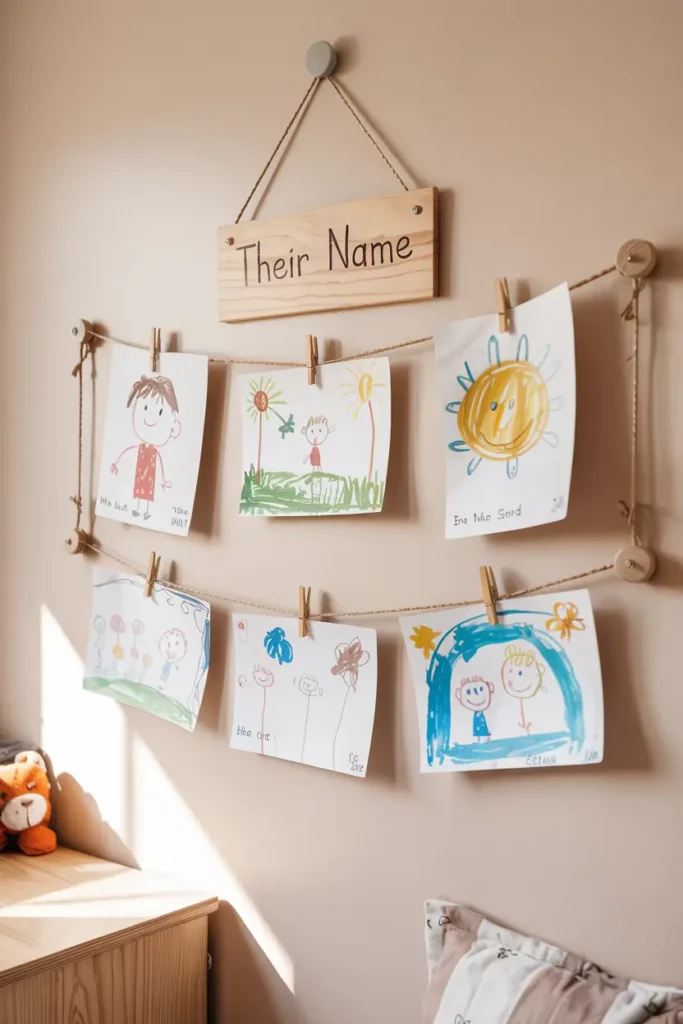
For a bigger statement, try a single wall of peel-and-stick wallpaper in a playful pattern ($25–$40 a roll; most kids’ rooms need two rolls for one wall). Or go handmade: a clothesline of their own artwork strung across one wall with mini clothespins costs under $10 and means more to them than any purchased art. The rule for kids’ walls: if it delights them and comes off cleanly later, it belongs.
5. Invest in Flexible and Grow-With-Them Furniture
The temptation is to buy very themed or very childish furniture — the race-car bed, the princess vanity — and it’s almost always a mistake. Kids outgrow novelty furniture fast, and it has zero resale value. Instead, buy simple, sturdy, neutral furniture sized to last: a real twin or full bed frame (not a toddler novelty), a proper desk chair, a dresser they’ll still use at fourteen.
The grow-with-them pieces worth spending on: a bed with under-bed storage drawers (reclaims the most wasted space in the room), a height-adjustable desk ($80–$120) that works at six and at sixteen, and a dresser with deep drawers rather than a cute-but-tiny kids’ one. Put the fun in the $15 lamp and the $20 bedding — never in the $300 bed frame.
6. Use Rugs to Define Zones and Add Softness
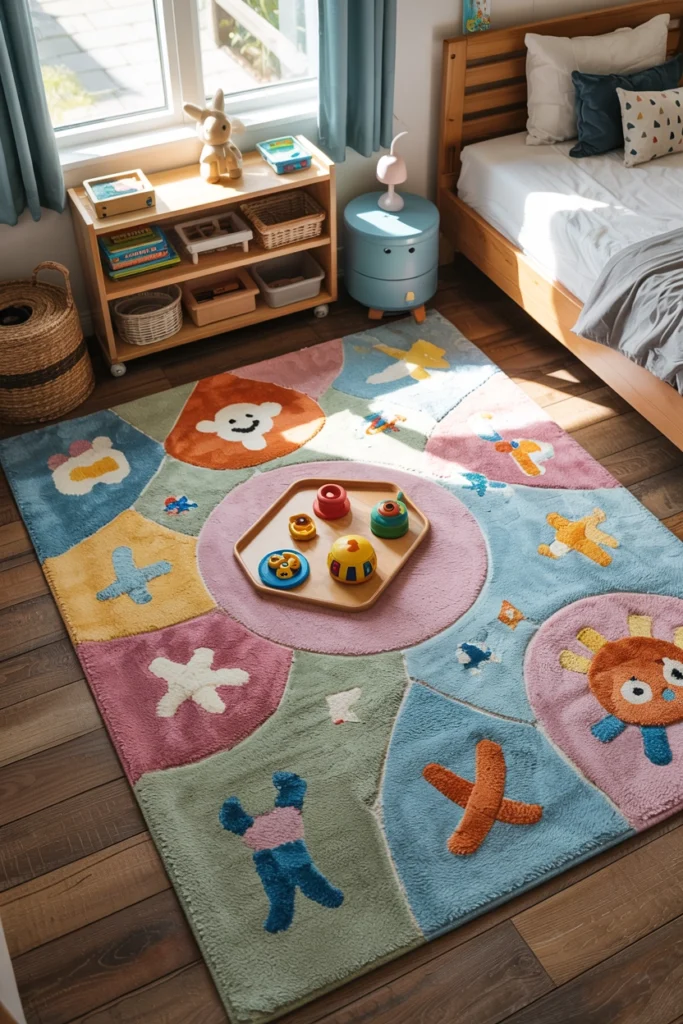
In a child’s bedroom, the floor is genuinely one of the most important surfaces — kids play, read, and build entire worlds down there. A rug defines the play zone, softens it, and (crucially) dampens the sound of all of it for everyone else in the house. A 5×7 washable rug ($40–$70) is the sweet spot: big enough for a play mat area, small enough to fit in a home washing machine.
Washable is non-negotiable — look for machine-washable flat-weave rugs and skip anything with a high pile that traps glitter, crumbs, and lost LEGO pieces forever. A round rug ($30–$50) works beautifully to mark a reading corner as its own little territory within the room. Darker patterns hide stains; light solid colors in a kids’ room are a brave choice you’ll regret by month two.
7. Light the Room With Warmth and Whimsy
Kids’ bedrooms need lighting that does two very different jobs: bright and cheerful for daytime play, soft and dim for the wind-down to sleep. One overhead light can’t do both. Add a warm bedside lamp they control themselves ($15–$25 — the independence matters as much as the light), plus something whimsical: star-projector night lights ($12–$20), paper lantern pendants, or battery fairy lights in a jar.
Keep all bulbs at 2700K warm white — cool daylight bulbs in a bedroom make it feel like a classroom and fight against sleepiness. A $10 plug-in dimmer on the main lamp lets you fade the room down as part of the bedtime routine, which genuinely helps younger kids transition. And put the whimsical light on a timer so it switches itself off after they fall asleep — one less thing to remember at midnight.
8. Display Their Art and Achievements on the Walls
One of the most meaningful — and most affordable — things you can do in a child’s bedroom is dedicate real wall space to their own creations. A $10–$15 set of clip frames or a simple art wire with clips turns their paintings into a rotating gallery, and the message it sends is enormous: what you make matters enough to frame. Swap the pieces seasonally together; make it a ritual.
Beyond art, display what they’re proud of: the swimming certificate, the first chapter book they finished, the photo from the school play. A small cork board ($8–$12) at their height gives them control over their own display — pinning and rearranging it themselves is half the fun. This wall costs almost nothing and it’s the one they’ll remember showing their friends.
9. Add Storage That Works as Decor
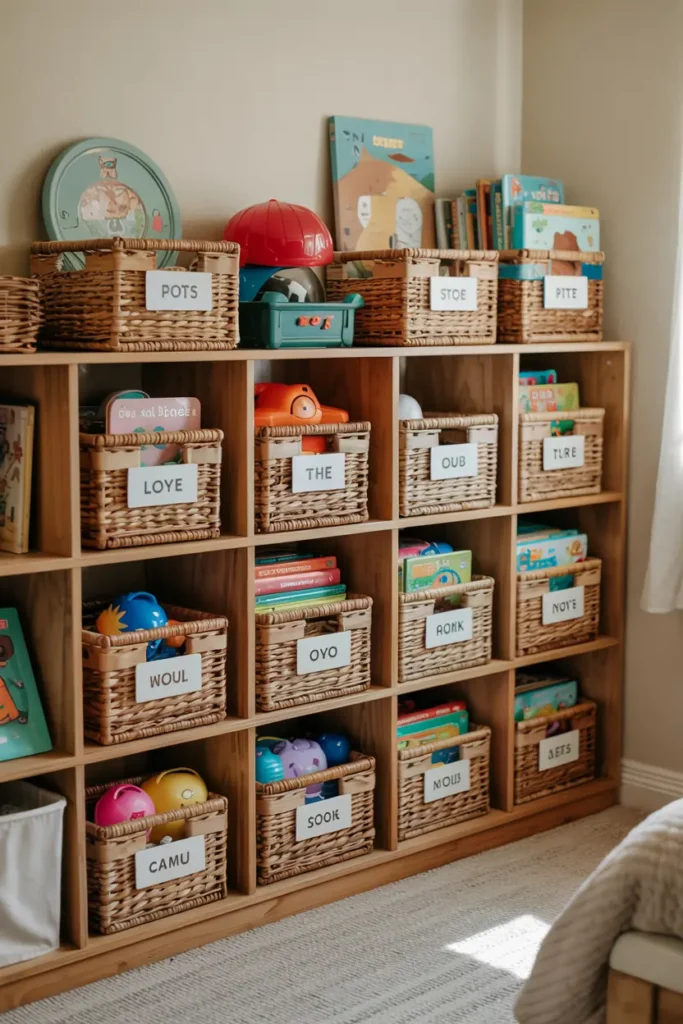
Every parent knows the real challenge of a child’s bedroom: the toys multiply, and open floors disappear. The solution is storage that looks like decor — colorful fabric bins ($5–$8 each) on a low cube shelf, a toy chest that doubles as a window seat, wall-mounted baskets for stuffed animals. If the storage is attractive and at child height, tidying stops being a battle and starts being a habit.
Label bins with pictures for pre-readers (a photo of blocks on the block bin) — it works shockingly well and makes cleanup a sorting game instead of a chore. Keep the system simple: fewer, bigger categories beat a dozen tiny labeled boxes that nobody maintains. And leave one shelf or surface that’s entirely theirs to arrange however they want, mess included — a child’s room that reflects them needs at least one zone with no adult rules.
10. Let the Child Have Real Input
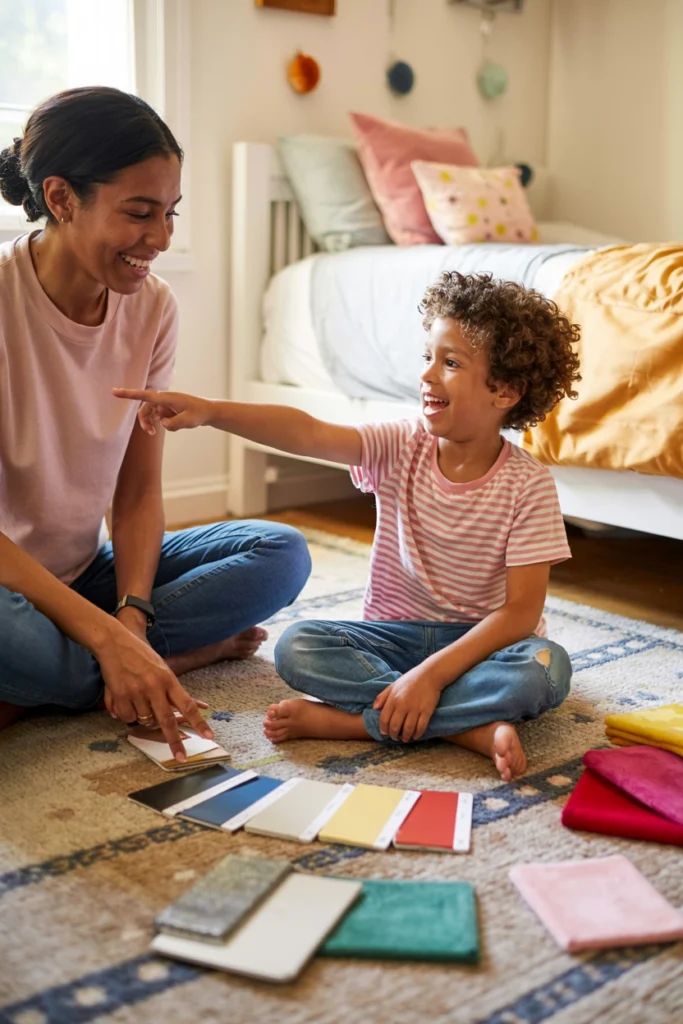
This final idea is the most important one and it costs absolutely nothing: give your child genuine say in their room. Not a token choice between two parent-approved paint swatches — real input. Let them pick the bedding, choose which wall gets the decals, decide where the reading nook goes. A bedroom a child helped design is a bedroom they’ll actually keep tidy, because it’s theirs in a way no showroom room ever is.
Set the boundaries clearly first (budget, the three things that are non-negotiable for safety or practicality), then hand over everything inside those lines. You’ll be surprised how good their instincts are — kids have strong, honest opinions about color and comfort. And when friends visit, the pride in “I picked this myself” is worth more than any designer touch. For more inspiration on rooms kids genuinely love, browse ideas for a child’s bedroom that balances fun with comfort.
The best kids’ bedrooms aren’t the most expensive or the most coordinated — they’re the ones where a child feels completely at home. Start with their input, add color boldly, keep the furniture simple enough to grow with them, and let their own art take pride of place on the walls. And if you’re working out how the same approach stretches across siblings sharing one space, these principles adapt beautifully for them without missing a beat — see ideas built for both ages and stages here: them.
Pro Tips
- Buy the washable version of everything — rugs, bedding, paint (eggshell or satin finish wipes clean; flat paint doesn’t). Kids are wonderful and also essentially weather systems.
- Mount book ledges and hooks at your child’s current eye level, not yours. If they can’t reach it independently, it’s decoration, not furniture.
- Keep one “growth drawer” with the next size up of nothing — instead, keep a small box where you stash the decor pieces they’ve outgrown but love. Revisiting it together once a year is a lovely ritual.
- Anchor every tall bookshelf and dresser to the wall with anti-tip straps ($8 for a pack). Kids climb; it’s not a question of if. Do this before anything else on this list.
FAQs
How do I decorate a small kids’ bedroom without it feeling cramped?
Go vertical: wall-mounted book ledges, hooks, and shelves free up every inch of floor. Choose a bed with built-in storage drawers, keep the palette to one hero color plus white so the eye isn’t chopped up, and use a single 5×7 rug to define the play zone. In small rooms, every piece should do two jobs — seating that stores, a desk that folds.
My child wants an extremely specific theme (dinosaurs! only dinosaurs!). How do I say yes without repainting in two years?
Say yes in the swappable layer: dinosaur bedding, posters, and a $15 rug — all changeable for under $50 when the phase passes. Keep walls, furniture, and lighting neutral or broadly themed (“adventure” covers dinosaurs today and space rockets tomorrow). The phase gets honored fully, and future-you doesn’t inherit a mural.
What’s worth spending more on versus saving on in a kids’ room?
Spend on the mattress, the desk chair, and anything structural (bed frame, dresser) — these affect sleep, posture, and safety daily. Save on everything decorative: bedding, wall decals, lamps, rugs, and art. Kids’ taste changes fast, so the decorative layer should be cheap enough to refresh completely every couple of years without pain.
How can siblings sharing a room each get their own space?
Divide the room into two defined territories with a rug, a bookshelf divider, or even a curtain on a tension rod ($15–$25) — the visual boundary matters more than the physical one. Give each child their own reading nook corner, their own art display area, and their own bedding color within a shared palette. Equal square footage and equal say prevent 90% of shared-room conflicts.

Ahsan Yousaf is a home decor writer and enthusiast behind HowDecor. He shares practical, budget-friendly decorating ideas — from colour schemes and small-space solutions to seasonal makeovers — for real homes, not showrooms.