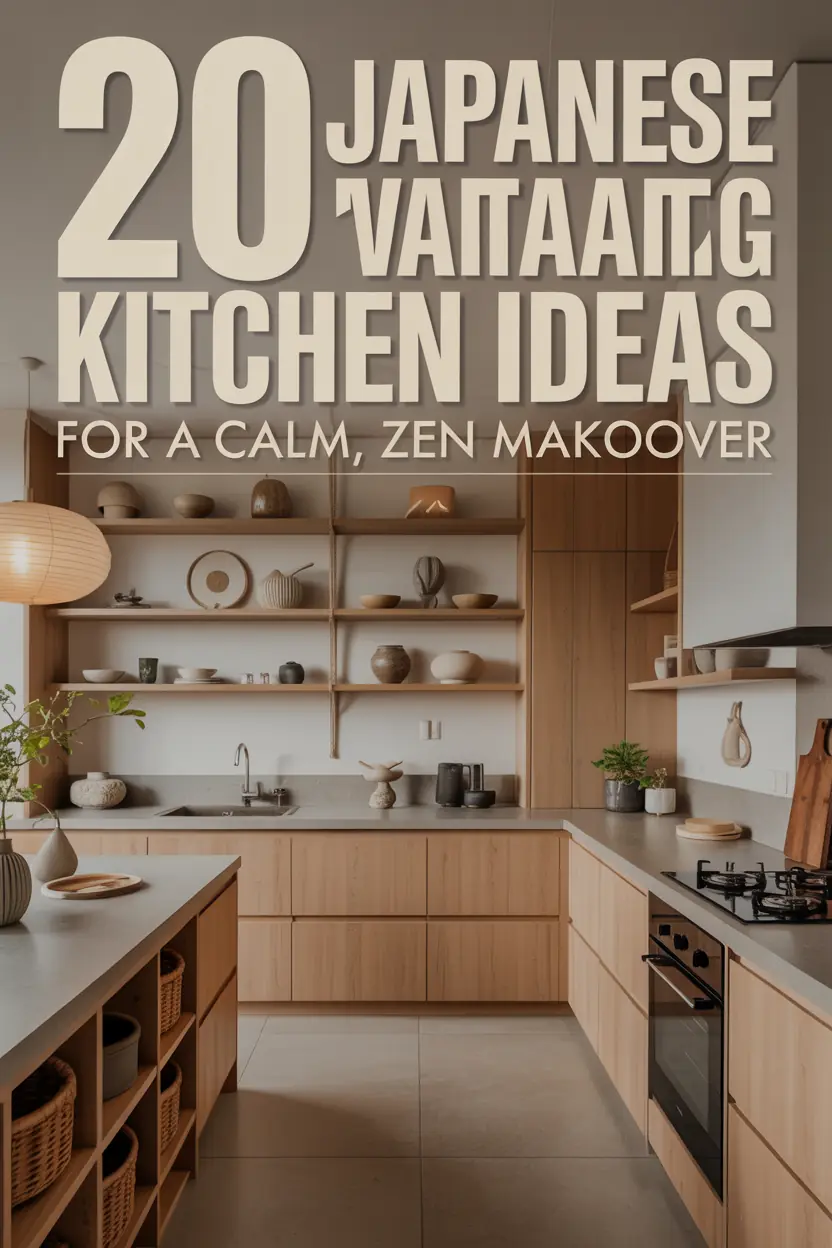
If your kitchen feels cluttered, chaotic, or just lacking a certain warmth, Japanese design might be exactly what you’ve been looking for. There’s something quietly powerful about the way Japanese kitchens are put together. Nothing feels accidental. Every element has a purpose, and yet the whole space feels effortless and serene. It’s the kind of calm you don’t just see, you actually feel it the moment you walk in.
This guide walks you through 20 practical and beautiful Japanese kitchen ideas that can help you bring that same peaceful energy into your own home, whether you’re doing a full renovation or just refreshing a few key details.
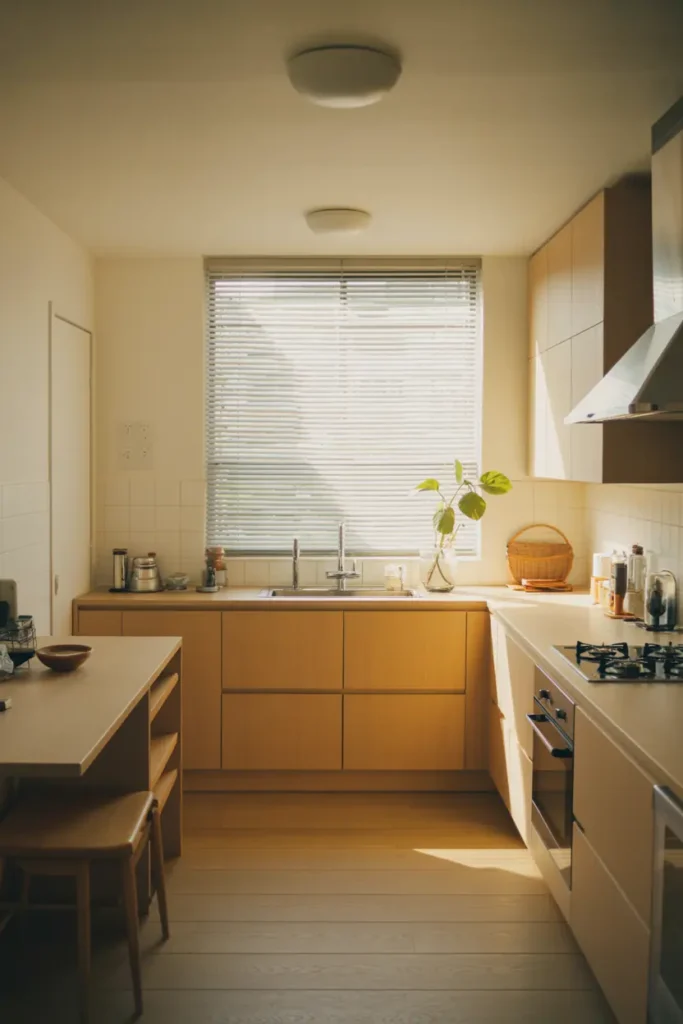
1. Embrace Minimalist Cabinetry
Japanese kitchens are famous for their clean, handle-free cabinets. The idea is simple: less visual noise means a calmer space. Flat-front cabinet doors in muted tones like off-white, warm grey, or natural wood give the kitchen a sleek, uninterrupted look. If you’re on a budget, even replacing busy hardware with simple push-to-open hinges can make a noticeable difference. This works especially well in smaller kitchens where you want the space to feel open rather than cramped.
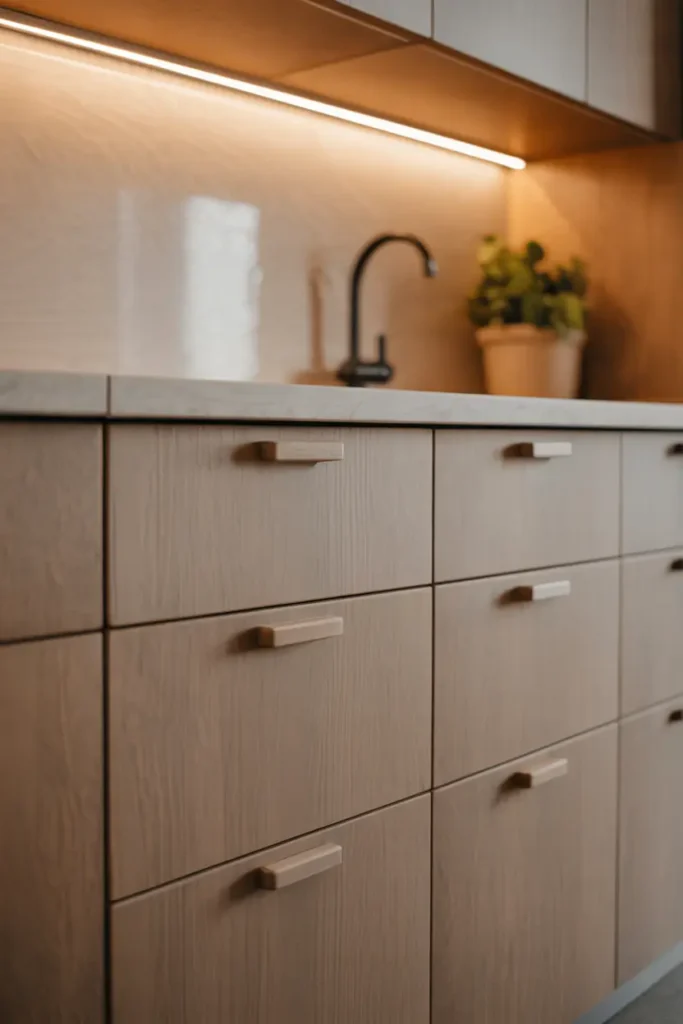
2. Use Natural Wood Tones
Wood is central to Japanese interior design. It brings warmth, texture, and a connection to nature that no painted surface can replicate. In the kitchen, consider using light oak, hinoki cypress, or bamboo for countertops, open shelving, or cabinet fronts. Even small wooden touches like a cutting board left on the counter or a wooden utensil holder can shift the entire feel of the space. The key is to keep the tones consistent and natural rather than overly polished or glossy.
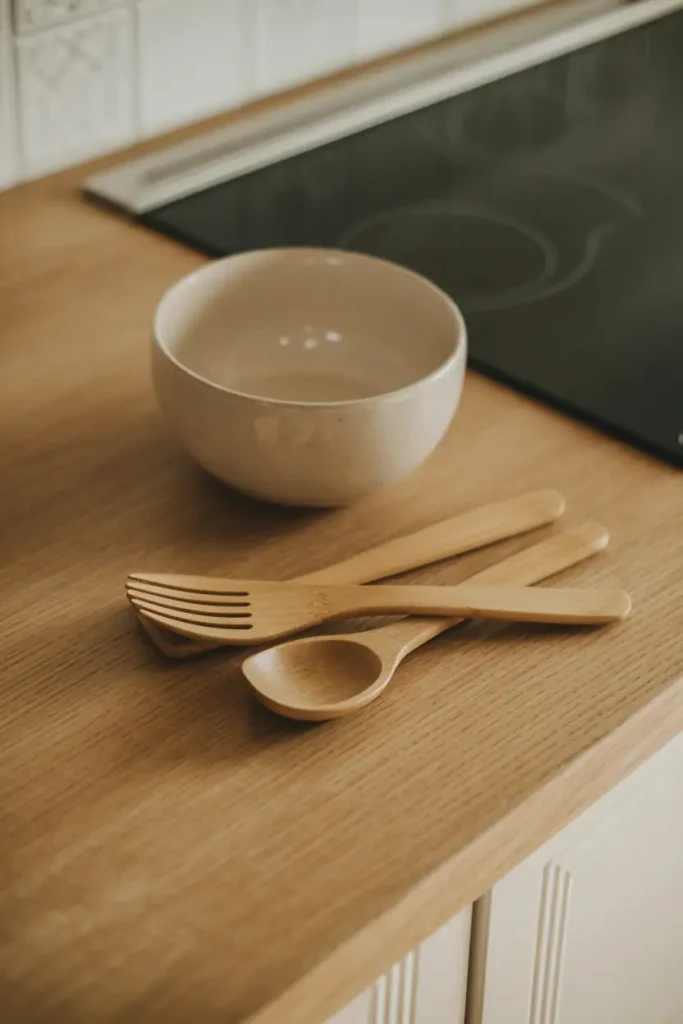
3. Incorporate Shoji-Inspired Elements
Shoji screens, those beautiful paper and wood panel dividers, are a hallmark of traditional Japanese design. You don’t need to install actual shoji panels in your kitchen, but you can draw inspiration from them. Frosted glass cabinet inserts, soft-lit panels above the counter, or even a sliding pantry door with a grid pattern can echo that same delicate, layered aesthetic. It adds visual interest without adding clutter.
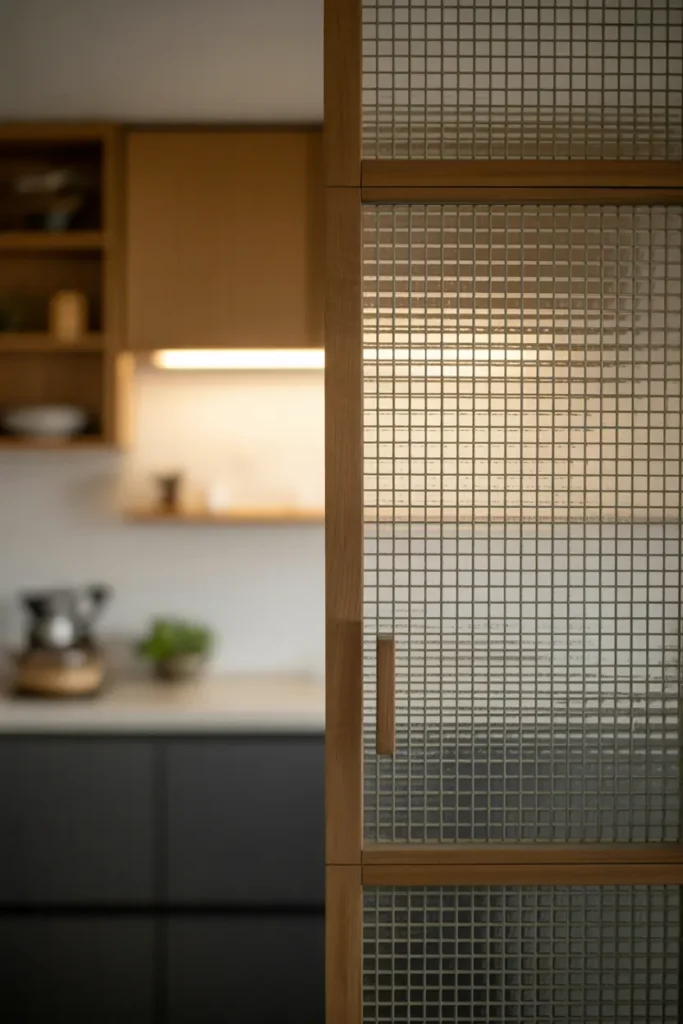
4. Keep Countertops Clear and Purposeful
In Japanese design philosophy, every surface tells a story. A clear countertop isn’t empty, it’s intentional. The habit of keeping counters free from unnecessary appliances or random items is one of the simplest and most transformative things you can do. Keep only what you use daily within reach, and store everything else out of sight. A single ceramic dish, a small plant, or a neatly folded cloth can be all the styling a Japanese kitchen counter needs.
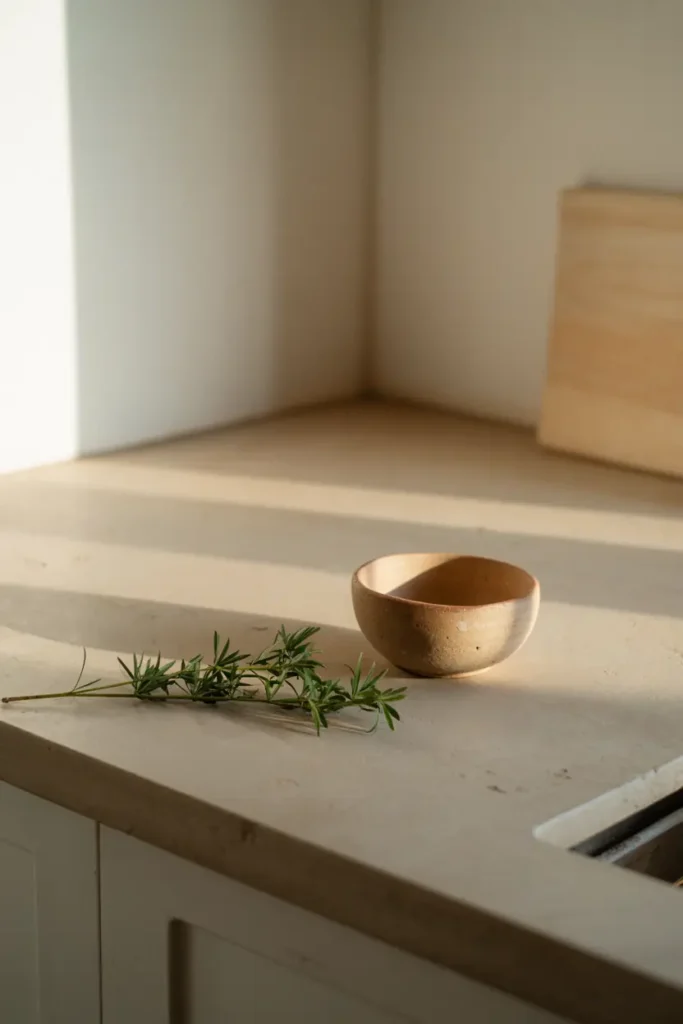
5. Choose a Neutral, Earthy Color Palette
Japanese kitchens rarely shout. The colors are soft, grounded, and drawn from nature. Think warm whites, sandy beiges, soft greens, and muted terracotta. These tones work together without competing, and they age beautifully over time. If you’re repainting your kitchen walls or choosing new tiles, lean toward colors that feel like they belong outdoors: mossy, stony, earthy. Avoid overly bright or saturated tones, as they tend to disrupt the calm you’re trying to create.
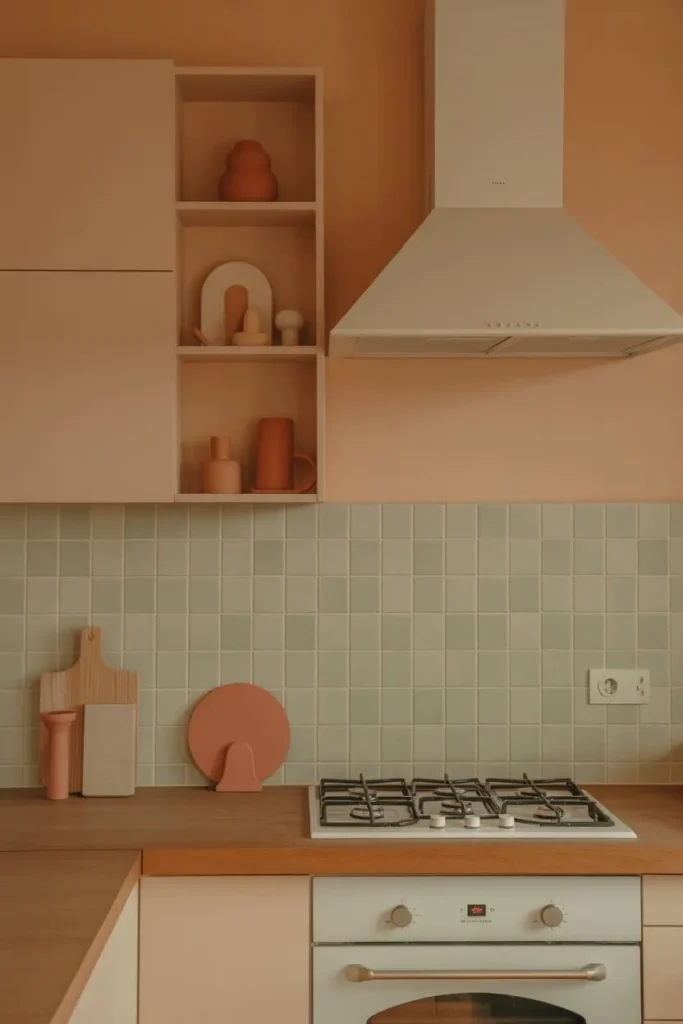
6. Add a Wabi-Sabi Touch
Wabi-sabi is the Japanese art of finding beauty in imperfection and impermanence. In a kitchen, this might mean keeping a handmade ceramic mug on display even though it’s slightly uneven, or choosing a stone countertop with natural variations rather than a perfectly uniform surface. It’s about resisting the urge to make everything look showroom-perfect. A little lived-in texture, a hand-thrown bowl, or a weathered wooden shelf can actually make your kitchen feel more authentic and inviting.
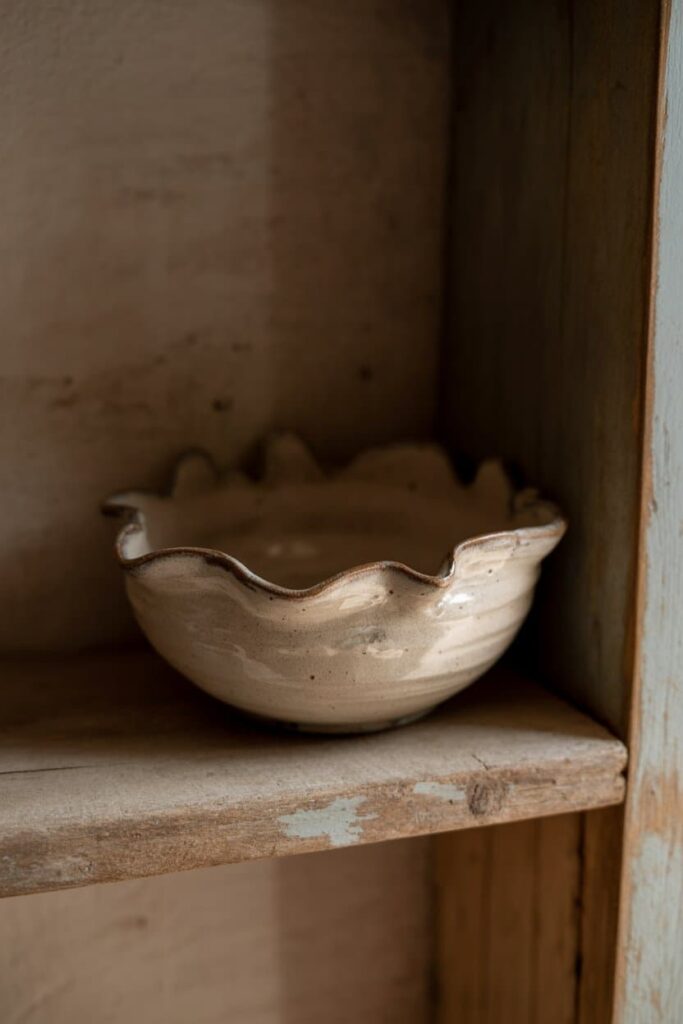
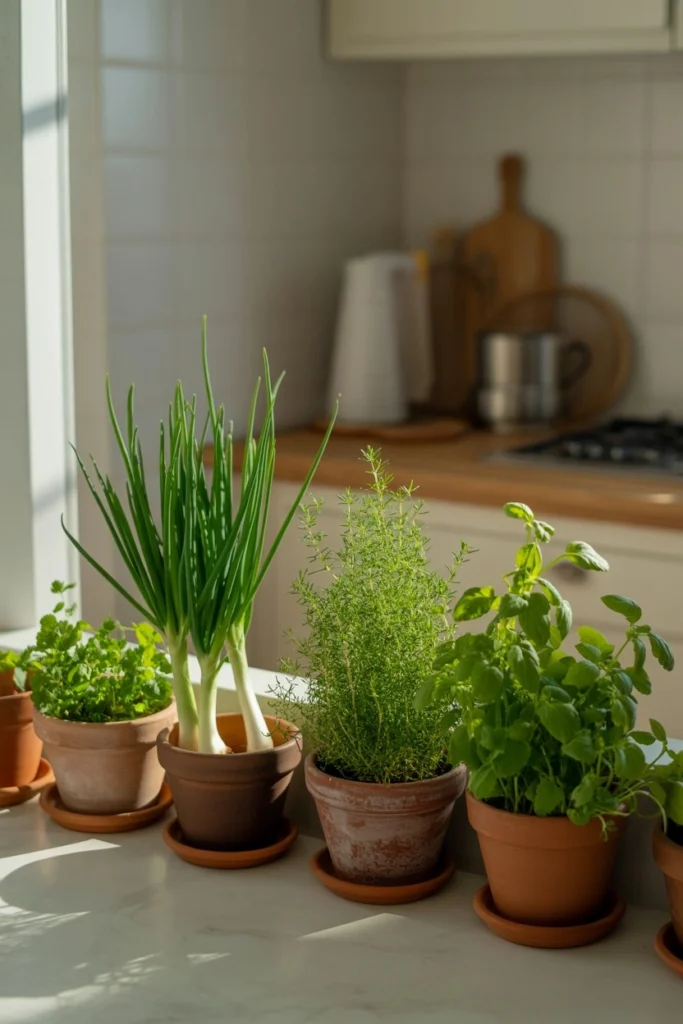
7. Install an Indoor Herb Garden
Fresh herbs are a staple in Japanese cooking, and growing them in your kitchen serves both function and beauty. A small row of pots along the windowsill or a simple wall-mounted planter with shiso, green onions, or mint brings life and color into the space without overwhelming it. It also connects the kitchen to nature, which is a core theme in Japanese design. Even if you’re not a serious cook, having a few living plants in the kitchen instantly softens the environment.
8. Use Open Shelving Thoughtfully
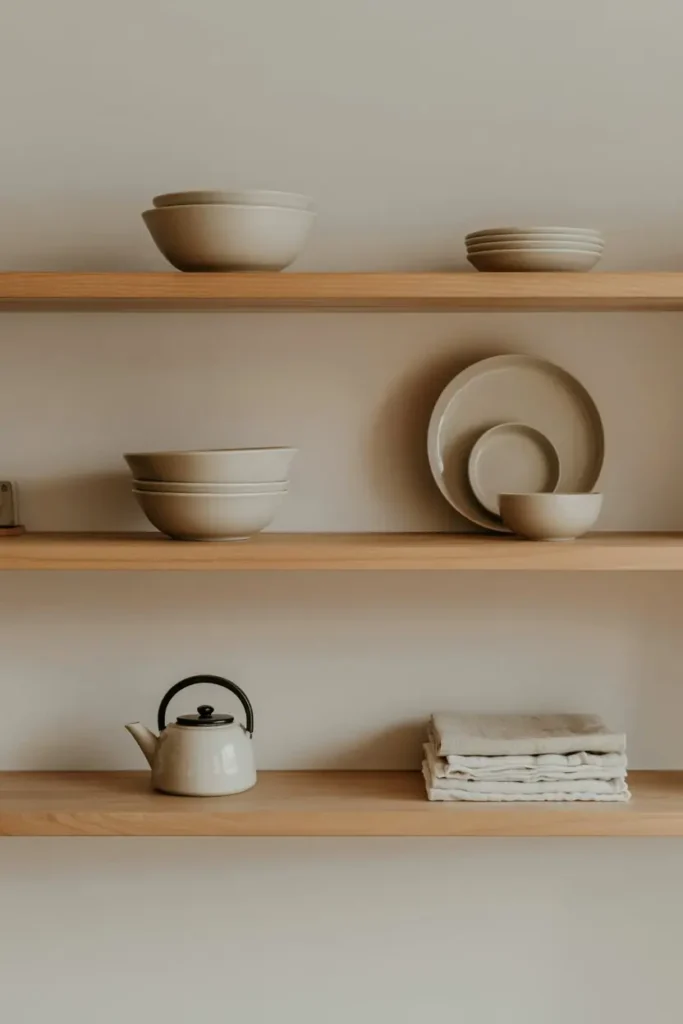
Open shelving is common in Japanese kitchens, but it comes with a responsibility to keep things curated. The goal isn’t to display everything you own. Choose a few pieces that are both beautiful and useful: a set of matching bowls, a small ceramic teapot, a stack of clean linen napkins. Arrange them with breathing room between items. When open shelves are done right, they feel like a quiet gallery rather than a storage overflow.
9. Bring In Natural Light
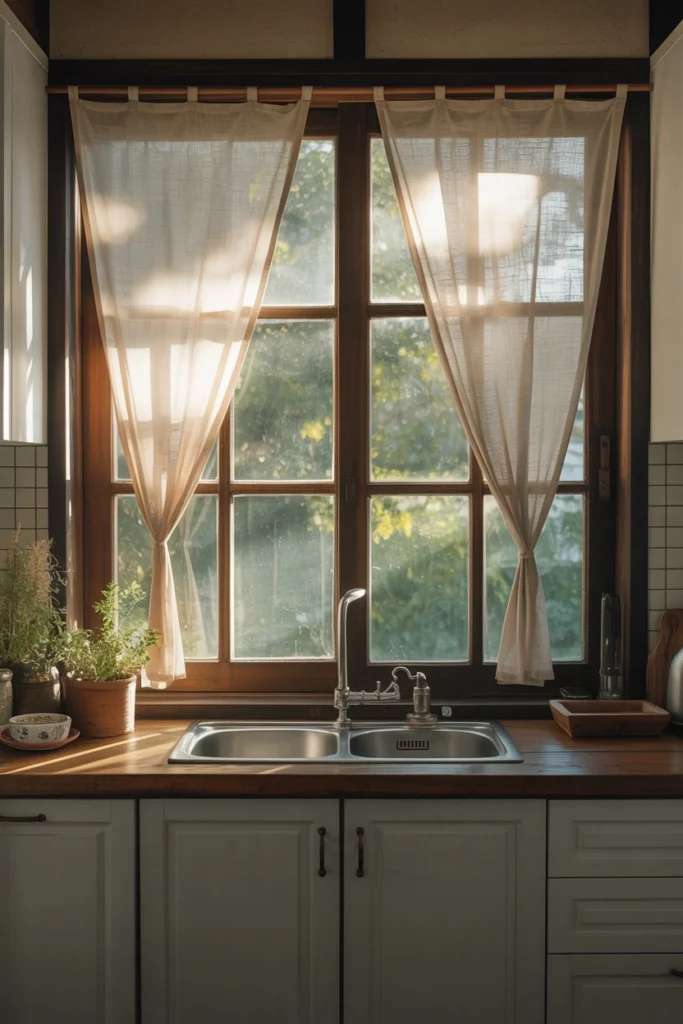
Light is treated almost like a design material in Japanese interiors. Soft, diffused natural light is preferred over harsh overhead fixtures. If possible, keep window areas clear of heavy curtains or bulky blinds. Sheer linen panels or simple bamboo shades let light filter through gently while maintaining privacy. In kitchens without great natural light, layered warm-toned artificial lighting can achieve a similar soft, cozy effect without feeling clinical or cold.
10. Choose Simple, Functional Fixtures
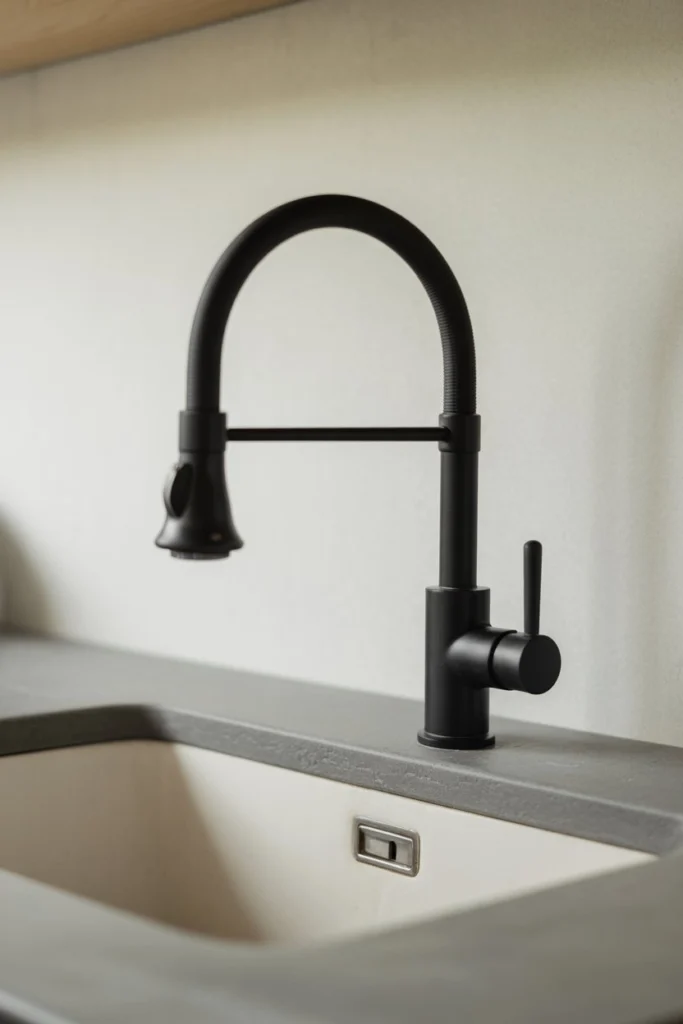
Faucets, handles, and light fittings might seem like small details, but they quietly define the character of a kitchen. In a Japanese-inspired space, simple and functional always wins over decorative and showy. Brushed nickel, matte black, or aged brass fixtures with clean lines complement the overall aesthetic without demanding attention. Avoid overly ornate or trendy hardware, as those tend to date quickly and clash with the timeless calm of Japanese design.
11. Incorporate Stone or Concrete Elements
Stone and concrete bring a raw, grounded quality to kitchen spaces that works beautifully within a Japanese aesthetic. A concrete countertop, a stone backsplash, or even simple stone coasters and trivets can anchor the space without being cold or industrial. The natural variation in these materials also adds a subtle wabi-sabi quality. They’re practical too, as stone and concrete surfaces tend to age gracefully and only improve in character over time.
12. Display Ceramics with Intention
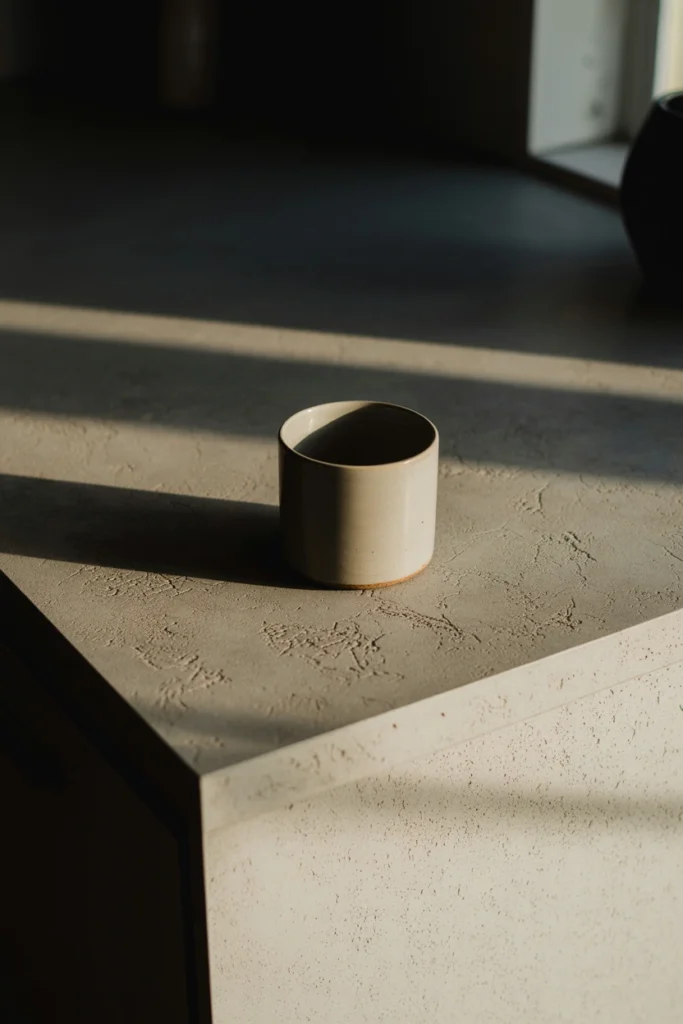
Japanese ceramic culture is rich and deeply rooted. A well-chosen piece of pottery on a kitchen shelf isn’t just decoration, it’s an expression of taste and appreciation. You don’t need a collection. One or two pieces with interesting glaze work, subtle color, or handmade texture are enough to elevate the space. Look for local ceramic artists or pieces with visible craftsmanship rather than mass-produced items. Even a simple yunomi tea cup displayed openly can become a small but meaningful focal point.
13. Try a Low-Profile Kitchen Island
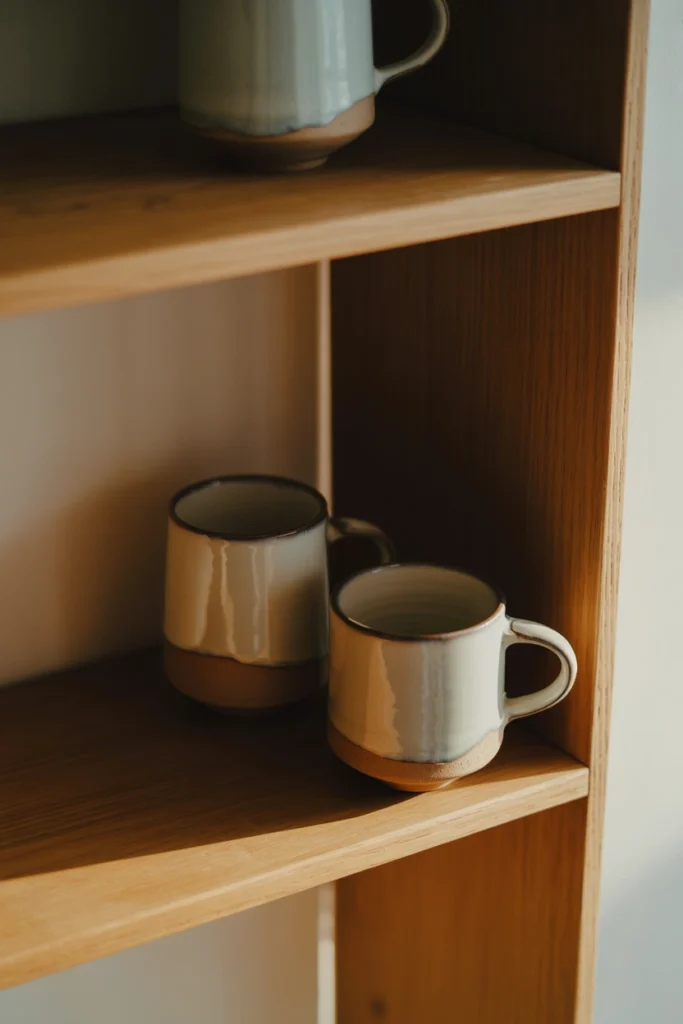
Traditional Japanese homes often keep furniture low and close to the ground. In the kitchen, a lower-profile island or prep table respects that sense of groundedness. It creates a more relaxed working environment and visually lowers the center of gravity in the room, making the space feel more open overhead. Pair it with simple wooden stools without backs for a clean, unobstructed look. This setup works particularly well in open-plan kitchens that flow into living or dining areas.
14. Use Sliding Doors Where Possible
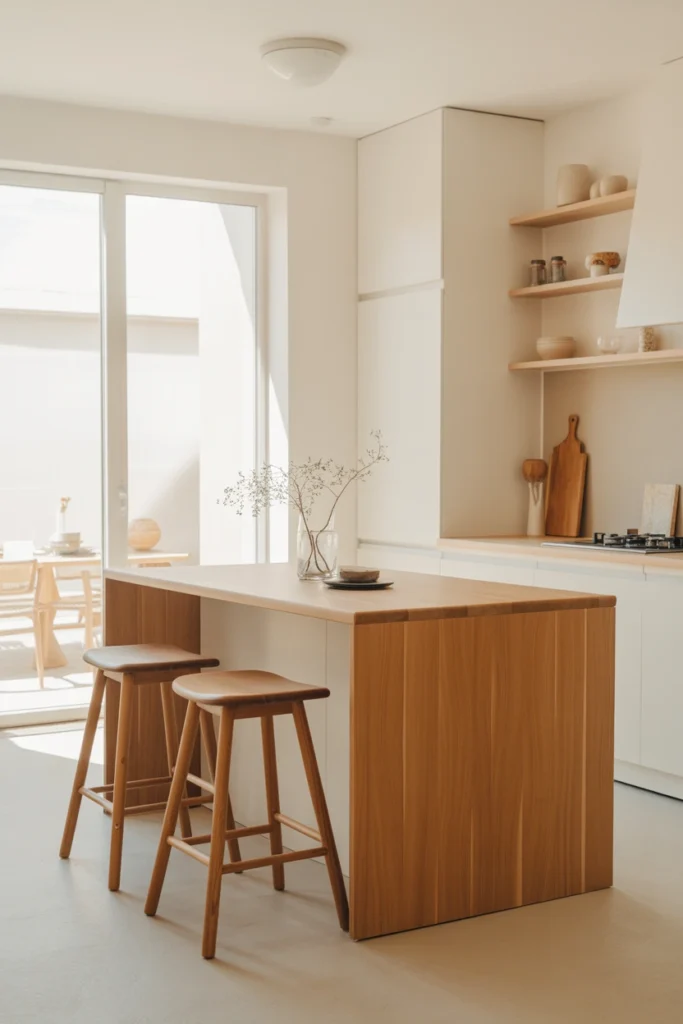
Space efficiency is a quiet obsession in Japanese design, especially in homes where rooms are small and every centimeter counts. Sliding doors for pantries, storage areas, or kitchen entrances eliminate the swing radius of traditional doors and immediately make a space feel more considered and intentional. Even a simple sliding door in natural wood or frosted glass can dramatically change the flow and feel of a kitchen. It’s a functional upgrade that also looks effortlessly elegant.
15. Keep the Backsplash Simple
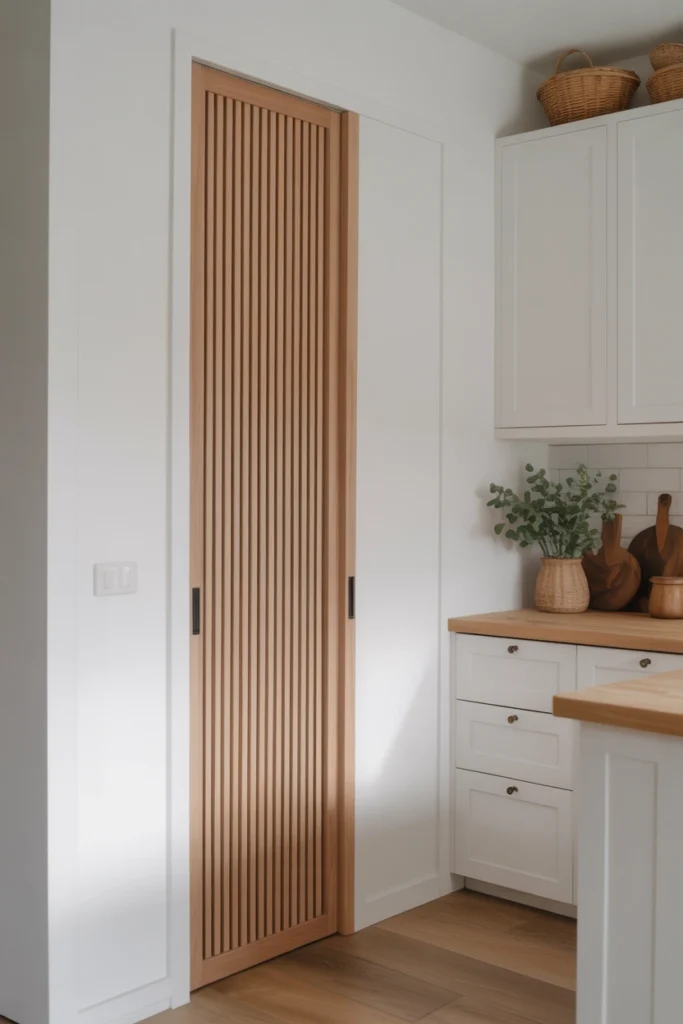
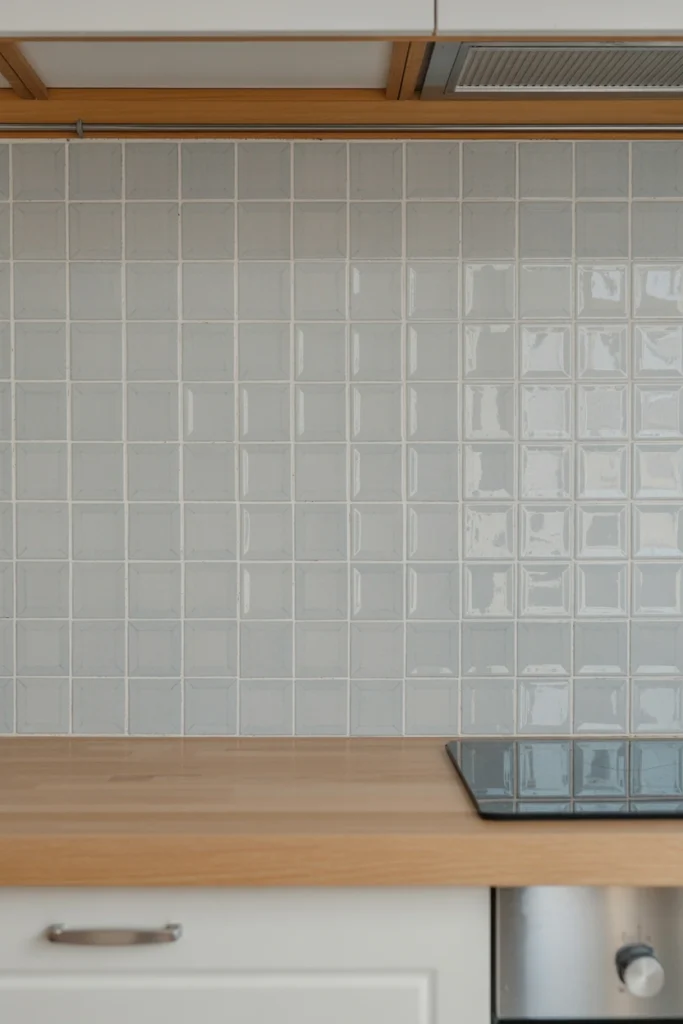
A busy backsplash can be the loudest thing in a kitchen. In Japanese design, restraint is the rule. Simple subway tiles in white or pale grey, thin stone slabs, or even smooth plaster finishes make for a backsplash that supports the overall calm rather than fighting against it. If you want a little texture or pattern, small handmade ceramic tiles in soft earth tones can add quiet personality without overwhelming the space. The goal is cohesion, not contrast.
16. Introduce Bamboo Accents
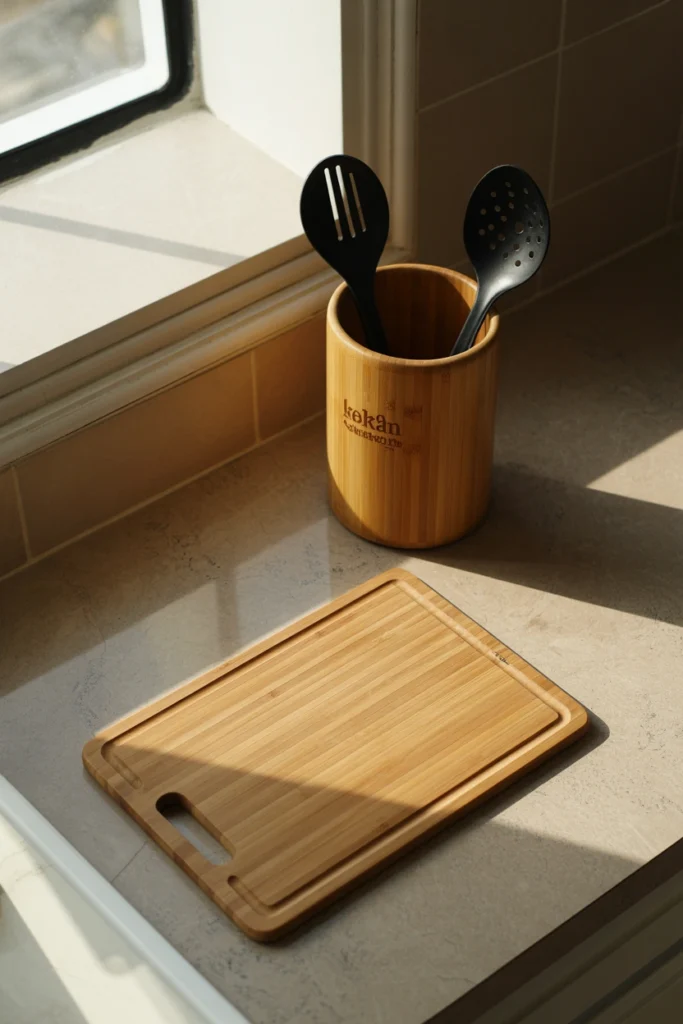
Bamboo is sustainable, beautiful, and deeply connected to Japanese culture. In the kitchen, it shows up naturally as cutting boards, trivets, utensil holders, and even drawer organizers. A bamboo drying mat next to the sink or a bamboo canister set on the counter adds warmth and texture without demanding attention. These are budget-friendly upgrades that have a surprisingly meaningful visual impact. They also age well, which fits perfectly with the wabi-sabi appreciation for things that develop character over time.
17. Add a Small Tatami or Textile Element
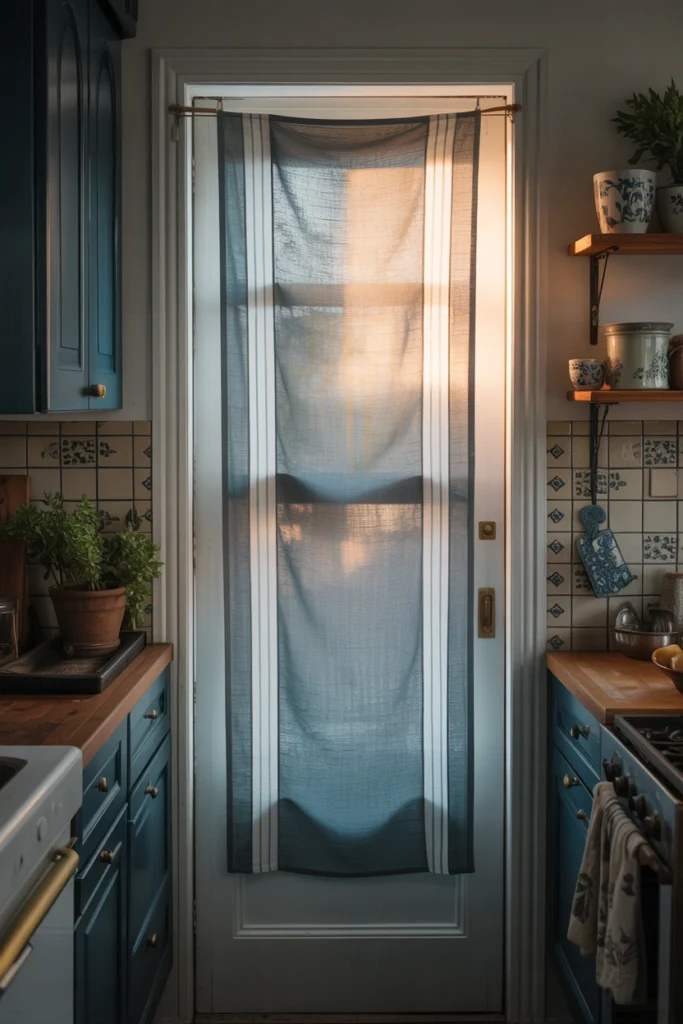
You wouldn’t normally think of textiles as a kitchen design feature, but in a Japanese-inspired space, they matter more than you’d expect. A simple tatami-weave runner along the kitchen floor, a handwoven dish cloth hanging from the oven handle, or a noren curtain separating the kitchen from an adjoining room can all add softness and cultural character. These are small additions that cost very little but speak volumes about attention to detail and intentional design.
18. Prioritize Smart, Hidden Storage
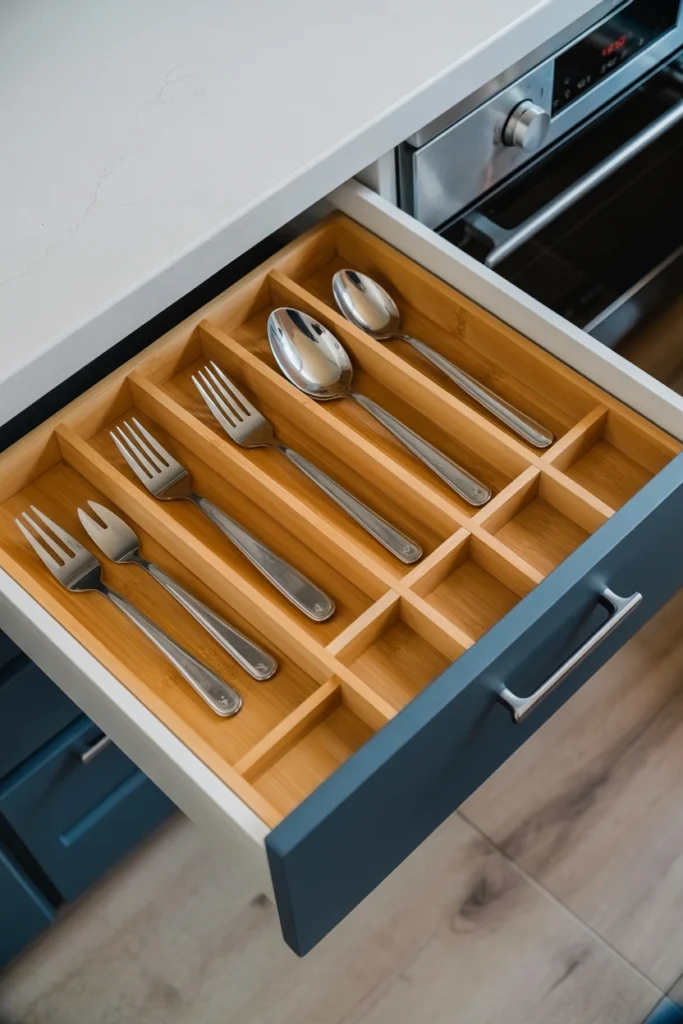
Clutter is the enemy of calm, and in a Japanese kitchen, the philosophy of storing things properly is taken seriously. Drawer organizers, pull-out pantry shelves, and closed cabinets that hide appliances keep the visual environment clean and focused. The idea isn’t to own less necessarily, though that helps. It’s to give everything a proper home so that the kitchen always feels ready and composed. Investing in good internal storage solutions is one of the highest-return upgrades you can make in a Japanese-style kitchen.
19. Use Soft, Layered Lighting
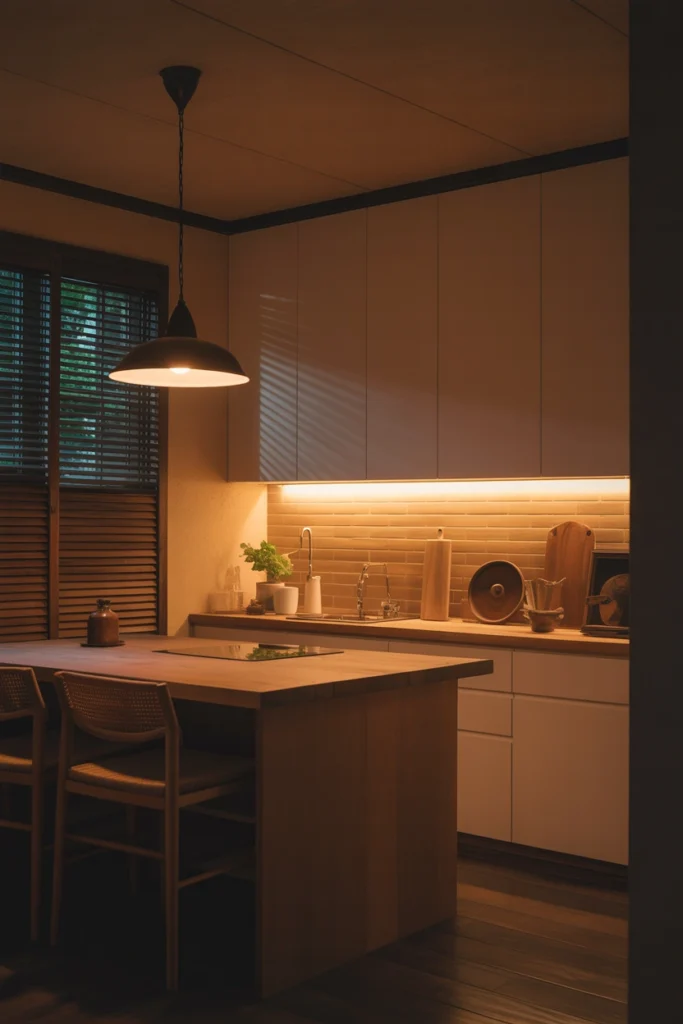
Lighting in a Japanese kitchen is never about bright, flat illumination. It’s layered, warm, and purposeful. Think under-cabinet task lighting for prep work, a soft pendant above the island, and perhaps a small warm lamp in a corner shelf area. This combination creates depth and warmth that changes subtly throughout the day. In the evening especially, a softly lit Japanese kitchen feels genuinely restful, almost like the kitchen is winding down alongside you.
20. Bring Nature Inside with a Single Statement Plant
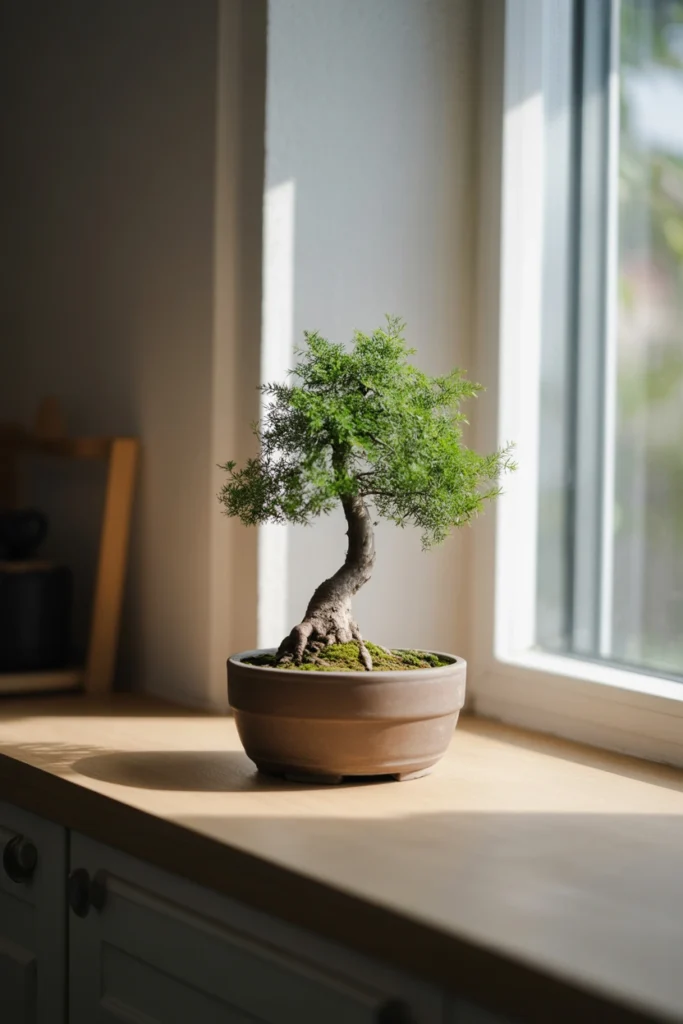
Japanese design has a deep reverence for nature, but it expresses it with restraint rather than abundance. You don’t need a jungle of plants. One well-chosen plant in the right spot can do more for a kitchen’s energy than a dozen small ones scattered everywhere. A tall, slender bamboo stalk in a simple clay pot, a small bonsai on the windowsill, or a trailing pothos above the cabinets can each serve as a living, breathing anchor for the whole space. Choose one, place it with care, and let it be enough.
Conclusion
Japanese kitchen design isn’t about buying expensive things or following a rigid set of rules. It’s a mindset. It’s about slowing down, being intentional, and choosing elements that genuinely serve both function and peace of mind. Whether you start with something as simple as clearing your countertops or go as far as redesigning the whole space, even small steps in this direction can completely transform how your kitchen feels.
The beauty of this style is that it works in almost any home. Small apartments, older houses, open-plan spaces. The principles scale to fit your life. Start with one idea from this list, live with it for a while, and let the space guide you from there. A calmer kitchen really can lead to a calmer day.