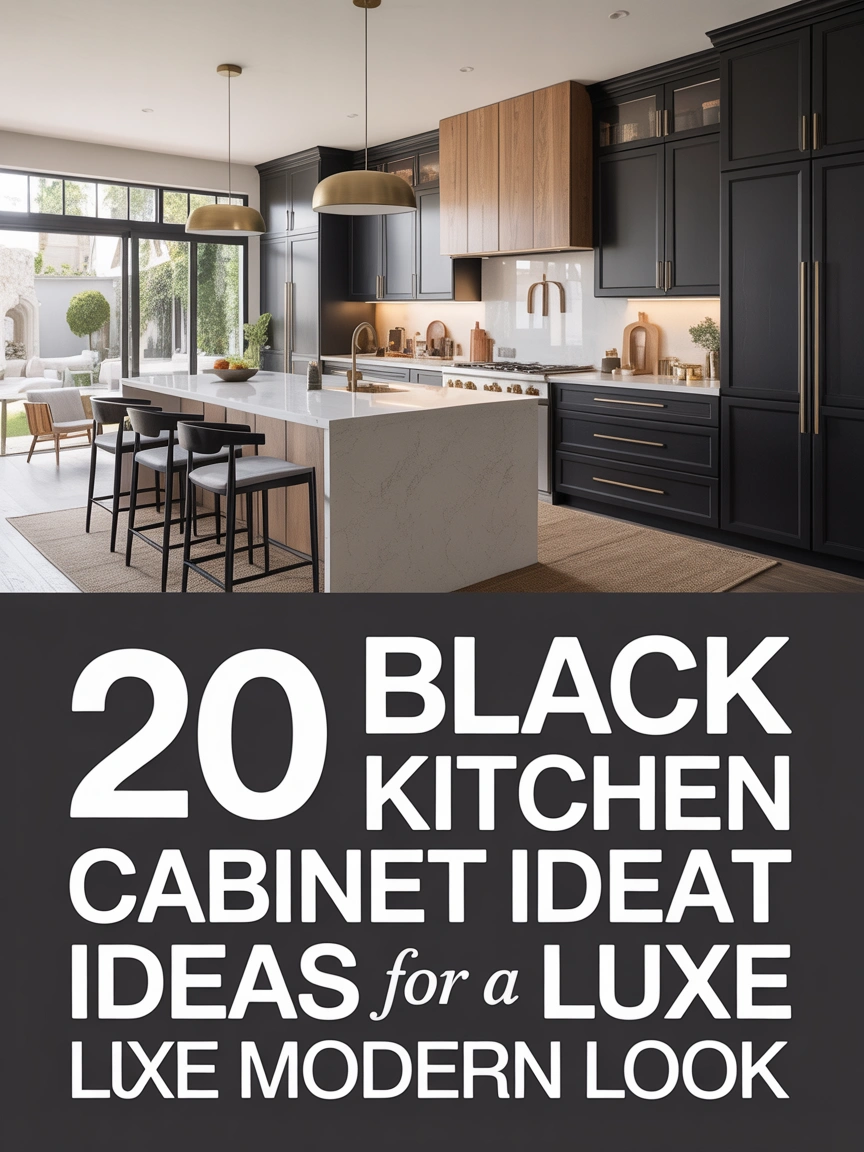
Black kitchen cabinets have a way of making people stop and stare. There is something about a kitchen built around deep, confident black cabinetry that feels both timeless and completely current at the same time. It is not a trend in the way that some kitchen styles are trends. It is more of a design statement, one that says the person who made it knew exactly what they wanted and committed to it fully.
In 2026, black kitchen cabinets have moved firmly into the mainstream of modern home design. What was once considered bold or risky is now one of the most requested finishes in kitchen renovations across every budget level. The reason is simple. Black works. It pairs well with almost every countertop material, every hardware finish, and every flooring type. It makes a kitchen feel considered and complete in a way that lighter cabinetry often takes more effort to achieve.
If you are thinking about going dark in your kitchen, or if you already have black cabinets and want to make the most of them, these 20 ideas will give you plenty of practical direction.
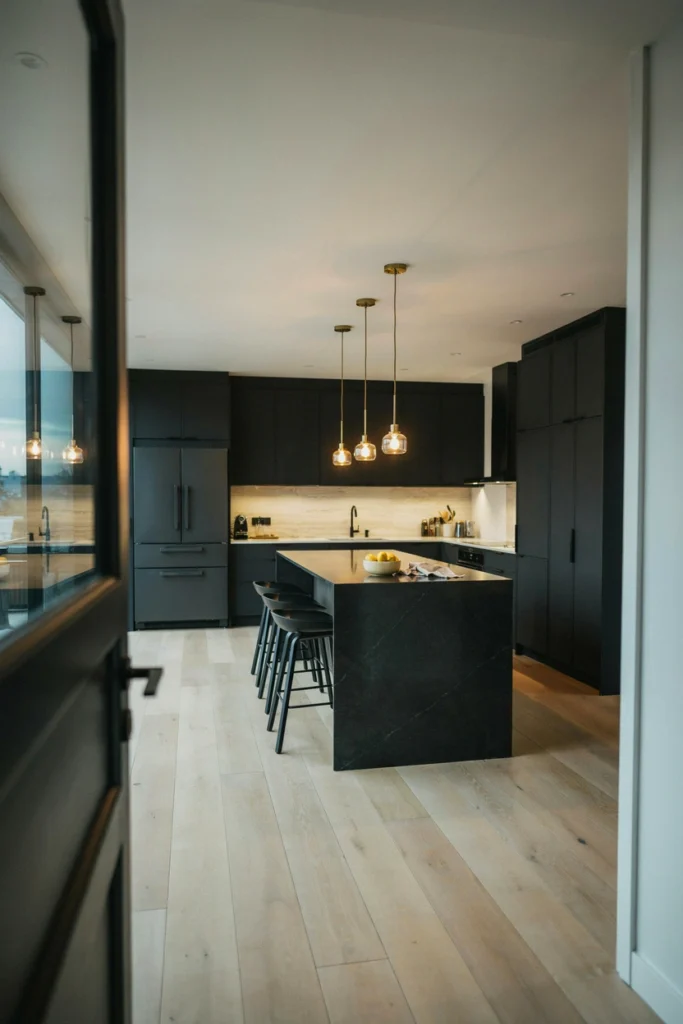
1. Matte Black Cabinets With Warm Wood Accents
Matte black and natural wood is one of the most satisfying combinations in contemporary kitchen design. The flatness of a matte finish absorbs light rather than reflecting it, giving the kitchen a depth and seriousness that gloss finishes do not quite achieve. When you introduce warm wood elements alongside that matte black, whether through open shelving, a kitchen island, bar stools, or a floating shelf above the countertop, the result is a kitchen that feels both sophisticated and genuinely warm.
In 2026, the most popular wood tones paired with matte black cabinets are light oak and mid-tone walnut. Light oak creates a Scandinavian-influenced contrast that feels airy and modern. Walnut runs warmer and richer, pushing the kitchen toward a more luxurious, almost restaurant-quality feel. Either works well, and the choice comes down to whether you want the wood to feel fresh and light or deep and grounded.
A practical way to introduce this combination without committing to a full renovation is to use black for the base cabinets and wall units while incorporating a wood-fronted island or open wood shelving as the contrasting element. This keeps the investment manageable while delivering the full visual effect of the combination.
This idea suits open-plan kitchens, modern family homes, and anyone who wants the drama of black cabinetry with enough warmth to prevent the space from feeling cold or clinical.
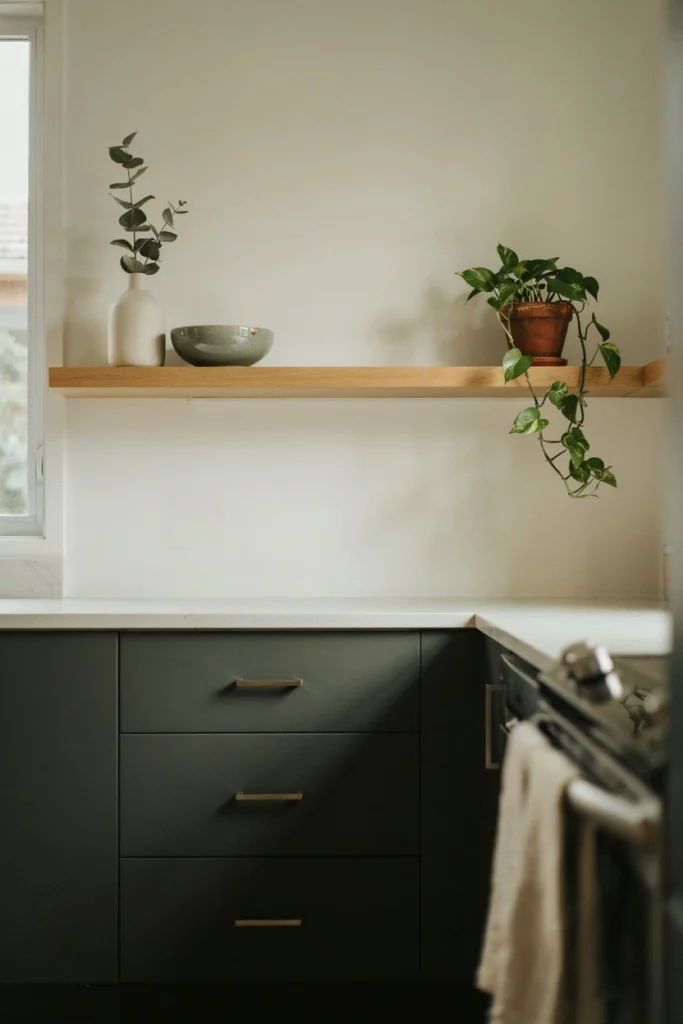
2. Black Shaker Cabinets for a Classic Modern Blend
The shaker cabinet style has been a staple of kitchen design for decades, and when executed in black it takes on an entirely different personality. The clean recessed panel detail of a shaker door adds subtle visual interest to a black kitchen without introducing pattern or clutter. It is a way of getting depth and texture from the cabinetry itself rather than from additional decorative elements.
Black shaker cabinets sit comfortably in both traditional and contemporary kitchens, which makes them one of the most versatile choices on this list. In a period property with original architectural features, black shakers feel at home alongside original cornicing and sash windows. In a new build with an open-plan layout, the same cabinet style reads as cleanly modern with the right hardware and countertop choices.
For hardware, brushed brass or antique brass pulls and knobs are the most popular pairing with black shakers in 2026. The warm metallic tone against the cool black creates a contrast that feels deliberately considered. Matte black hardware is a strong alternative if you want a more tonal, monochromatic look that lets the cabinet shape do all the work.
This style works particularly well in kitchens of any size. In smaller kitchens, black shaker cabinets paired with a light countertop and open upper shelving create a space that feels intentional without being overwhelming.
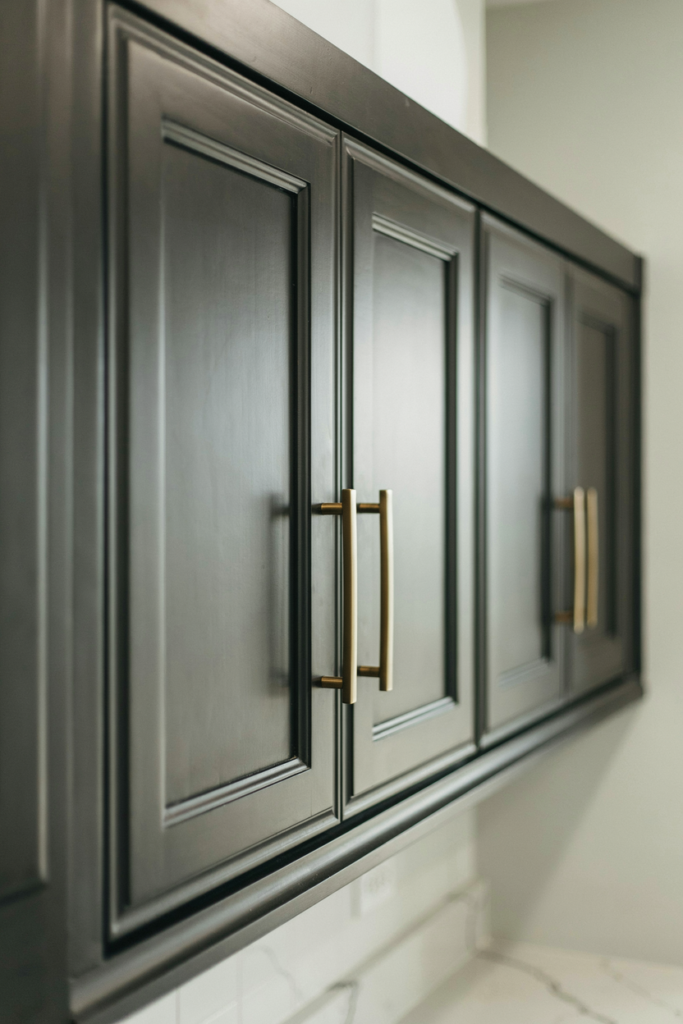
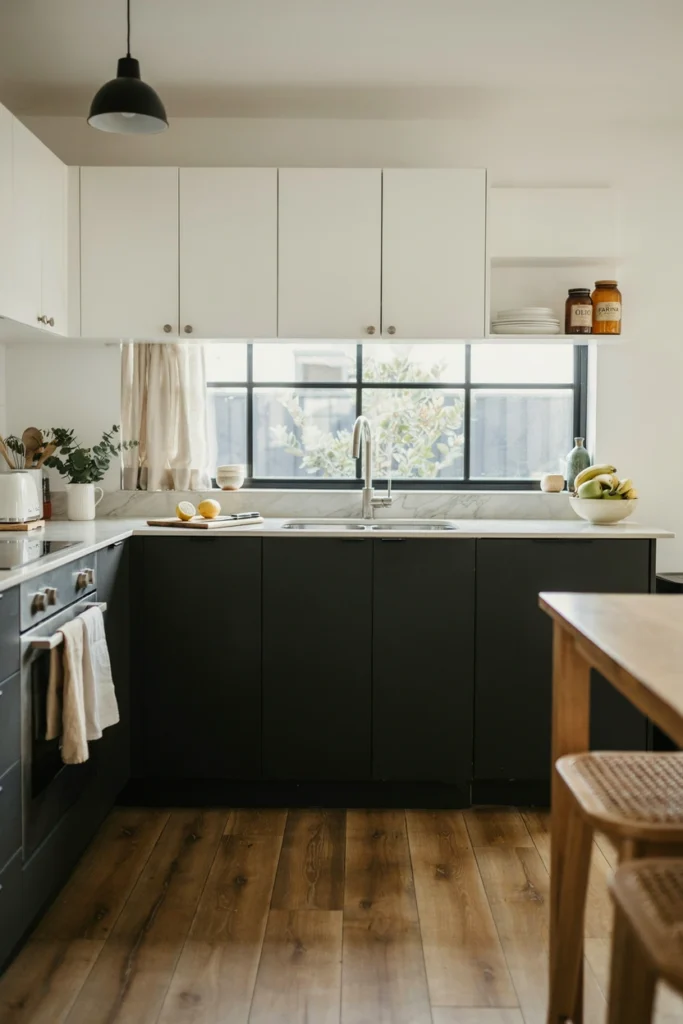
3. Two-Tone Kitchens With Black Lowers and White Uppers
The two-tone kitchen approach has become one of the most practical and visually intelligent solutions in modern kitchen design. Using black for the lower cabinets and white for the upper ones gives you the visual weight and drama of black cabinetry at the base of the room, where it grounds the space and connects naturally to the floor, while keeping the upper portion of the kitchen light, open, and easy to live with.
This combination works particularly well in smaller or medium-sized kitchens where a fully black kitchen might feel too heavy. The white upper cabinets reflect light back into the room and prevent the black from dominating in a way that could make the space feel enclosed. The division between the two colors at countertop height also creates a natural visual horizon that makes the room feel organized and intentional.
The countertop choice matters significantly in a two-tone kitchen. White marble or light quartz with subtle veining connects the two tones without taking sides strongly, while a darker countertop like black granite or dark green quartz leans further into the black palette and creates a more dramatic overall result.
This is an ideal starting point for anyone who loves the look of black cabinets but is not quite ready to commit to them for the entire kitchen. It delivers substantial visual impact while keeping the space comfortable and livable.
4. Black Cabinets With Brass Hardware for a Luxe Finish
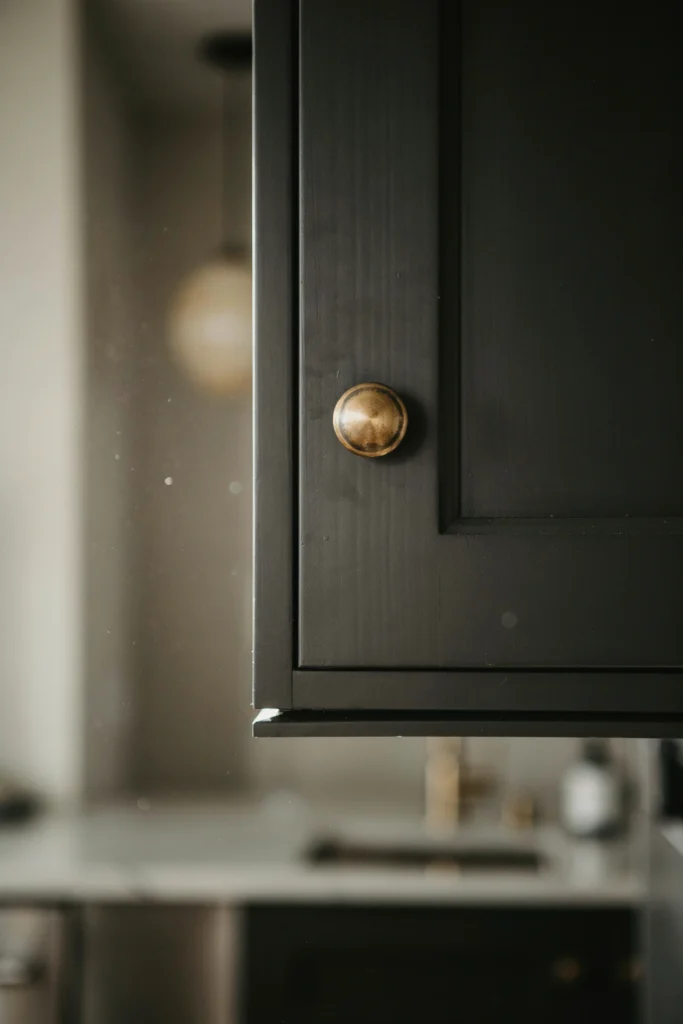
If there is one hardware choice that consistently elevates black kitchen cabinets from stylish to genuinely luxurious, it is brass. The warm, rich tone of brass against deep black creates a contrast that feels both classic and current, the kind of combination that you see in high-end kitchen showrooms and well-styled design magazines because it simply works at every level.
In 2026, unlacquered brass and brushed brass are both popular choices for black cabinet kitchens. Unlacquered brass develops a natural patina over time, darkening and shifting slightly in color as it ages, which adds character and a sense of history to the kitchen. Brushed brass maintains a more consistent appearance and has a softer, more matte quality that suits contemporary matte black cabinet finishes particularly well.
Beyond pulls and knobs, brass appears in black kitchens through tap fittings, pendant light fixtures, pot racks, and even the frames of open shelving units. Keeping brass consistent across these different elements creates a cohesive look that feels designed rather than assembled from separate decisions.
This combination suits anyone who wants their kitchen to feel elevated and premium without necessarily spending more on the cabinets themselves. The hardware is often the last thing people budget for, but in a black kitchen it is the detail that makes the biggest difference to the overall quality of the finished result.
5. Open Shelving Mixed With Black Closed Cabinets
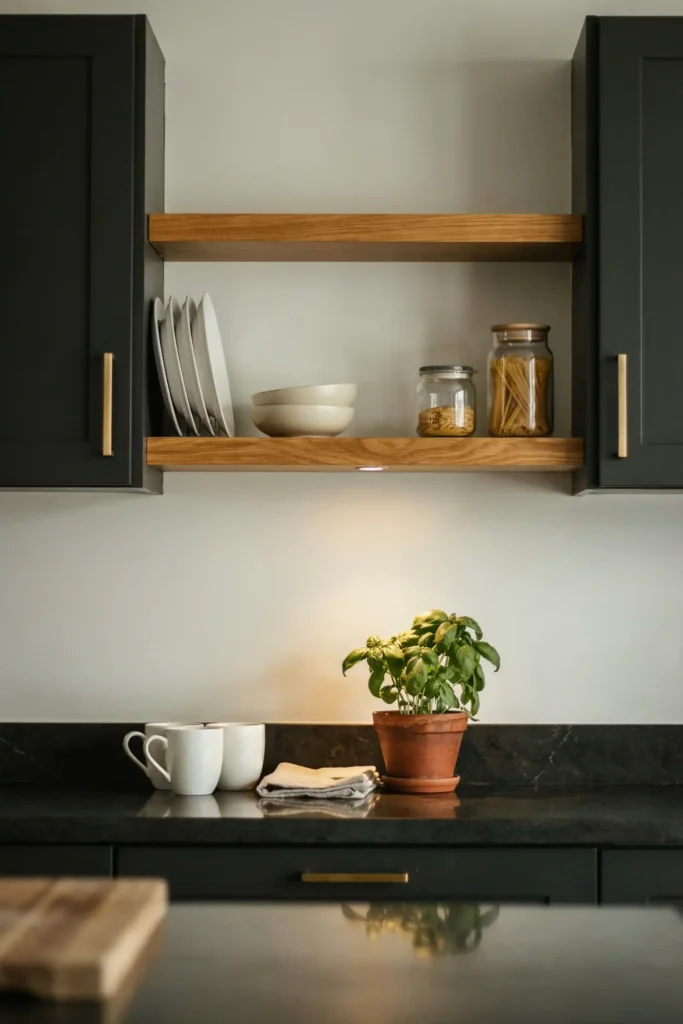
Combining open shelving with closed black cabinets is one of those design decisions that solves a practical problem while simultaneously improving the aesthetics of the kitchen. Fully closed black cabinetry throughout a kitchen can feel heavy and monolithic. Introducing open shelving at strategic points breaks that visual mass, adds lightness, and creates space for displaying items that add color and personality to an otherwise dark palette.
The most effective placement for open shelving in a black kitchen is typically above a countertop or beside a window, where the shelves can be naturally illuminated and the displayed items read clearly against the dark cabinets behind or beside them. White ceramic plates, glass jars, small plants, wooden cutting boards, and colorful cookbooks all look excellent displayed on open shelves in a predominantly black kitchen.
From a practical standpoint, open shelving requires a degree of organization and discipline. Items on display are always visible, which means the styling of those shelves needs to be maintained. For people who prefer their kitchen to be purely functional and easy to keep tidy, keeping open shelving limited to one or two sections rather than replacing all upper cabinets works well as a compromise.
Floating shelves in natural wood are the most popular open shelving choice in black kitchens in 2026. The wood tone adds warmth and breaks up the dark palette without introducing additional visual complexity.
6. Black Kitchen Island as a Statement Piece
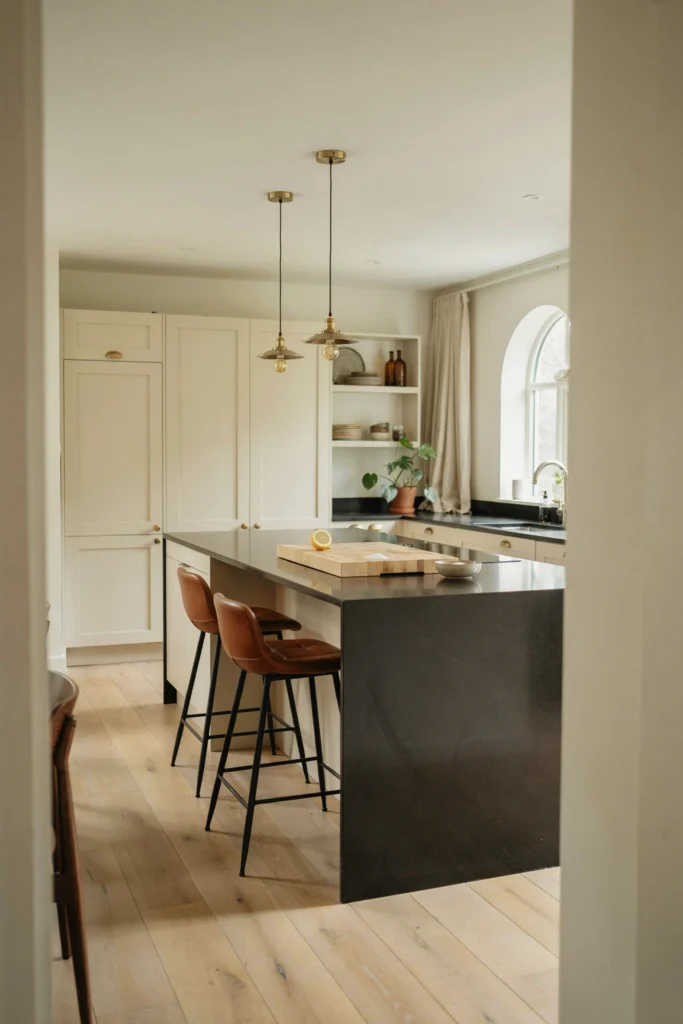
Not everyone needs or wants to commit to black cabinetry throughout an entire kitchen. For those who want the visual impact of black without the full commitment, a black kitchen island is one of the most effective entry points into this design direction. The island becomes the focal point of the kitchen, doing the dramatic design work while the surrounding cabinetry remains in a lighter, more neutral tone.
A black island in a white or cream kitchen creates a bold visual anchor. It defines the center of the space, adds a clear sense of purpose to the kitchen layout, and introduces the kind of contrast that makes a kitchen feel genuinely designed rather than simply fitted. When the island is paired with a light stone countertop and warm pendant lighting above, the effect is particularly strong.
In 2026, kitchen islands are increasingly being designed with mixed materials. A black painted or lacquered island body with a butcher block or light marble top, combined with bar stools in leather or warm fabric, creates a layered material composition that feels rich and considered. The island becomes a piece of furniture in its own right rather than just an extension of the fitted cabinetry.
This approach works well in open-plan kitchens and family homes where the island functions as a gathering point. It also suits people who are renovating in stages and want to introduce a strong design statement without replacing all the existing cabinetry at once.
7. Black Cabinets With Concrete Countertops
Concrete countertops and black cabinets share a certain industrial honesty that makes them a natural pairing. Both materials have a raw, substantial quality that feels genuinely different from the more polished combinations that dominate mainstream kitchen design. Together, they create a kitchen that feels serious and original without being cold or unwelcoming.
Concrete countertops in 2026 are available in a range of finishes from rough and textured to polished and smooth. The rougher, more textured finishes suit black cabinets with a matte or furniture paint finish, where the shared texture quality creates a cohesive material story. Polished concrete with a slight sheen works well with both matte and gloss black cabinetry and adds a more refined quality to the combination.
One practical consideration with concrete countertops is sealing. Properly sealed concrete is durable and stain-resistant, but the sealing process needs to be maintained over time. Working with a reputable fabricator and following their maintenance guidance makes a significant difference to the long-term performance of the surface.
In terms of style, this combination suits industrial-influenced interiors, converted warehouse apartments, and anyone who wants their kitchen to feel more like a professional workspace than a conventional domestic kitchen. It is a bold choice that delivers a genuinely unique result.
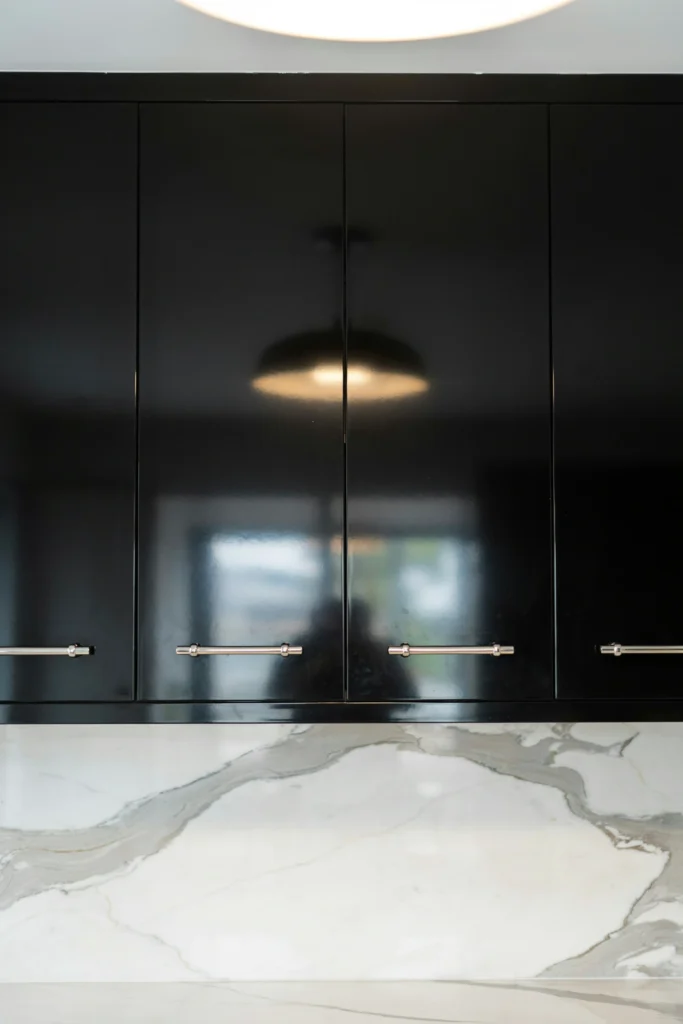
8. Glossy Black Cabinets for a High-Impact Dramatic Look
While matte black dominates current kitchen trends, gloss black cabinets occupy a specific and very effective design niche of their own. A high-gloss black finish reflects light actively, creating depth and shine that transforms the visual presence of the kitchen in a way that matte simply does not. In the right setting, a kitchen with glossy black cabinets looks genuinely spectacular.
The key to making gloss black work well is controlling the light environment carefully. Gloss surfaces amplify both natural and artificial light, which means a kitchen with good natural light will look extraordinary with gloss black cabinets, while a darker kitchen risks looking heavy and difficult to see in. If you are considering gloss black for a kitchen with limited natural light, adding strong artificial lighting is essential rather than optional.
Gloss black also pairs best with equally polished and refined countertop materials. High-polish black granite, white Calacatta marble, or sleek dark quartz all complement the reflective quality of the cabinet finish. Chrome or polished nickel hardware works better with gloss black than brass, as the similar reflective quality creates a visually cohesive pairing.
This style suits contemporary apartments, modern new builds, and anyone who wants a kitchen that makes a strong and unambiguous first impression. It is a confident choice, and the result when done well is genuinely memorable.
9. Black Cabinets With Green Accents for a Natural Contrast
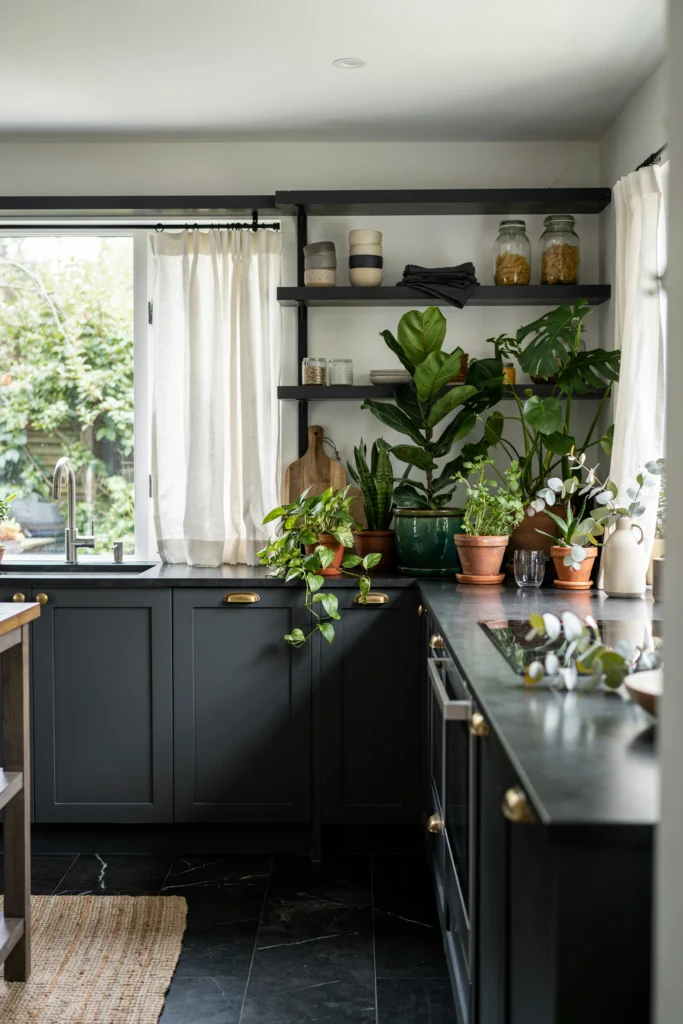
Black and green is one of the most compelling color combinations in interior design, and the kitchen is one of the best places to explore it. Deep forest green, sage green, and olive green all sit exceptionally well alongside black cabinetry, creating a palette that feels rich, organic, and genuinely distinctive without veering into anything that could be described as trend-chasing.
The most practical way to introduce green alongside black kitchen cabinets is through plants, ceramics, and soft furnishings rather than through additional painted surfaces. A collection of potted herbs on a windowsill, a large trailing plant on an open shelf, and green ceramic bowls or a green glazed vase on the countertop introduce the color naturally and in a way that can be easily changed or refreshed over time.
For a stronger commitment to the combination, painting one section of the kitchen, perhaps a pantry door, a kitchen island, or a breakfast nook wall, in a deep forest green creates a second focal point that anchors the green as a deliberate design choice rather than an accessory color. Against black cabinetry, the effect is rich and layered in the best possible way.
This combination is particularly well suited to kitchens that open onto a garden or have views of outdoor greenery, where the interior color palette naturally extends the visual connection to the outside.
10. Black Cabinets in a Small Kitchen Done Right
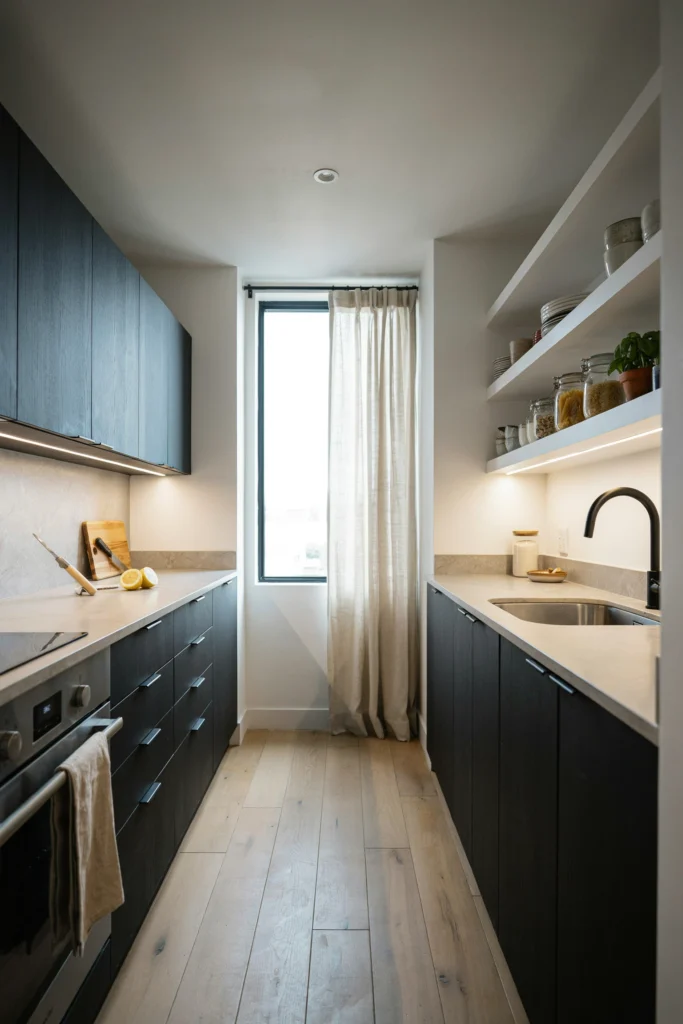
One of the most persistent myths about black kitchen cabinets is that they are only suitable for large kitchens with plenty of natural light. This is not accurate, and some of the most impressive black kitchen designs exist in relatively compact spaces. The key is making specific design decisions that work with the black palette rather than against it.
Light countertops are the most important counterbalance in a small black kitchen. White, cream, or light grey countertops reflect light back into the room and prevent the dark cabinets from creating a sense of visual compression. Similarly, light flooring, whether pale wood, light stone, or white tile, keeps the lower half of the room feeling open.
Open upper shelving instead of upper cabinets removes the visual mass from the top section of the kitchen and allows light to move more freely through the space. Under-cabinet lighting is a practical investment in a small black kitchen because it illuminates the countertop directly and creates a separation between the dark cabinet surface and the work surface below.
Keeping hardware minimal and sleek, thin bar pulls or integrated handles rather than decorative knobs, reduces visual clutter in a compact space where every detail is close and visible. With these adjustments, a small kitchen with black cabinets can feel intimate and sophisticated rather than dark and confined.
11. Black Cabinets With White Marble for Timeless Contrast
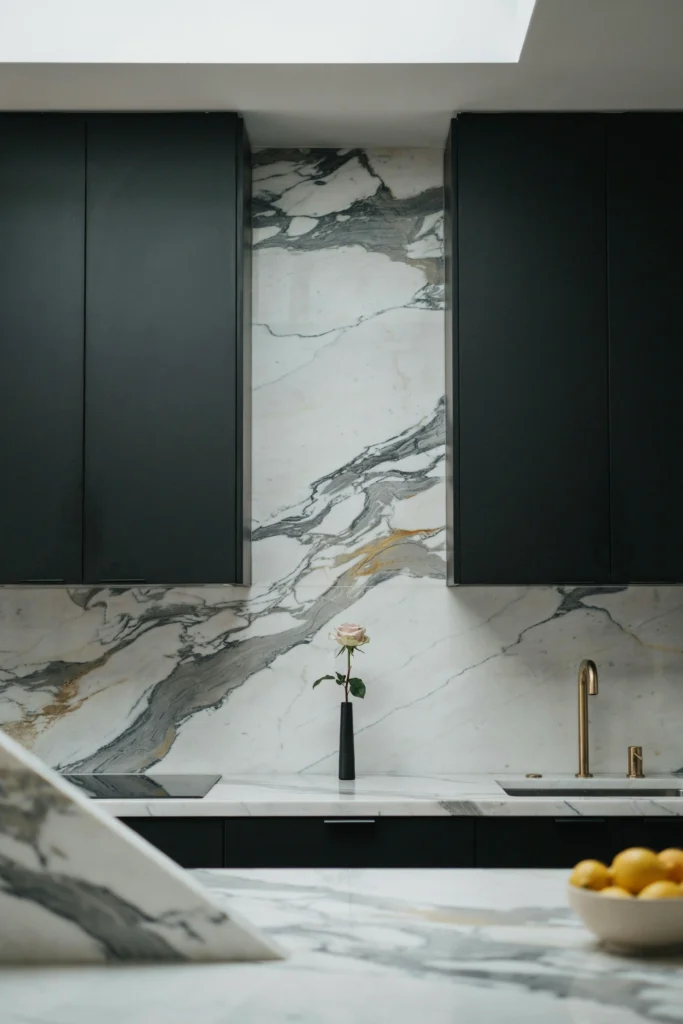
Black cabinetry and white marble is one of the most enduringly beautiful combinations in kitchen design. It has been referenced in luxury home design for decades and it remains compelling in 2026 because the contrast between the deep matte or satin black and the bright, veined marble surface is visually striking in a way that does not depend on any particular trend.
White Carrara marble with its soft grey veining creates a quieter, more understated contrast with black cabinets. White Calacatta with its bold dramatic veining creates a stronger statement that suits kitchens designed for maximum visual impact. Either choice works beautifully, and the decision comes down to how prominent you want the countertop to be in the overall composition.
Marble requires proper sealing and consistent maintenance to prevent staining, which is a practical consideration worth factoring into the decision. For those who want the look of marble without the maintenance requirements, high-quality marble-effect quartz has reached a level of realism that is genuinely impressive and provides a more durable alternative.
This combination suits both traditional and contemporary kitchens and tends to appeal to people who want their kitchen to feel genuinely luxurious. The investment is higher than most other options on this list, but the result is one that ages gracefully and maintains its appeal over many years.
12. Black Cabinets With Terrazzo Flooring
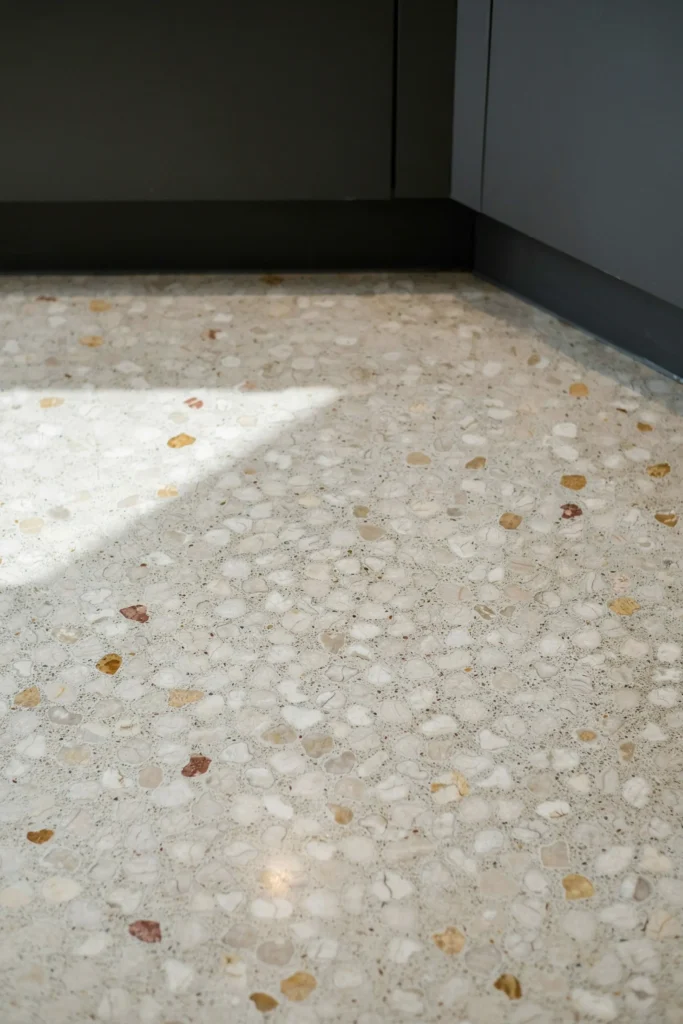
Terrazzo has experienced a significant revival in recent years and in 2026 it sits comfortably among the most popular flooring choices for modern kitchens. When paired with black cabinetry, terrazzo flooring creates a visual richness and material depth that most other flooring options cannot easily match.
The chips of color embedded in terrazzo, whether in a warm cream base with earthy aggregate or a cool grey base with mixed tones, pick up and reflect the colors present elsewhere in the kitchen. In a black kitchen with brass hardware, a terrazzo floor with warm amber or gold aggregate chips ties the material palette together in a way that feels deliberate and sophisticated.
Terrazzo is also a genuinely practical kitchen flooring choice. It is durable, water-resistant when properly sealed, easy to clean, and will last for decades with reasonable care. The initial investment is higher than laminate or standard tile, but the longevity and visual quality justify the cost for anyone planning a kitchen that is meant to last.
For those who want the terrazzo look without the expense of poured in-place terrazzo, terrazzo-effect porcelain tiles have become very convincing and are available at a range of price points. Combined with black cabinetry, they create a kitchen that looks considered and individually styled.
13. Industrial Style Black Kitchen With Exposed Brick
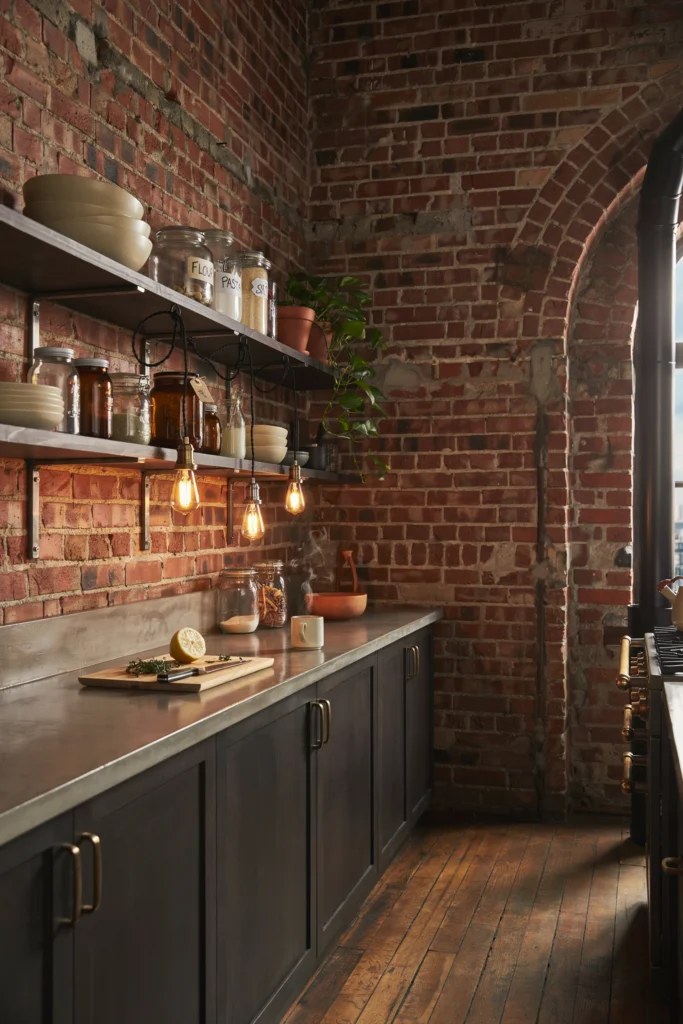
Exposed brick and black kitchen cabinets share the same honest, unfinished quality that defines industrial interior design. Together they create a kitchen that feels like it has genuine character and history rather than the polished uniformity of a showroom. For those who love the industrial aesthetic, this combination is one of the most satisfying on this list.
The brick provides texture, warmth, and color that would otherwise be absent in a predominantly black kitchen. Even the orange-red tones of standard engineering brick sit surprisingly well against black cabinetry, creating a warmth that prevents the dark palette from feeling cold. Pale, whitewashed, or painted brick works if a lighter result is preferred, though it loses some of the raw texture quality that makes exposed brick worth using in the first place.
Open metal shelving in black or dark steel integrates naturally into this style. A commercial-style tap in matte black or industrial chrome, pendant lights with Edison bulbs or cage-style shades, and concrete or dark wood countertops all work well as supporting elements.
This style suits period properties, converted buildings, and anyone who wants their kitchen to feel more like a creative workshop than a conventional fitted kitchen. It is not a subtle look, but for those who connect with it instinctively, it is one of the most personally expressive kitchen styles available.
14. Black Cabinets With Statement Backsplash
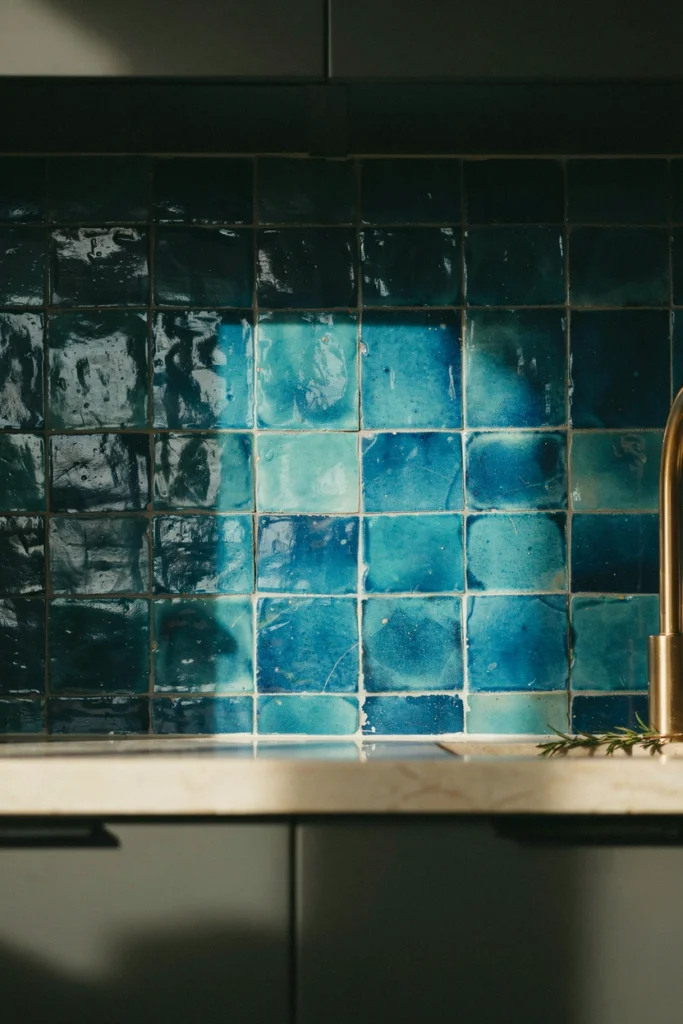
A black kitchen does not have to be monochromatic. One of the most effective ways to add personality and visual interest to a dark kitchen is through a bold backsplash that introduces pattern, color, or texture behind the countertop. The black cabinetry provides a strong, stable backdrop that actually allows a statement backsplash to read more clearly than it would against lighter cabinets.
Zellige tiles in deep jewel tones, handmade ceramic tiles with organic glazed surfaces, bold geometric encaustic patterns, and richly veined stone slabs all work exceptionally well as backsplashes in black kitchens. The combination of a dark, confident cabinet color and an expressive backsplash creates a kitchen with both visual depth and genuine character.
Keeping the backsplash to the area between the countertop and the upper cabinets or open shelving contains the pattern or color to a defined zone, which prevents the overall effect from becoming overwhelming. This also makes the statement backsplash easier to live with long term, since its visibility is naturally framed by the surrounding dark cabinetry.
For those who want to try this approach without a permanent commitment, removable adhesive backsplash tiles have improved considerably in quality and can create a convincing effect while remaining fully reversible.
15. Minimalist Black Kitchen With Hidden Handles
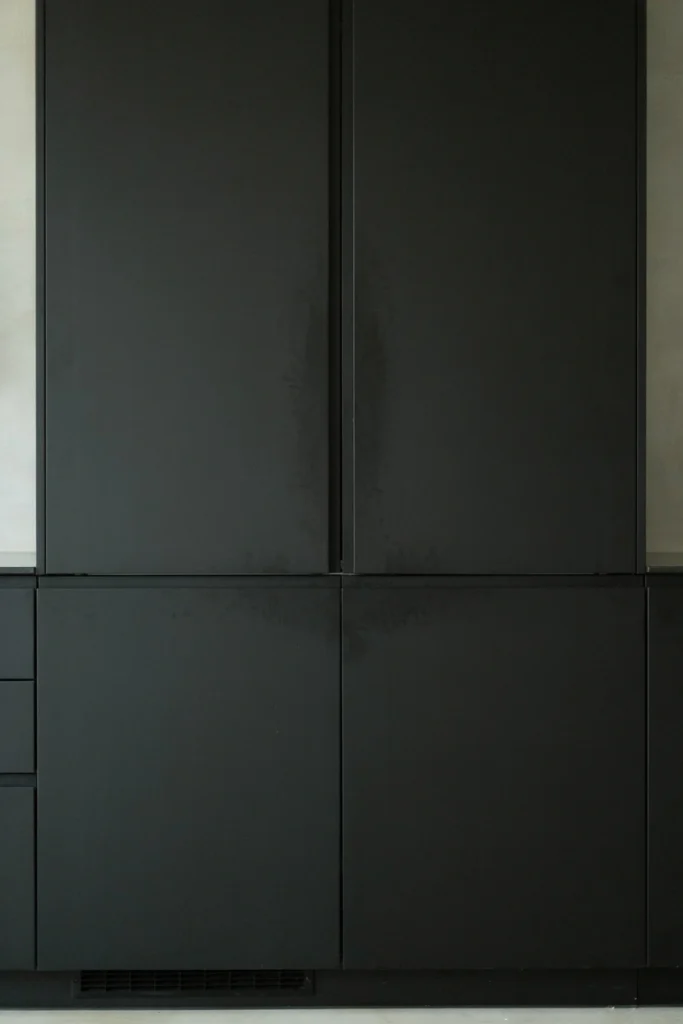
There is a particular kind of calm that a handleless or hidden-handle black kitchen creates. Without the visual interruption of hardware on every cabinet door and drawer, the surface of the cabinetry reads as one continuous, unbroken plane of color. In black, this approach creates a kitchen that feels almost architectural in its precision and restraint.
Hidden handle systems in 2026 use integrated grooves routed into the top or side edge of each cabinet door, allowing you to open the door by pressing your fingers into the routed channel. The result is a completely clean cabinet face with no visible hardware at all. Push-to-open mechanisms are an alternative that uses spring-loaded hinges to release the door with a gentle press, eliminating the need for any handle system entirely.
This minimalist approach suits kitchens where the design intention is to let the material and the overall composition do the work without decorative detail. In an open-plan home where the kitchen is fully visible from the living area, a seamlessly handleless black kitchen reads as a strong architectural statement rather than a fitted room.
The practical consideration with hidden handle kitchens is fingerprint visibility. Matte black finishes handle fingerprints better than gloss, as the flat surface shows marks less clearly and they wipe away easily. Regular light cleaning with a soft cloth keeps the surface looking its best.
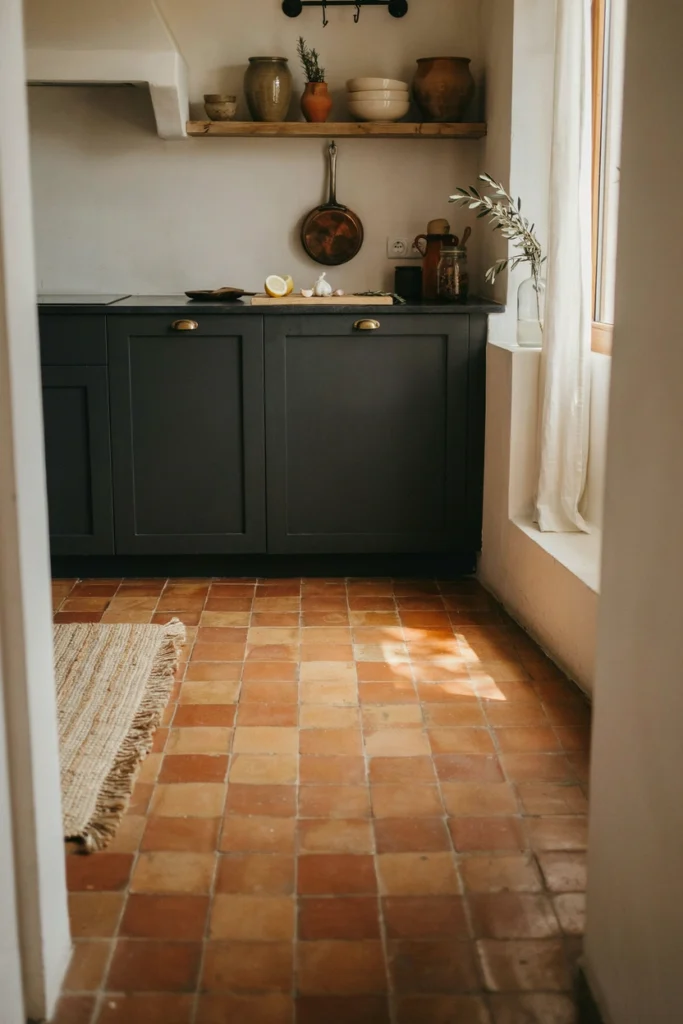
16. Black Cabinets With Warm Terracotta Tones
Terracotta and black is a combination that feels both grounded and alive. The warm, earthy orange-red of terracotta tiles or accessories introduces a sun-baked, Mediterranean warmth that sits beautifully against the depth of black cabinetry. It is an unexpected pairing that consistently performs better than people expect before they see it realized in a real kitchen.
Terracotta floor tiles beneath black cabinets create a particularly effective base layer. The warm tone of the floor prevents the black cabinetry from feeling cold or heavy, and the natural variation in handmade terracotta tiles adds an organic texture that contrasts pleasingly with the smooth, consistent surface of the cabinet doors above.
As a less permanent approach, terracotta can be introduced through ceramic accessories, a terracotta pendant light shade, a collection of handmade clay pots on open shelving, or terracotta-colored textiles like dish towels, a small rug runner, or seat cushions on bar stools. These additions warm up the kitchen considerably without requiring any structural change.
This combination suits kitchens that lean toward a natural, organic, or Mediterranean aesthetic. It also works well in older properties with period features, where the warmth of terracotta connects the modern black cabinetry to the existing character of the building.
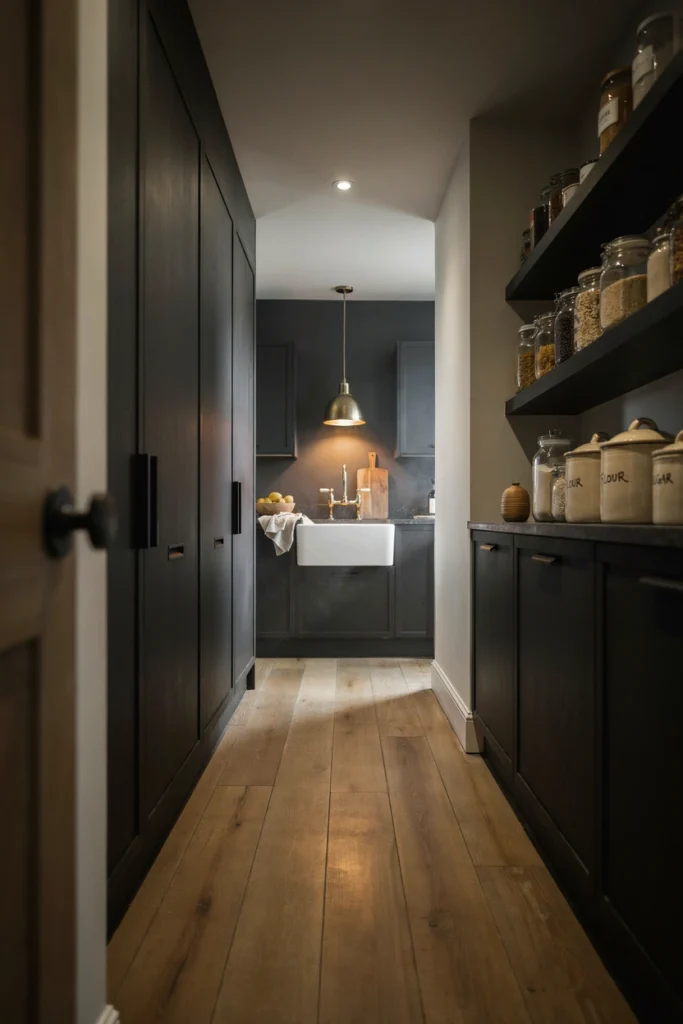
17. Black Cabinets in a Scullery or Butler’s Pantry
The scullery and butler’s pantry have made a genuine comeback in home design over the past few years, and in 2026 they have become one of the most requested additions to kitchen renovations in larger homes. A scullery is a secondary kitchen space used for food preparation, washing up, and storage, positioned behind or beside the main kitchen and designed to keep mess and workflow out of sight.
Black cabinets in a scullery feel entirely appropriate and even liberating. The secondary nature of the space means you can be bolder in the design choices than you might be in the main kitchen. Deep black cabinetry with open shelving, a large butler’s sink, and functional shelving for appliances and pantry items creates a space that is seriously practical and seriously atmospheric at the same time.
Because a scullery is not the primary visual focus of the home, the design decisions here do not need to be made with the same caution as those in the main kitchen. This is the space to try the darker palette, the more expressive backsplash, or the more industrial aesthetic that you might feel uncertain about in the main room.
For homes that are being extended or renovated, including a scullery behind a lighter main kitchen is an effective way to have both design aesthetics working in the same home, a bright, airy main kitchen and a moody, atmospheric scullery just behind it.
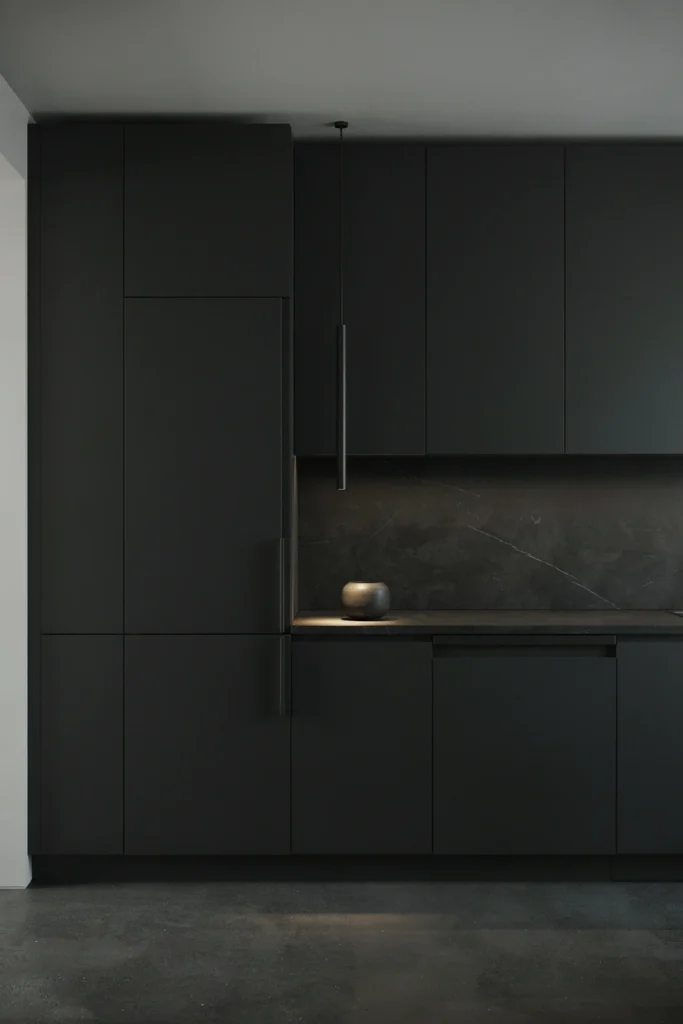
18. Black Cabinets With Integrated Appliances
Integrating appliances behind black cabinet panels is one of the most effective ways to create a kitchen that feels completely seamless and architectural. When the refrigerator, dishwasher, and oven are all hidden behind doors that match the rest of the cabinetry, the kitchen reads as a unified composition rather than a collection of separate appliances and cabinets arranged together.
In 2026, integrated appliance options have expanded considerably in both quality and availability. Most major appliance manufacturers now offer full integration options across their refrigerator, dishwasher, and oven ranges. The cabinet maker creates doors that match the rest of the kitchen’s cabinetry and the appliances operate behind them invisibly.
For a black kitchen, integration is particularly effective because it maintains the clean, continuous plane of black across the entire kitchen without interruption. Stainless steel or white appliance faces breaking up the black palette create visual stops that a fully integrated kitchen avoids entirely.
The practical benefit of integrated appliances extends beyond aesthetics. A kitchen with no visible appliance faces is easier to keep visually calm and requires less deliberate effort to style. The appliances exist functionally without competing visually with the overall design intention of the space.
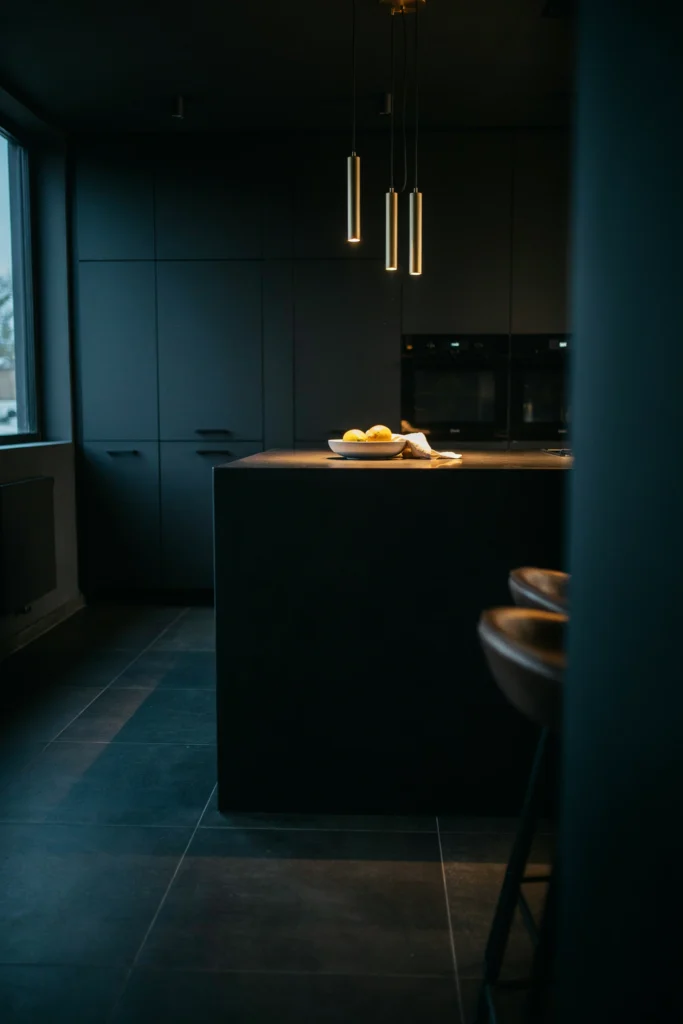
19. Black Cabinets Paired With Dark Flooring for a Moody Interior
Not every black kitchen needs to balance the dark palette with light countertops and pale flooring. Some of the most striking black kitchens are those that lean fully into a deep, moody aesthetic, pairing black cabinetry with dark flooring and allowing the kitchen to be genuinely dramatic rather than softened at every opportunity.
Dark flooring options that work well with black cabinetry include dark stained hardwood in deep walnut or ebony, large-format charcoal or slate-effect porcelain tiles, and polished dark concrete. Each of these floor types adds its own texture and character to the base of the room while maintaining the overall dark palette.
The key to making a fully dark kitchen feel atmospheric rather than oppressive is strategic lighting. Overhead lighting should be strong and warm rather than cool and fluorescent. Under-cabinet strip lighting illuminates the countertop work surface and creates a layer of light at the middle of the room. A carefully positioned pendant above an island or dining area becomes a focal point that breaks the darkness with intentional warmth.
This approach suits confident, design-literate homeowners who want their kitchen to make a strong statement. It works particularly well in kitchens that open into darker, more atmospheric living spaces where the overall interior design direction leans toward moody and considered rather than bright and airy.
20. Black Cabinets With Natural Stone and Earthy Tones
The final idea on this list brings together black cabinetry with natural stone surfaces and earthy accessory colors to create a kitchen that feels grounded, organic, and deeply considered. This is the approach that suits people who love the visual strength of black cabinets but want the overall kitchen to feel warm and connected to the natural world rather than cool and industrial.
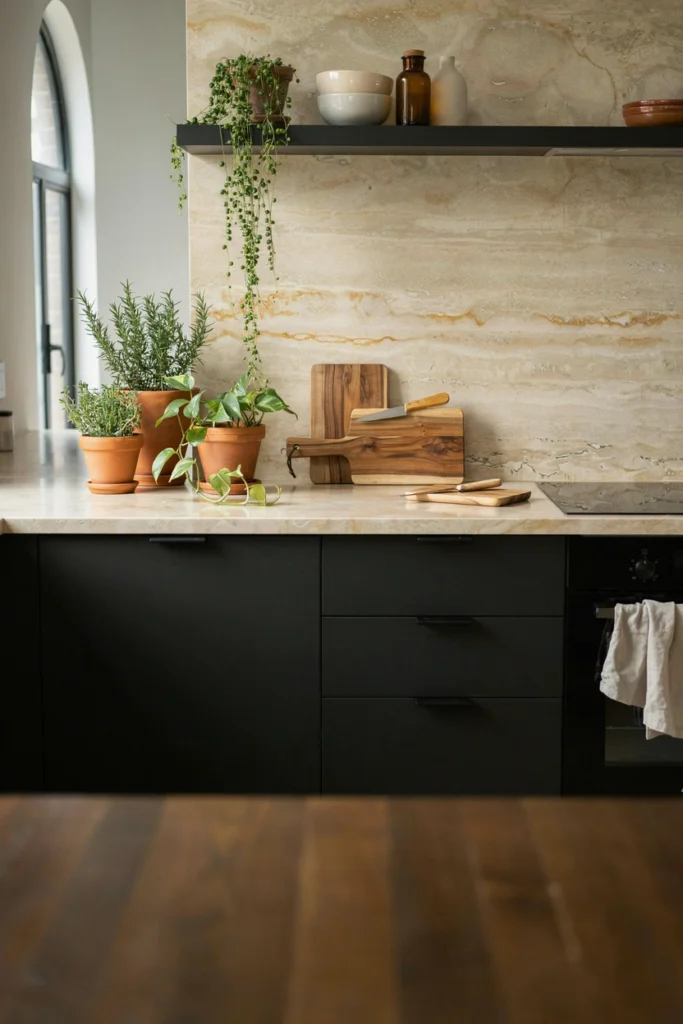
Natural stone in this context means countertops, backsplashes, or flooring in materials like quartzite, travertine, granite, or slate. These stones carry natural variation, organic veining, and color tones that introduce warmth and texture to the palette. Travertine in particular has become increasingly popular in 2026 as a countertop and backsplash material in black kitchens because its warm cream and tan tones sit beautifully against deep cabinetry.
Earthy accessories complete the picture. Terracotta pots, wooden cutting boards, woven baskets, linen dish towels in neutral tones, and ceramic vessels in muted earth colors all contribute to a kitchen that feels curated and personal. Plants add living color and organic texture that no manufactured accessory can replicate.
This combination appeals to a wide range of homeowners, from those who are drawn to a more natural and sustainable approach to interiors, to those who simply want a kitchen that feels beautiful and genuinely comfortable to spend time in rather than purely impressive to look at.
How to Choose the Right Black Kitchen Cabinet Style for Your Home
Twenty ideas is a generous starting point, but the most useful question is not which idea looks best in a photograph. It is which approach suits the specific proportions, light conditions, and overall design direction of your actual kitchen.
Start with your kitchen’s natural light. A kitchen with strong natural light from a south or west-facing window can support a fully dark palette, including dark countertops and flooring alongside black cabinets, without feeling enclosed. A kitchen with limited natural light needs counterbalancing elements like light countertops, open shelving, and strong artificial lighting to keep the space from feeling heavy.
Consider how the kitchen connects to the rest of your home. In an open-plan space where the kitchen is visible from the living area, the cabinetry needs to relate to the broader interior design direction of the whole room. In a closed, self-contained kitchen, you have more freedom to create a distinct atmosphere that does not need to coordinate with the adjacent spaces.
Finally, think about what you want the kitchen to feel like on an ordinary weekday morning rather than in a styled photograph. The most beautiful kitchen is the one you want to spend time in every day, not just the one that makes the strongest first impression.
Conclusion:
Why Black Kitchen Cabinets Are Worth the Commitment in 2026
Black kitchen cabinets are not for everyone, and that is precisely part of their appeal. They require a degree of commitment and confidence that not every kitchen design decision demands. But for those who do commit, the result is consistently one of the most distinctive and satisfying kitchen aesthetics available.
The 20 black kitchen cabinet ideas in this guide cover the full range of approaches, from the restrained and minimal to the bold and maximalist, so there is a direction here regardless of the size of your kitchen, the level of natural light you are working with, or the overall design aesthetic of your home.
Black kitchen cabinets done well create a space that feels luxurious, personal, and genuinely considered. They age well. They make everything you put against them look better. And they turn an ordinary kitchen into a room that people genuinely want to spend time in.

Ahsan Yousaf is a home decor writer who believes a beautiful home should feel comfortable, personal, and full of warmth. He loves sharing simple, practical decorating ideas that everyday homeowners and renters can actually use. Through HowDecor, he hopes to inspire readers to create spaces that feel peaceful, welcoming, and truly their own — one room at a time.